Your browser's print window will open. Choose Save as PDF as the destination, and switch on background graphics for the illustrations.
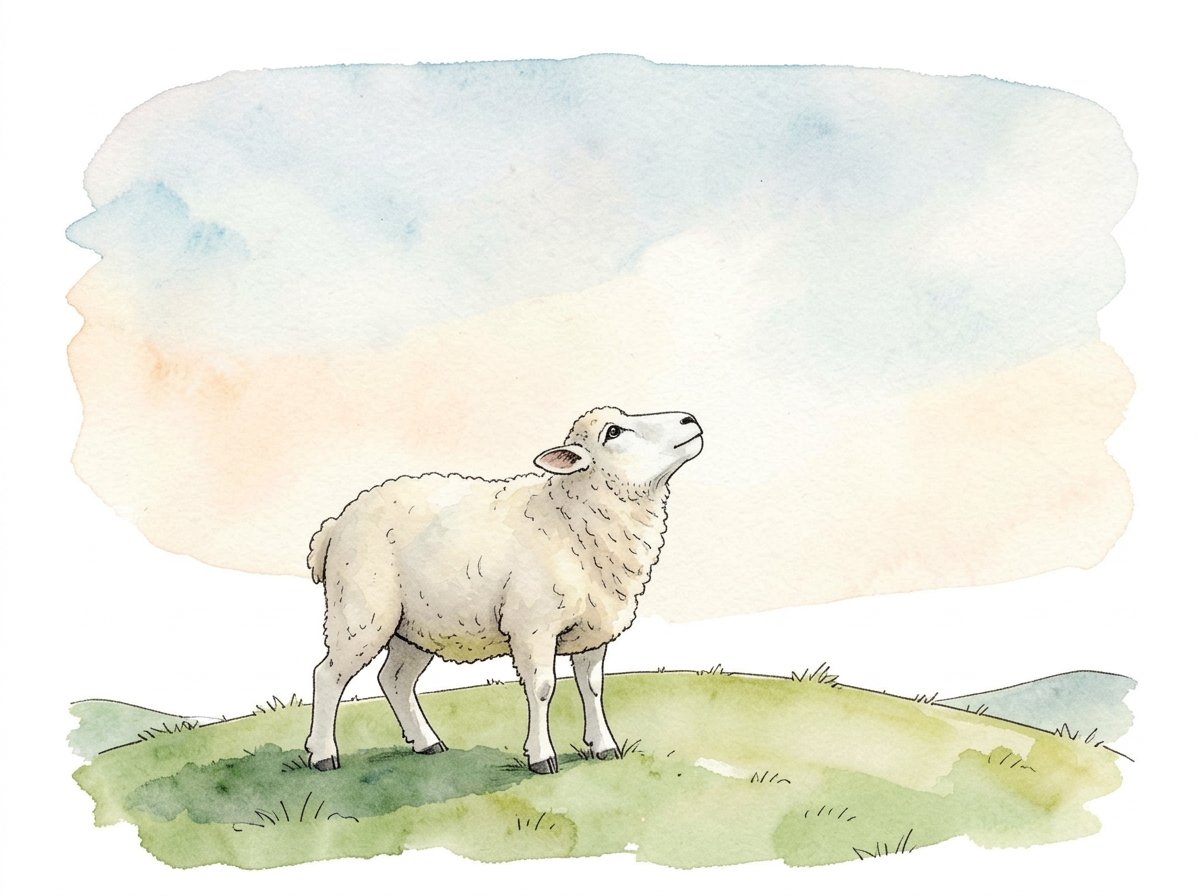
Heryshaf the Sheep
And His Search For The Meaning of Life
By Bish Smeir
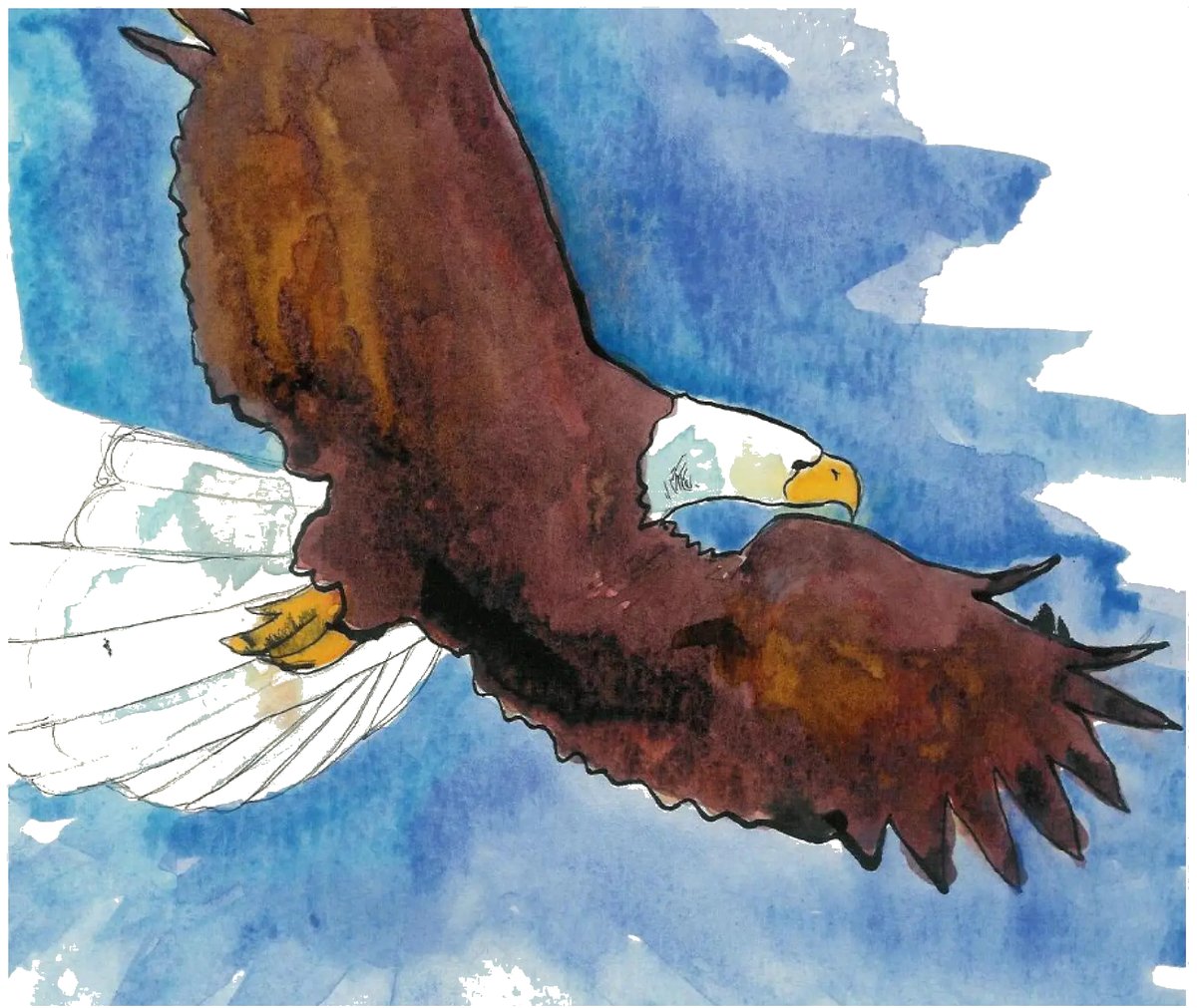
'Life is short, my darling children. You may not realise this, overlooking my words as empty vessels floating across this page. I am however trying to talk to you here, now, with all of my being. You can save yourself so much time by trying to listen. If you can accept one little piece of advice, one gift which you can really internalise, it should be this: This moment you call life is short. It is a vast playground full of wonders and I encourage you to savour every moment of it. Moments will pass into memory, and memories too will pass in time. All that is real is this moment of connection. Here and now, whilst you stare and breathe, and feel - Your mother and I did not raise Sheep. And you are not to be sheep. You are each to be a human 'being'. - Be relentless T. Be courageous A. Be righteous H. Because we are all a long time dead.'
Contents
Cycle 1
The Journey
- DogmaThe Journey · I
- RevelationsThe Journey · II
- Mighty OrdokThe Journey · III
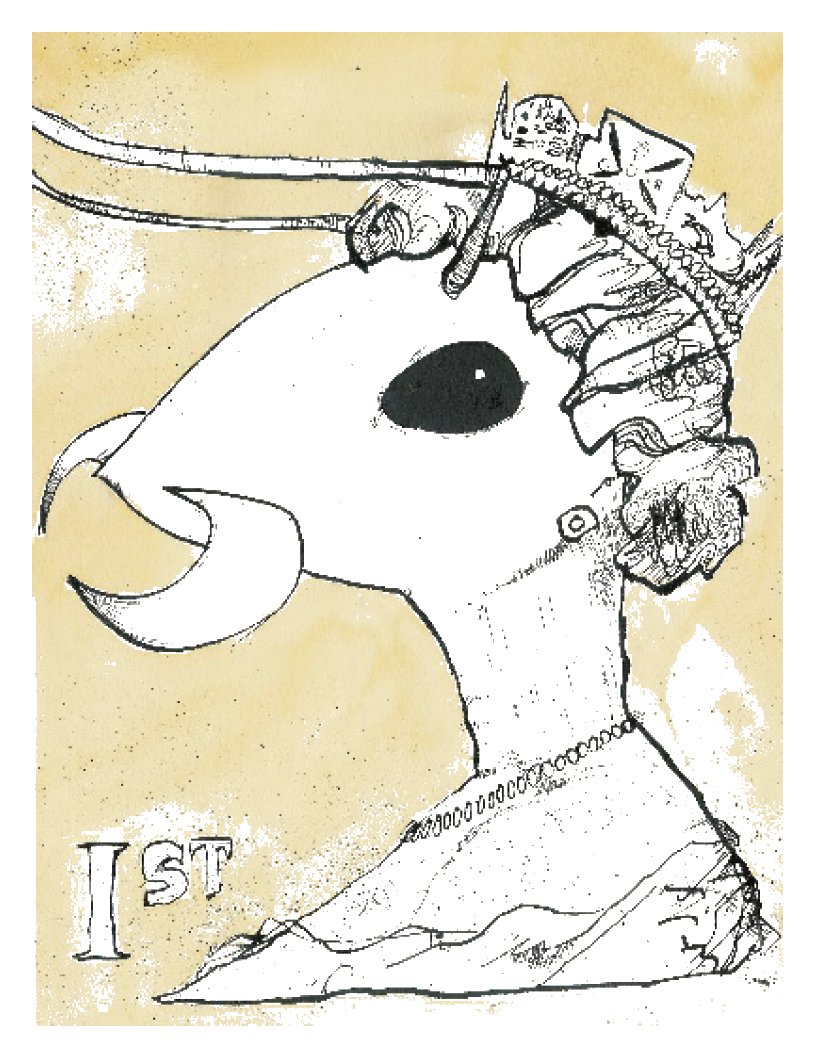
- 1st Interval
Contents
Cycle 2
The Self
- DoubtThe Self · I
- FarewellThe Journey · IV
- ReggieThe Self · II
- SoarThe Journey · V
- Midnight CourtThe Self · III
- 3rd Interval
Contents
Cycle 3
The Telling
- DoomedThe Telling · I
- LaddersThe Journey · VI
- FateThe Self · IV
- RetellingThe Telling · II
- 2nd Interval
- Sink or SwimThe Journey · VII
- SovereignThe Self · V
- MirrorThe Telling · III
- 5th Interval
- LacunaThe Self · VI
- False ShepherdsThe Telling · IV
- DorikThe Journey · VIII
- 4th Interval
Contents
Cycle 3
The Telling(continued)
- SojournerThe Telling · V
- Silver TrailThe Self · VII
- Last CrownThe Telling · VI
- 6th Interval
- SilenceThe Telling · VII
- DownwindThe Self · VIII
- DoneThe Telling · VIII
- MeaningsClosing
Cycle 1
The Journey
Three things are happening in this book, and they do not begin at the same time.
The first begins here, on a hillside, with a sheep who asks what the meaning of life is and believes the answer is somewhere over the hill.
The Journey · I
Dogma
Dogma
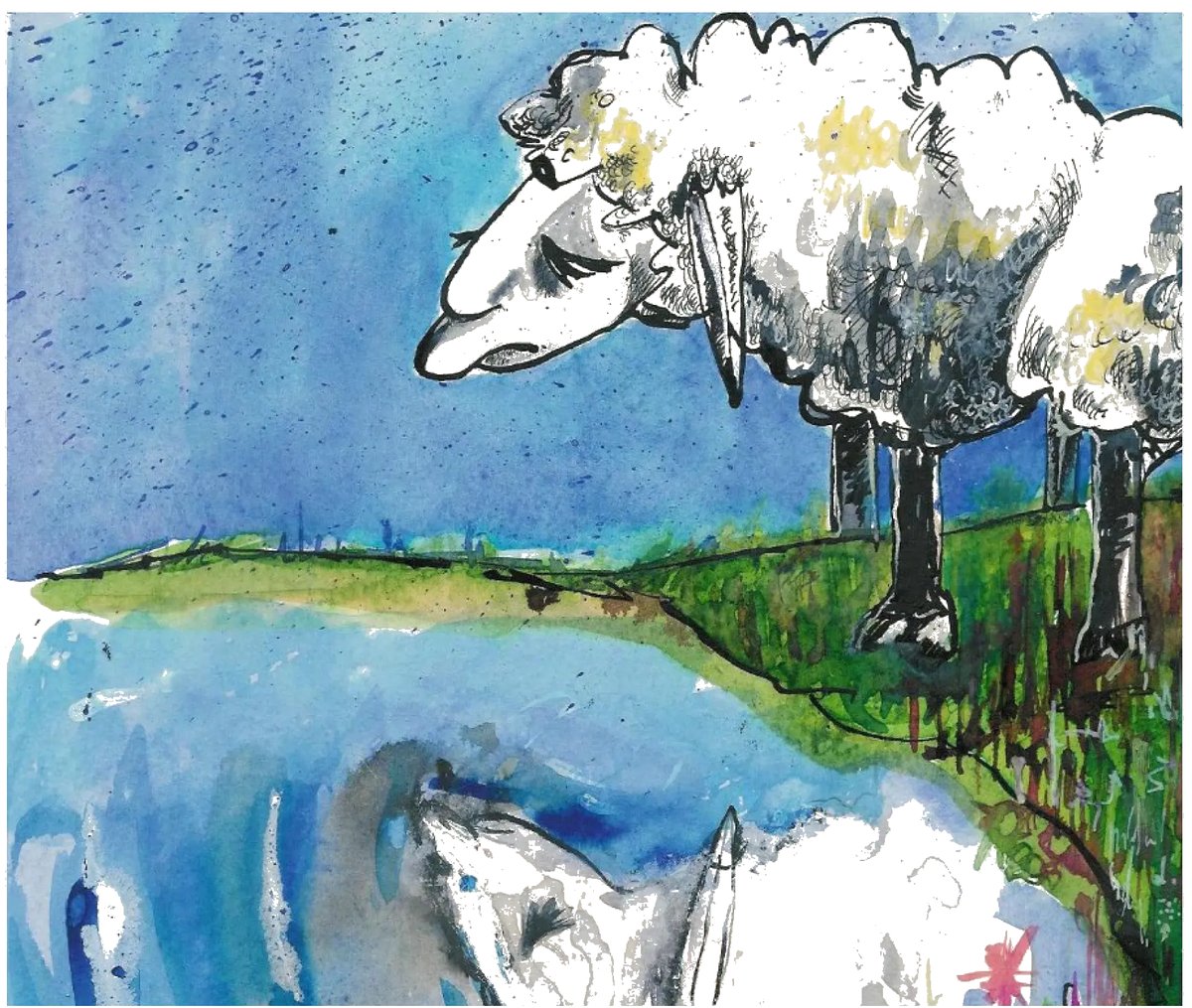
Reflecting the new autumn moon, the river Styx lapped lazily along its course. Heryshaf the sheep watched his reflection shimmer upon its dark glassy surface. Hanging in the night sky, the moon appeared to be the eye of a giant cyclops, observing everything below it hungrily, as though ready to pounce. A light breeze ruffled his shaggy fleece as he munched on a stalk of moist green grass.
The rest of the flock had started behaving coldly around him.
They said he had been asking too many questions. Questions about sheep, and why sheep were sheep; about life and death; about why things were the way they were.
These were matters, he had been told, that did not concern him.
Heryshaf thought this was a strange thing to say. If life and death did not concern him, he wondered what did.
Tonight, as he stared into the river, something felt different.
His reflection seemed wrong.
Not very wrong. That would have been easier.
Just wrong enough.
Heryshaf tilted his head.
The sheep in the water tilted his.
He raised a hoof.
So did the other sheep.
Heryshaf made a sound and, for some reason, even that did not sound quite like him.
He stopped chewing.
For a moment he could not tell whether he was looking down into the water or whether something in the water was looking up at him.
His heart began to beat faster.
The moon watched from above.
Dark clouds moved slowly across it like bars.
And Heryshaf had the sudden, terrible feeling that he had been asleep for a very long time.
He stepped closer to the river.
"Who are you?" he whispered.
The sheep in the water asked him the same question.
Heryshaf touched its face with his hoof.
At once the sheep broke apart.
His eyes went first. Then his nose. Then the moon. Circles spread across the black water until there was nothing left of any of them.
Heryshaf stared.
The ripples faded.
His face returned.
So did the moon.
Everything was exactly as it had been before.
Which, Heryshaf thought, was somehow worse.
A hoof struck him on the rump.
Heryshaf nearly fell into the river.
It was Miriam, his cousin.
"Heryshaf," she said. "It's your uncle!"
The Journey · II
Revelations
Revelations
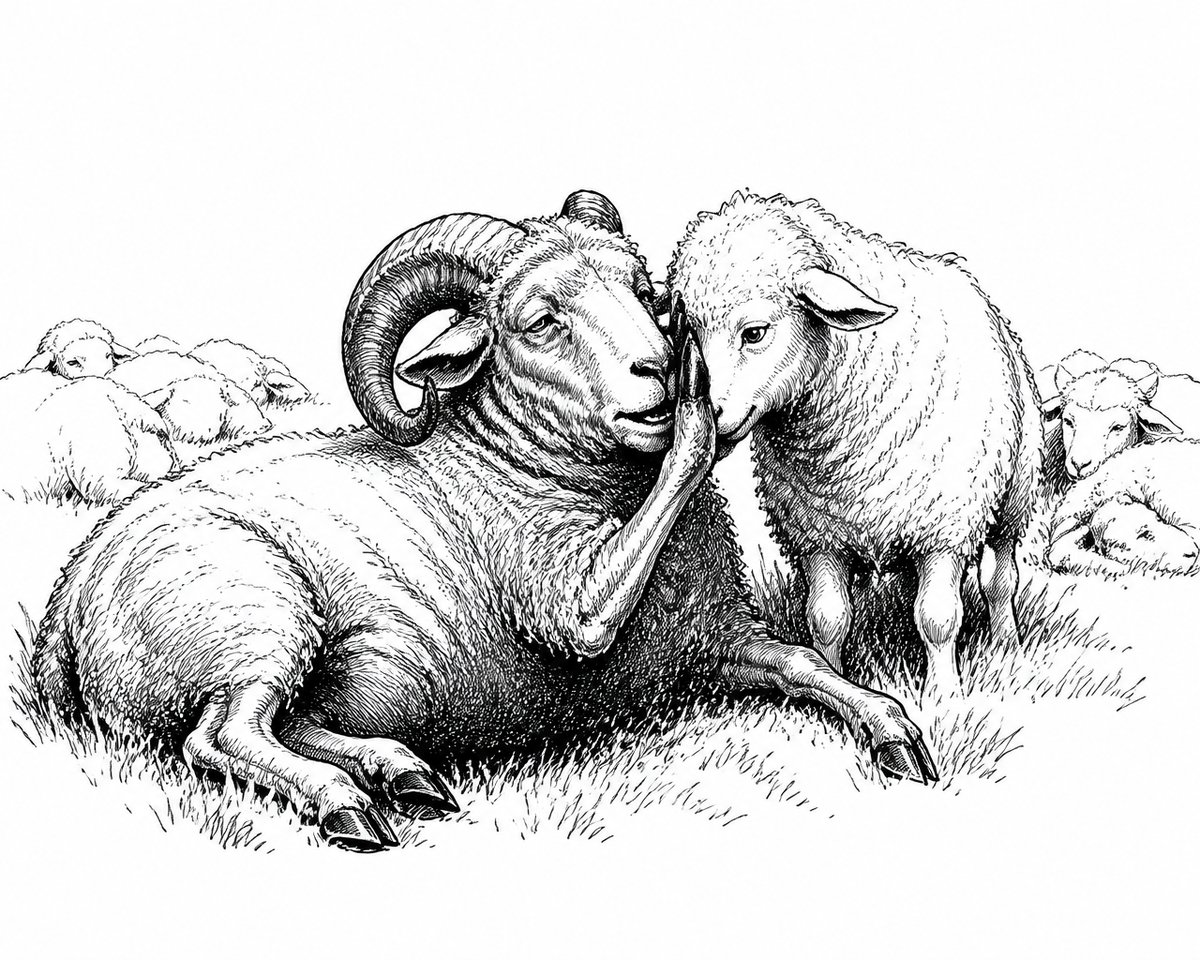
By the time Heryshaf reached his uncle’s side of the field, a small crowd had gathered around him, murmuring and making sympathetic noises.
“Let him in,” croaked his uncle. “Let the boy through.”
Heryshaf pushed into the centre.
His uncle looked smaller than he remembered.
“Leave us,” the old sheep said.
The others moved away, somewhat reluctantly.
“Uncle?”
“Heryshaf.”
“What is wrong?”
His uncle smiled.
“It is the end of my time in this world.”
“No.”
“Yes.”
Heryshaf moved closer.
“Don’t cry for me, boy. I’ve had a good long life.”
His uncle reached up and wiped a tear from beneath Heryshaf’s eye.
“And I leave it with no regrets.”
The old sheep thought for a moment.
“Except one.”
“What?”
“A promise.”
His breathing had become shallow.
“Come closer.”
Heryshaf did.
“Your father would have been proud of you.”
Heryshaf looked down.
“I know,” his uncle continued, “because I am proud of you.”
Heryshaf opened his mouth.
“Don’t ruin it. Just listen.”
Despite himself, Heryshaf smiled.
“When your father was a lamb, he was a great nuisance.”
“My father?”
“Terrible. Questions from morning until night. Why are sheep sheep? Why do we follow? Where are we going? How do we know?”
Heryshaf stared at him.
“Sound familiar?”
“A little.”
“A little?”
His uncle coughed.
“Everyone told him to stop thinking so much. We told him life was much easier if he simply accepted things as they were.”
“Did he?”
“Of course not. He was a strong-minded fool.”
The old sheep looked at Heryshaf.
“Rather like another one I know.”
Heryshaf said nothing.
“Your father said there was something more. He couldn’t prove it. He just knew.”
Heryshaf felt something tighten in his chest.
“And when he was twelve, he left.”
“Left?”
“The flock. Everything. He went looking for whatever it was he thought the rest of us were missing.”
Heryshaf could barely believe what he was hearing.
His father had stood on this same grass and asked the same questions.
“What did he find?”
His uncle’s eyes moved towards him.
“I don’t know.”
“What do you mean?”
“He never told me everything.”
“Why not?”
“Perhaps he couldn’t.”
Heryshaf remembered the river.
For some reason, this frightened him more than if his uncle had simply said that his father had found nothing.
“But he came back?”
“Oh yes.”
“What was he like?”
The old sheep was quiet for a moment.
“When he returned he was, how can I put it; more than a sheep.”
Heryshaf felt a strange warmth move through him.
Until this moment he had thought his questions separated him from his father.
Now they seemed to be the thing that connected them.
“Why didn’t he ever tell me?”
“Because you weren’t ready.”
“How did he know?”
“He didn’t.”
Heryshaf frowned.
His uncle smiled.
“Parents are very good at being certain about things they cannot possibly know.”
Heryshaf laughed.
His uncle began coughing.
At first Heryshaf waited.
Then the coughing became worse.
“Uncle?”
He put a hoof against the old sheep’s back.
“I’m all right.”
“You don’t sound all right.”
“I haven’t sounded all right for twenty years.”
He drew another difficult breath.
“Now listen. There isn’t much time.”
Heryshaf became still.
“Your father did leave you something. Four things, in fact. Four things he spent his life discovering.”
“What things?”
“Secrets.”
Heryshaf leaned closer.
His uncle closed his eyes.
For one horrible moment Heryshaf thought he had died.
Then one eye opened.
“I said listen, boy. I didn’t say climb into my ear.”
Heryshaf moved back.
His uncle took another breath.
“Four secrets,” he repeated.
“And your father made me promise that, when the time was right, I would give them to you.”
The Journey · III
Mighty Ordok
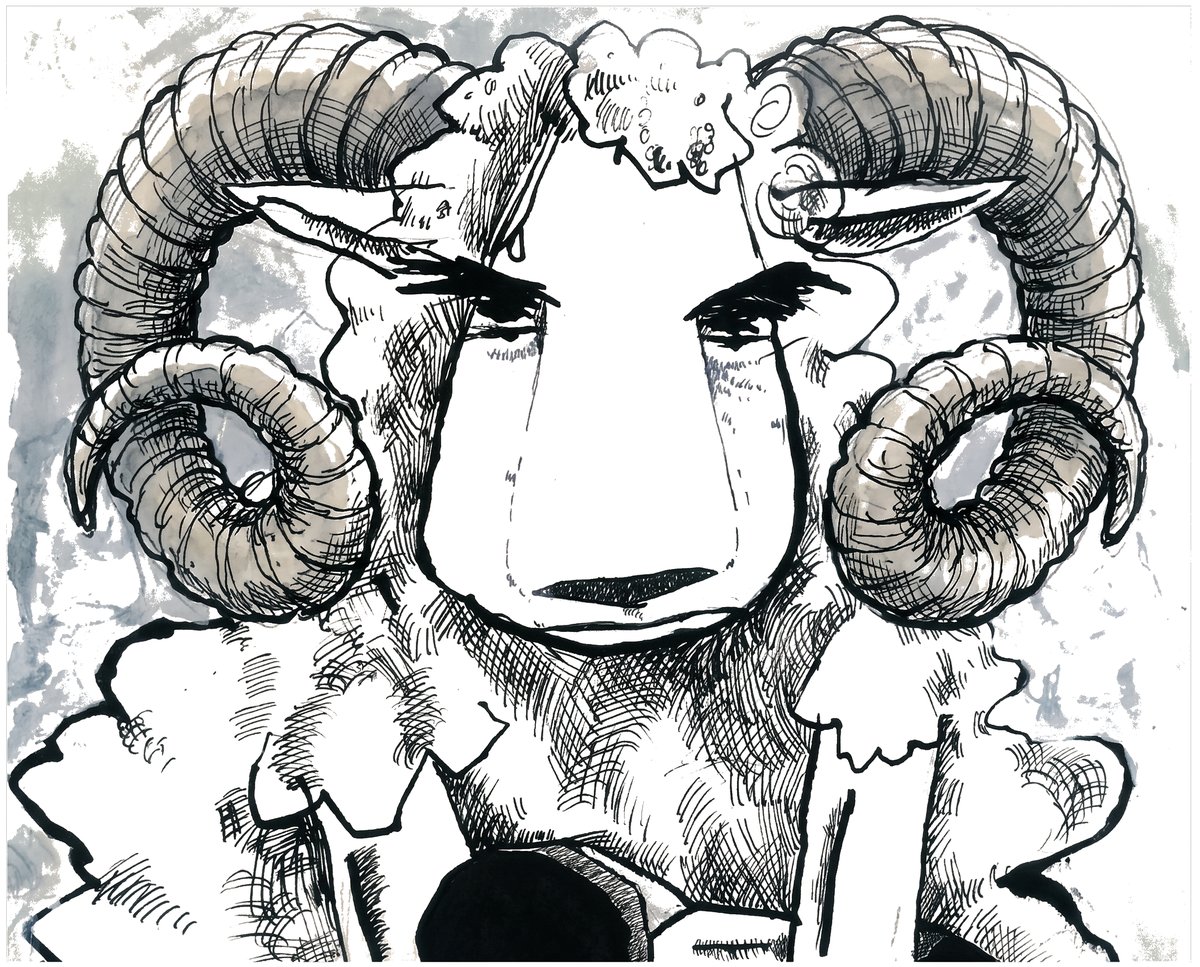
Mighty Ordok
While Heryshaf sat at his uncle's side, across the field stood Ordok, chief of all Sheepdom.
In his youth Ordok had contemplated thoughts similar to Heryshaf's many times.
“So many young sheep and lambs,” he thought, “will never fulfil their potential.”
They spent too much time worrying about how they looked, how others felt about them, or what they would do when they were older. They did not focus on their own performance, their own principles and their own aims. Instead of bravery, they hid themselves, denied themselves — preferring to “fit in” or “not stand out” from the crowd.
He thought back to his own youth.
He had forced such thoughts out of his mind and got on with it.
Now, in his old age, he was chief of all Sheepdom. He looked over his life with pride. He had started with nothing and now had everything — everything except his youth, which he would have given it all back for.
He knew that, after many years, young sheep like Heryshaf would look back and see just how beautiful they really had been in their youth; just how much potential had lain before them.
All they needed was courage to be true to themselves.
“Truly one's hopes and dreams make life worth living,” he thought.
Now his hopes fell on the next generation of young lambs. He had such high expectations of them. He desperately wanted them to do well in life, to be respected, to work hard; to be just like him.
Yes, sometimes he was overly strict, yet he just wanted the best for them.
He just wanted them to know the correct way: his way.
“If only you could see that no one owns their lambs,” his brother had once told him. “You can seek to be like them but never to make them like you.”
If only he had listened to the advice his father had given him on the same subject. If only he had humbled himself and taken their advice, then maybe his lambs would not have grown up to be the rebellious lambs they now were.
Ordok resented his brother because of his well-behaved kids. He resented him for the self-righteous advice he'd given him.
He just knew what his brother and his father, both long passed away and now with the Good Shepherd, were thinking.
They were looking down on him, smiling smugly.
“We told you so!”
Truthfully, Ordok resented everyone.
He had lived a good life.
A holy life.
A life of example.
He had always walked in the Good Shepherd's path.
Why was it, then, that the Good Shepherd had forsaken him and given him rebellious lambs?
Where was He now?
1st Interval
1st Interval
Heryshaf's Uncle continued, “Your father gave me four secrets, four of his discoveries that he wanted me to pass to you. He told me that these four secrets are worth more than any material gift; more precious than any perfume. He told me that these four secrets have the power to transform any sheep who applies them into something more.”
“What are these four secrets?” interrupted Heryshaf.
“Silence, boy. Listen,” croaked his Uncle, breathing heavily.
“Your father explained the significance of his discoveries. He stressed the importance of re-telling them to you in a very specific order.”
“He explained that his enquiries into the nature of life and reality had led him to understand that always and in everything, every big and small phenomenon, every circumstance, every growing creature and every dying moment can be viewed from three specific points of view.”
“He explained that there are always three forces acting on everything, in everything, and through everything.”
“He said that once one could understand this in his mind, experience it in his body and believe it in his heart then certain hidden mysteries begin to become manifest.”
“It is the clear decision to be aware of yourself that changes everything.”
“He said he left you these four secrets, to remind you of this fact!”
“But Uncle, you said there are four secrets — not three?” questioned Heryshaf.
“Exactly,” said his Uncle. “Exactly four.”
The old sheep’s eyes began to close.
“Uncle?”
No answer.
“Uncle!”
Heryshaf shook him gently.
“Eh? Ah. Where was I?” stammered his Uncle.
“You were about to tell me my Father’s secrets. You said there were four secrets, and that I would be reminded of these four secrets by understanding the three forces which operate in everything.”
“Not so fast, young sheep,” coughed his Uncle. “Your father also ordered me to give you a warning before explaining his discoveries.”
“A warning?”
“The price of knowledge.”
Heryshaf became quiet.
“Your father said that although knowledge is power, sometimes it is better to live in ignorance, for further knowledge does not necessarily lead to happiness. There are things which, once known, cannot be unknown.”
Heryshaf thought of his reflection in the river.
His Uncle continued.
“A great teacher once said to your father, ‘To know all, it is only necessary to know a little. But in order to know this little, it is first necessary to know pretty much.’”
“I’m not sure I’m following you,” said Heryshaf.
“That is to be expected,” continued the old sheep.
“Your dear father also proved to me that sheep can only understand knowledge which they are ready to hear. He explained that it is useless and folly indeed to cast pearls before swine — or sheep; that even the greatest teacher cannot give anything to a student which the student does not already possess.”
“All that such a teacher can do is help crystallise what has already been learned before.”
“Then, and only then, can a fourth force enter.”
Heryshaf wanted to ask what that meant, but something told him not to.
“In all honesty, Heryshaf, that is why I have left it until now to give you your Father’s gifts. However, now that my time is almost up and I can feel the greater sleep falling upon me, I must deliver on my promise to your father, even if his words fall upon deaf ears.”
“They won’t,” said Heryshaf.
His Uncle looked at him.
“You don’t know that.”
Heryshaf hesitated.
“No.”
“Good.”
The old sheep smiled faintly.
“In time you may come to understand all he had to give you, but as of now, simply listen and memorise these secrets of his. Over the coming years they will make more sense to you.”
He drew another shallow breath.
“So relax and breathe deeply, my dear Brother’s son. Become aware of yourself. Now is the time to take what your father felt were the most valuable four possessions he could give you.”
He looked into Heryshaf’s eyes.
“I now pass them to you, Heryshaf, the lamb he loved so much.”
Heryshaf breathed deeply and looked fondly into his Uncle’s fading grey eyes. He felt like he was watching the scene unfold from a distance. As if he were simultaneously inside and outside of his own body. A strange feeling arose in him of great, distant, compassion. The very air in his lungs felt somehow - finer.
“Beware thinking these four discoveries to be too simple to contain the wisdom of your father’s whole life. These four secrets he wished to share with you I will tell you now:”
Secret I
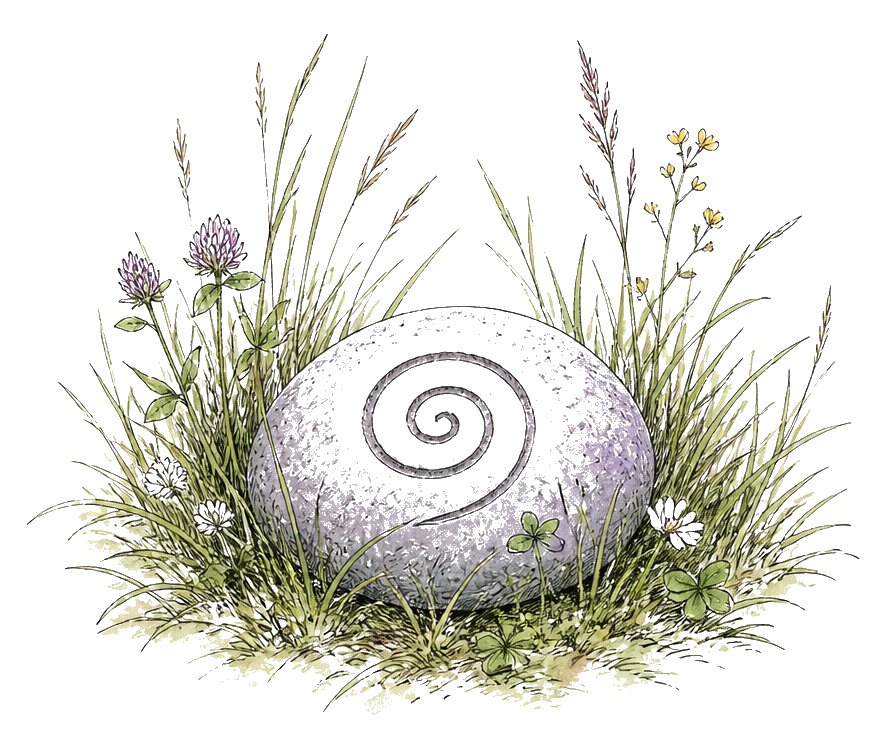
Have the courage to be yourself.
Be still. Observe yourself. In the subtle space between your breaths, find your centre. Hold the centre and treasure it.
You are unique and there is no shame in this uniqueness, or need to hide this uniqueness.
Honour your centre in all circumstances.
Secret II
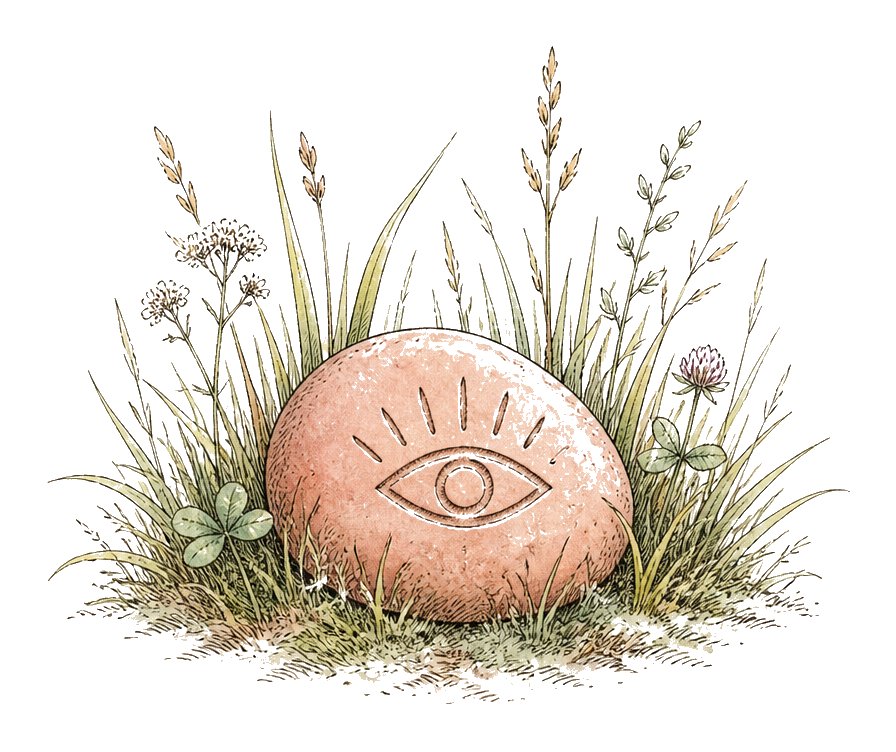
Learn to discern.
Anyone who gives you a belief system may be your enemy.
Test and verify everything.
Look for agendas.
Be wary of ignorant opinions.
If you do not know something with certainty, never speak of it as if you do.
Secret III
Maintain curiosity.
Focus. Dig deep. Be playful.
Embrace the unknown.
Welcome uncertainty.
Secret IV
Know where you are going.
It is not enough simply to ask whether something is right or wrong. Ask where it leads, and what it serves.
Always consider your AIM in all that you do.
Cycle 2
The Self
And here another thing began.
The road had run out of answers, and so a second question started underneath the first one, quieter and far more dangerous: not what is the meaning of life, but who is the one asking?
From here the two run together. When the road goes quiet, look inward. When looking inward goes quiet, the road picks it up again.
The Self · I
Doubt
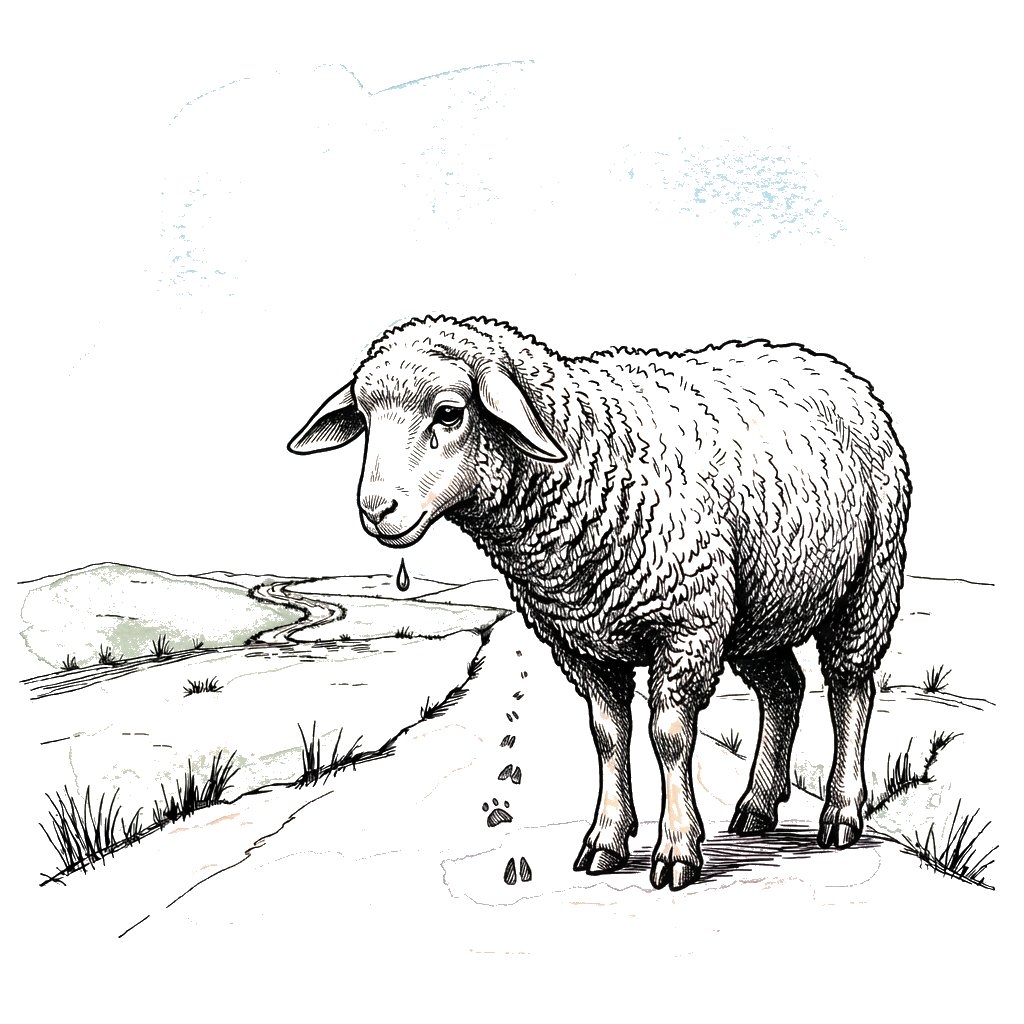
Doubt
Heryshaf had always doubted.
He had doubted the flock. He had doubted the Good Shepherd. He had doubted the things he had been told simply because every other sheep seemed willing to believe them.
But there was one sheep he had rarely thought to doubt.
Heryshaf.
Until now.
It was a peculiar thing to discover that the sheep asking all the questions might himself be part of the problem.
As Heryshaf wandered and wondered, he became more and more depressed.
Tears ran from his eyes and he felt a horrible emptiness in his right stomach.
It comforted him to reflect that back home the rest of the flock would be grazing together, never to discover their individuality.
At least I'm not like them.
The thought calmed him.
It made him feel better.
Then another thought appeared.
It's not really that bad.
And another.
It will all be OK.
You are doing the right thing.
You are a good sheep.
You've made the right choice.
For a moment Heryshaf felt better.
Then he noticed something.
The comforting thoughts had arrived by themselves, precisely when he had begun to feel bad.
He had not asked for them.
Were they true?
Or had some part of him produced them simply because the truth had become uncomfortable?
Heryshaf didn't know.
And that made him feel worse.
His thoughts continued to race.
Maybe it would have been better had he never questioned anything.
Truly life did seem much more unreal now than it ever had been before.
The world seemed full of different paths to fulfilment. The more choices Heryshaf imagined, the less certain he became.
After all, with so many different avenues available, just how should one figure out which the best path is?
Maybe following the path taught to him in his youth was best.
That way, life would have been simple.
And anyway, had following the path of the Good Shepherd really been that bad?
Was doing what you were told to do, thinking what you were told to think, such a problem?
What was wrong with blind faith anyway?
He missed the flock.
Missed it like the universe if it had vanished.
At times he desperately wanted to go home, to rest his head on his mother's side.
Yet something deep inside him urged him to continue.
He couldn't quit now.
Even if he wanted to go home, he didn't know where home was any more.
Heryshaf had a mission and the mission itself felt like home.
He was suddenly reminded of his Father's fourth secret:
Know where you are going.
It is not enough simply to ask whether something is right or wrong. Ask where it leads, and what it serves.
Always consider your AIM in all that you do.
Heryshaf breathed deeply and remembered. He was suddenly by his Uncle's side. He looked fondly into the old man's fading grey eyes. He felt like he was watching the scene unfold from a distance. As if he were simultaneously inside and outside of his own body. A strange feeling arose in him of great, distant, compassion. The very air in his lungs felt somehow — finer.
It suddenly made sense.
His Father and his Uncle had been right.
These secrets, these gifts his Father had gathered and his Uncle had held so dearly over the years, would only make sense when he was ready for them and not before.
He could be led to the truth, but in order to truly understand it he would need to be ready.
For the first time Heryshaf understood that Understanding was a very different quality from knowledge.
Knowledge was just words.
Empty ringing sounds without a vessel to contain them.
One had to be ready to hold knowledge before it could become understanding.
Understanding only arose when a piece of knowledge made sense to him in every fibre of his body and being.
Heryshaf became still.
Something had changed.
He had spent his life questioning everything outside himself.
Now, for the first time, he had caught himself in the act of believing himself.
And that gave him something entirely new to question.
The Journey · IV
Farewell
Farewell
A short while later, Heryshaf became aware that he was once more surrounded by sheep.
“We have come to hear that you seek the great secret of life,” stated Ordok. “Is this true?”
Heryshaf looked up, bemused.
“Eh?”
Ordok repeated himself.
He was not in the habit of doing that.
It made him angry.
Heryshaf heard it in his voice.
“Yes,” he said. “It is true.”
“This is a very dangerous course, son of Storig. Have you heard the story of Douglas?”
“Yes,” answered Heryshaf. “He too sought the great secret of life.”
“Perhaps that is all you know.”
The sheep drew closer.
“Indeed, Douglas sought the answer to that great mystery. He must have been about your age when we first became aware of his pondering. He would ask questions day and night — the kinds of questions you have been asking.
“Then, one dark night in December, while the rest of us were gathered around the north field, huddling together to keep warm, we heard frantic baa'ing.
“We rushed to see what was happening.
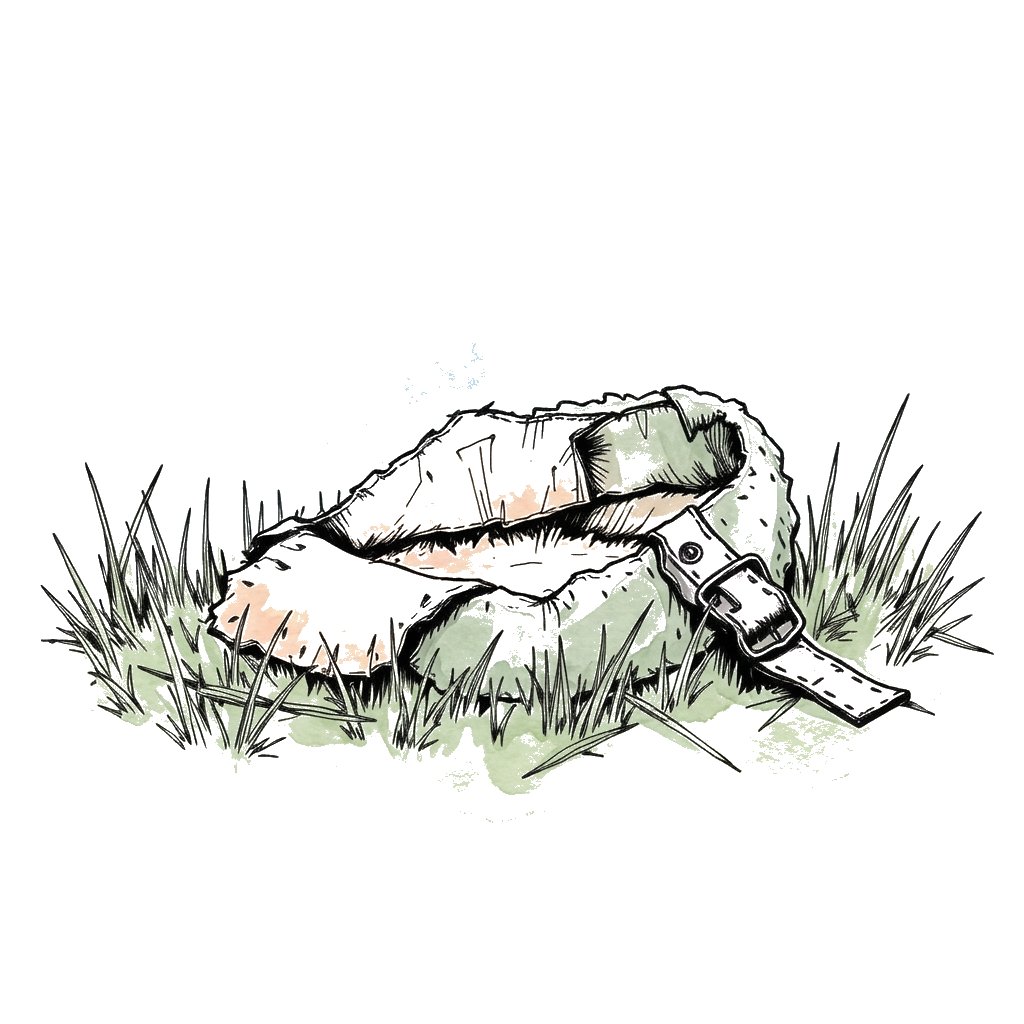
“When we arrived, we found his collar torn and tattered upon the grass.
“Douglas was gone.
“We never saw him again.
“They say the Dark One took him away.”
“The Dark One…” baaa'd the others.
“The next morning we gathered to decide what should be done,” continued Ordok. “And we came to a conclusion.
“We should never question life again.
“Never again should we stray from the path of the Good Shepherd.
“And if we remain humble and good, then one day — just maybe — He shall come down from His great dominion upon the hill, take the quiet ones away and guide them on the great journey to…”
Ordok paused.
“The Abattoir.”
“The Abattoir,” gasped the sheep in unison.
“For it is written that the meek shall inherit the earth. I hope that one day, by His grace, He shall lead me to that place far away. Until then, we should pay homage to the Creator and trust that the one who walks upright will look after us.”
Heryshaf looked around at the flock.
“It is true that I have tried to keep humble and quiet and follow the path of the Good Shepherd,” he said. “But I cannot remain unquestioning.
“My faith is always lacking.”
“That is not good news,” said Ordok.
A murmur passed through the flock.
“We cannot have a sheep who goes his own way. That could upturn the order of things. How are the newborn to know the righteous way with anarchists amongst us?”
“Anarchists among us!” echoed the flock.
At that moment a great eagle swooped from the sky, passed low over the sheep and disappeared beyond the trees.
For a moment nobody spoke.
Then a frantic voice cried:
“It's a sign!”
“A sign!” declared another.
“A sign!”
The flock erupted, writhing left and right in one great cloud of stiff white wool.
“A sign indeed!” declared Ordok fiercely.
He took a deep breath.
The flock held theirs.
“Do you, Heryshaf, son of Storig, refute the way of the Good Shepherd? Do you seek your own truths?”
Heryshaf remembered his Father's first secret:
Have the courage to be yourself.
He gathered his courage and inhaled deeply.
“Yes I do.”
The flock inhaled in shock.
A low murmuring ran through the wool.
“Silence!” shouted Ordok.
The flock fell quiet.
“Your Father was a great sheep, Heryshaf,” Ordok began. “He was one of my closest friends until the day the Good Shepherd took him.”
“Blessed be the Shepherd and His kingdom,” proclaimed the flock.
“Therefore, it saddens me to lay my judgement upon this matter. Yet it is my solemn duty to speak it.”
Ordok looked directly at Heryshaf.
“Do you continue to shun the precepts of the Good Shepherd and follow your own path?”
“Yes I do.”
“Even though it goes in the face of all Sheepdom?”
“Yes I do.”
“Even though you will bring great shame upon your mother's house?”
Heryshaf hesitated.
He looked towards his mother.
“Yes I do.”
“Even though it may lead to madness and split-mindedness?” said the old sheep, his voice rising.
“Yes I do,” answered Heryshaf.
Then, more quietly:
“I must follow my own path to knowledge. I must find the great secret of life for myself.
“I can no longer accept the old ways unquestioningly.
“I love my family. I am very fond of the flock. I have great respect for you, Ordok, and for the principles of the Good Shepherd.
“But I cannot preach or follow that which I have not learnt myself.”
The field was silent.
“So it is, then!” hollered Ordok.
He raised his head.
“I, Ordok the Ancient, shall pass judgement!”
“Judgement!” echoed the flock.
“From this moment forth, Heryshaf, son of Storig, I cast you out of the flock.
“You must go from here and never return, for you have chosen your own way.
“No sheep shall talk with Heryshaf.
“No sheep shall eat with him.
“No sheep shall look at him.
“For he is no longer one of us.
“He is of the Dark One.
“And let it be known that any other sheep who seeks his own way and forsakes the way of the Shepherd makes his own fate also.”
Ordok stared at him.
“Pick yourself up and go.
“You are baaaaa'nished.”
Baaaaa'nished?
Heryshaf had never thought it would come to this.
“Baaaaa'nished!” hammered the flock.
Heryshaf lowered his head and began to walk.
A tear crawled down to his snout.
What had he just done?
He reached the gate and pushed himself through it.
Then he looked back one final time.
Every sheep, from young to old, stared at him.
“Baaaaa'nished!”
And then he saw his mother.
Tears streamed down her face.
For one moment Heryshaf waited.
Perhaps she would come to him.
Instead, she slowly raised her hoof and pointed towards the gate.
“Baaaa'nished,” she cried through her tears.
Heryshaf looked at her.
Then he turned away.
Behind him, the flock continued.
“Baaaaa'nished.”
Ordok watched Heryshaf leave.
He resented the young sheep's confidence.
Heryshaf had been willing to sacrifice everything for the truth.
Ordok thought of the Good Shepherd.
He had believed for so long.
And what had it brought him?
For one dangerous moment he wondered whether he should go with Heryshaf.
Then he thought of everything he had built.
Everything he had earned.
Everything he might lose.
Ordok remained where he was.
The Self · II
Reggie
Reggie
So if the secret of life could not be found amongst the flock, nor upon the path of the Good Shepherd, where indeed could it be found?
Everything had seemed much clearer before Heryshaf began asking questions.
Now every answer seemed to contain another question.
He had discovered fragments of things, certainly, but somehow each discovery made the whole mystery larger.
Still, somewhere inside him was a small glow.
I will find it.
Then another thought followed.
And when I do, I shall be the first.
The glow became warmer.
What a genius I am.
Heryshaf stopped.
He knocked himself on the cheek with a cloven hoof.
He had discovered almost nothing.
“In truth, there is nothing new in the world,” he thought. “All remains merely to be rediscovered.”
He had been walking for over an hour when something seized his leg.
“Baaaaaaaaaaaagggghhh!”
Heryshaf looked down.
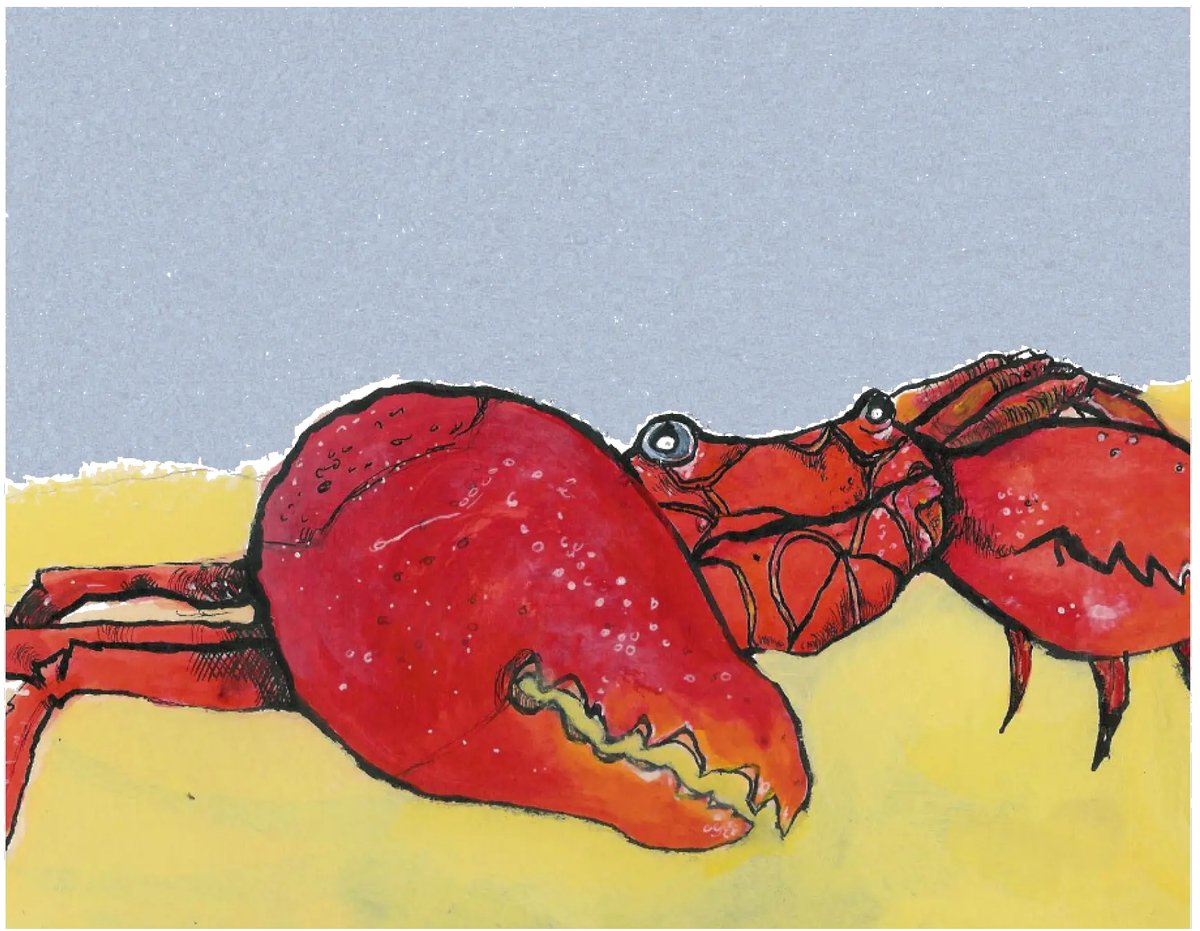
Attached to him by one enormous claw was what appeared to be a red, six-legged, hard-bodied spider.
“Get off me!” he screamed, shaking his leg wildly. “Get off me, spider!”
The creature released its grip and spun through the air in a bright red arc.
“Ouch!”
It landed upside down.
“I am not a spider,” it said, rubbing its head. “I am a crab.”
“A crab?”
“Yes.”
“What is that?”
“It is what I am.”
Heryshaf stared at him.
“Are you sure?”
The crab froze.
“Am I sure?”
“I've never heard of one.”
“Of course I'm sure! What do you think I am?”
“I don't know. You look like a spider.”
“A spider?” spluttered the crab. “Are you stupid?”
“No!” snapped Heryshaf. “Are you?”
And thus began a great battle between the crab and the sheep.
Later, Heryshaf would wonder why the word great was so often used to describe wars.
There seemed very little great about this one.
For nearly thirty minutes wool flew across the beach and the clap of pincers echoed around the bay.
Eventually both creatures collapsed, bruised and exhausted.
Heryshaf recovered first.
He planted one hoof firmly upon the crab's shell.
A little more pressure and it would crack.
The crab glared up at him.
Heryshaf glared down.
Then, for no particular reason, Heryshaf noticed the sea.
It was blue.
He had always known that the sea was blue, but for the first time wondered why.
Perhaps because it reflected the sky.
Then why was the sky blue?
Heryshaf looked upward.
That brief moment of philosophical distraction was all the crab required.
SNAP.
Heryshaf froze.
The crab had clamped one pincer firmly around his testicles.
“Gotcha.”
Heryshaf did not move.
“Remove your hoof,” said the crab, “or I shall remove your balls.”
“Remove your pincer or I shall remove your life.”
“You first.”
“But if I remove my hoof, you may still snap.”
“And if I let go,” said the crab, “you may still squash.”
A bead of sweat crawled down Heryshaf's face and dropped onto the crab's shell.
The crab smiled.
He now knew something Heryshaf had been trying very hard not to reveal.
Heryshaf was terrified.
The crab tightened his grip very slightly.
“I'm pinching.”
“And I'm squashing.”
“You're about to lose your life!”
“And you're about to lose your ability to father children. Which is the greater loss?”
Heryshaf considered this.
Not for very long.
“Victory always requires sacrifice,” he said carefully, “but this time I am not willing to pay the price.”
He removed his hoof.
The crab removed his pincer.
Both retreated a safe distance.
The crab chortled.
“What's your name?”
“Heryshaf.”
“Heryshaf what?”
“Heryshaf the sheep.”
“Reggie the crab.”
They regarded one another.
“What are you doing here?” asked Reggie.
“I'm searching for the secret of life.”
Reggie burst out laughing.
“A sheep searching for the secret of life?”
“What's funny about that?”
“Nothing. Nothing at all. Except that creatures spend their whole lives looking for the secret of life and then die before they find it.”
Heryshaf frowned.
“And everyone knows that, of all creatures, sheep were born to die.”
Heryshaf's stomach tightened.
Perhaps Reggie had a point.
Perhaps there was no secret.
Perhaps the flock had been right.
Don't question.
“If somebody had found the secret of life,” Reggie continued, “don't you think they would have told everyone by now?”
“Maybe.”
“My advice? Stop looking.”
“But what's the point of everything if there is no secret?”
“I've already told you.”
“No you haven't.”
“Children.”
Heryshaf stared at him.
“Children?”
“Children. That's it.”
“That's the secret of life?”
“Life.”
“That doesn't explain anything.”
“It explains crabs.”
Reggie seemed satisfied with this.
“I have fathered a great many children,” he added proudly.
“How many?”
Reggie thought.
“A great many.”
“So life is about replacing yourself?”
Reggie tilted his shell.
“If you want to make it sound complicated.”
Heryshaf thought about this.
“Everything else,” Reggie continued, “comes from creatures having too much time to think. Cheer up. Life isn't that bad.”
Heryshaf looked at him suspiciously.
“You were trying to remove my testicles a moment ago.”
“Yes.”
“And now you're telling me to cheer up?”
“Yes.”
Reggie began crawling away.
“Come on.”
“Where?”
“I know a little rock pool further along the beach. The water tastes terrible, but it has a very peculiar effect on anyone who drinks it.”
Heryshaf followed.
It was surprisingly easy to follow a crab.
After a while, Heryshaf noticed something.
“Reggie?”
“Yes?”
“Why do you walk sideways?”
Reggie stopped.
He had clearly never expected the question.
“Because,” he said eventually, “I don't want to spend my life looking back at the past, and I have no particular desire to stare into the future.”
“So you look sideways?”
“Exactly.”
“That makes no sense.”
“It works for me.”
Reggie continued walking.
“I like it here,” he said. “Now. It's much less complicated.”
Heryshaf followed beside him.
“And I've found that happiness generally prefers a simple life.”
Reggie pointed towards the beach.
“Look at all that sand.”
Heryshaf looked.
“Most creatures would try to understand the whole beach at once. Imagine counting every grain.”
“That would take forever.”
“Exactly. And even if you somehow managed it, what would you know about any one of them?”
Reggie reached down and lifted a single grain.
“I once spent a very long time looking at one of these.”
“What did you discover?”
“The beach.”
Heryshaf frowned.
Reggie held the grain closer.
“If you look carefully enough at a little thing, sometimes the big thing reveals itself.”
Heryshaf looked at the grain.
“Better to know one thing well than a thousand things badly,” said Reggie. “Everyone keeps looking for answers as though they're hiding somewhere far away.”
He dropped the grain.
“Maybe they're staring us in the face.”
Heryshaf remembered something he had thought earlier.
“Everything is already known,” he murmured. “It only remains to be rediscovered.”
Reggie shrugged.
“If you say so.”
They crossed the remaining beach and stopped beside a small rock pool.
“Here we are.”
Heryshaf peered into it.
The water looked entirely ordinary.
“Drink.”
“What does it do?”
“It will blow your mind.”
“What does that mean?”
Reggie considered this.
“It means it will blow your mind.”
“Oh.”
Heryshaf lowered his head and drank.
For several seconds, nothing happened.
Then space moved.
The beach stretched away from him.
The sky folded.
Light broke into colours Heryshaf was fairly certain had not existed a moment before.
Sounds merged into one another until he could no longer tell whether he was hearing them or seeing them.
He tried to steady himself.
Somewhere, very far away, Reggie seemed to be laughing.
Then Heryshaf heard his voice.
“Let go, Heryshaf.”
The world spun faster.
“Don't fight it.”
Heryshaf tried very hard to fight it.
“You'll have much more fun.”
The Journey · V
Soar
Soar
Heryshaf walked and walked and cried and cried and cried some more.
“What have I done?” he whimpered. “I've given up everything I've ever known. Where am I to go? What am I to do?”
Over the next few days he stumbled through fields, further and further from what he used to call home.
Day turned to night, then back to day again, and Heryshaf lost track of time.
After a while he calmed down and realised that all the worrying in the world wasn't getting him anywhere.
“The last day has gone forever,” he thought, “in a blur of tears and sobs.”
Not only did he not know where he was, but he could barely remember how he had got there.
Suddenly it felt as if he had just woken up, even though he was already walking around with open eyes.
The feeling stopped him.
He had felt it before.
At the river.
Looking into his reflection.
And that feeling fuelled a remembrance of his quest. He recalled why he had left the flock behind in the first place.
“I will find the secret of life,” he thought to himself.
“I will find the secret of life,” Heryshaf affirmed out loud.
Then he surprised himself by shouting at the top of his voice, as if in defiance of the surrounding hills:
“I will find the secret of life!”
The words echoed around the valley as if challenging him.
Secret of life…
of life…
life…
He listened as they died away.
There was silence in the glen.
Mist crawled down the mountain as the sun sank lower in the sky.
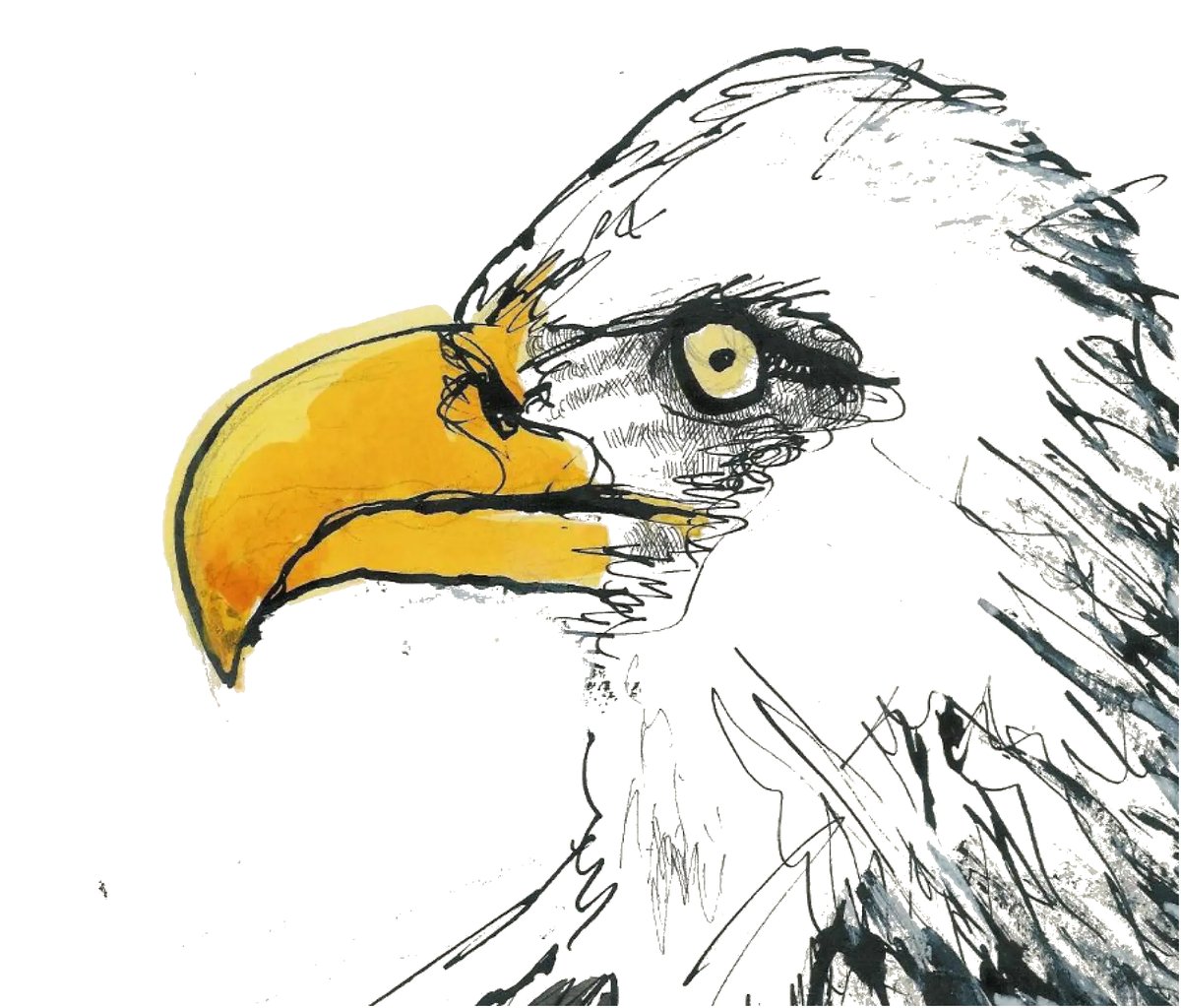
His train of thought was interrupted by the laugh of a great eagle, which had settled on a nearby tree.
“So sonny, you want to know what life's all about then?” it asked.
Heryshaf looked up nervously.
“What do you mean? How did you know?”
“Couldn't help overhearing. Great voice!” said the eagle sarcastically.
Heryshaf blushed.
“Well?” questioned the eagle.
“What?” asked Heryshaf, confused.
“If you want to know the secret of life, or anything else for that matter, you could do better by asking someone who has a wider perspective than you.”
“What do you mean?”
“Well,” began the eagle, “if you wanted to know where the ocean was, would you do better to ask the ant or myself?”
“You've been to the ocean?” said Heryshaf in wonder.
“Yes, indeed I have. And flown across it to a distant land where the sun never shines.”
“The sun never shines there!”
“Never,” retorted the eagle confidently.
Anything said with confidence sounds like fact.
“So you must have seen many amazing things,” said Heryshaf. “Yet, if I may ask, Mr Eagle, have you found the secret of life?”
“My dear sheep,” preached the old eagle, “it is true that I, Aldwin the Eagle, have travelled widely and seen many wonderful things. I am sixty-eight years old, and the years have not passed without their lessons.
“Yet I learnt long ago that wheresoever I flew, whosoever I met and whatsoever I learned, there would always be a creature that had already observed these things and more.
“Every time I thought I knew it all, one of these creatures would remind me of just how little I did know.”
Heryshaf gazed at the great bird's wings.
“How wonderful it must be to have wings like yours and ride upon the waves of the wind. If I had wings like yours, I would fly around the world and certainly find the great secret of life.”
“Oh woolly one. Do not fool yourself,” squawked Aldwin the Eagle.
“The great secret of which you speak cannot be found in the deepest valley of the earth or upon its highest peak, for I have swooped and risen to all those places and, alas, to no avail.
“It is true the gift of wings has taken me places you can never hope to go. Every creature has its special gift. Look at you. You carry your own warmth and need not build shelter for yourself, as I need build a nest.
“The Good Lord has given us all different shapes in which to scour the earth in search of the great secret. So let not the form of a creature blind you.
“Envy was put into the heart of all the living to distract us from looking within.”
Heryshaf looked down at his wool.
He had never thought of it as a gift.
Then he looked back at Aldwin's wings.
They were still magnificent.
“Truly you are a majestic and wise old bird,” said Heryshaf. “So pray tell, in all the days of your life, what is the greatest thing you have ever learned?”
Aldwin thought for a moment.
Then answered:
“Know yourself.”
Heryshaf waited.
Aldwin said nothing more.
“That's it?”
The eagle smiled.
Then he spread his golden wings and launched himself into the evening sky.
As he rose, Aldwin squawked:
“Always remember, Heryshaf, no bird can fly too high on his own wings.”
Heryshaf watched as the glistening great bird disappeared into the clouds.
That night he sat beneath the stars and thought about the eagle's words.
Know yourself.
Heryshaf looked down at himself.
He wasn't entirely sure where to begin.
The Self · III
Midnight Court
Midnight Court
Heryshaf looked down and saw that he was floating. His hooves were not resting on any solid surface below him. All around, a deep red colour began to nauseate him. His stomach churned and he became very worried.
What is going on? What have I just drunk? Did the crab poison me? Am I dreaming?
He could find no immediate answers to these questions.
A pulsing yellow light appeared in the distance. He was not sure which direction was up, which was down, so he observed the light for several seconds to stabilise himself.
Heryshaf watched the pulse of light get bigger, and bigger, and bigger until he became completely enveloped in flashing blue and yellow.
He did not know what to think and so he refrained.
A voice boomed:
“I am the heart of Douglas the sheep, the uncollared one. He that sought to purify himself in the great stream. And I am he that was thwarted by the pride that seeks to maintain its own power.”
“I am Douglas who seeks not revenge but forgives even he that slays me. For I am he that observes cause and effect in action and through inaction obtain my revenge.”
“For the sins, and the wins, of all sheep fall on their lambs.”
“I am he that has found a truth. As you sought and carried on seeking, Heryshaf, the belly of the universe spoke to me and said, ‘Write down what you have seen and tell it to Heryshaf so that he may rise above himself and know his spirit and that of all others.’”
“Douglas?” said Heryshaf.
The universe began to sing a simple song:
Heryshaf has found that ignorance is bliss,
And what one does not know, he cannot miss;
That knowledge is better, but leads to sadness.
Yet in good time vexation will turn to gladness.
So replace his confusion and shades of madness,
Instruct him to embrace loving kindness.
The song faded.
Douglas continued:
“For when you want something enough and decide to leave all else behind to pursue it. When you pass the tests of desire that the universe has designed to weaken and ensnare your will. When neither obstacles nor time can dampen or turn you. When you fight for your goal and keep on fighting. As you have done on your search for truth, Heryshaf.”
“Only then, and with perfect timing, the universe will see fit to help you.”
“Do you believe that your meeting with the crab who led you to this vision was just a coincidence? Or do you recognise that serendipity is the voice of the ONE that leads you to the WAY?”
“Do you observe the laughter of LIFE in the midst of the Irony? Do you observe the flow in all things?”
“Slow down long enough to breathe in rhythm with the vibrations of your friend, the great hand that breathes his power into your bones.”
“Heryshaf the sheep, please accept this gift that the universe offers you through myself and through your dreams.”
“Do not seek to analyse this vision, for it is spoken in a higher tongue than any of the languages upon the earth. There is no inflection in it. You shall understand it on every level the same.”
“For this is the revelation of all that rises and falls under the sun.”
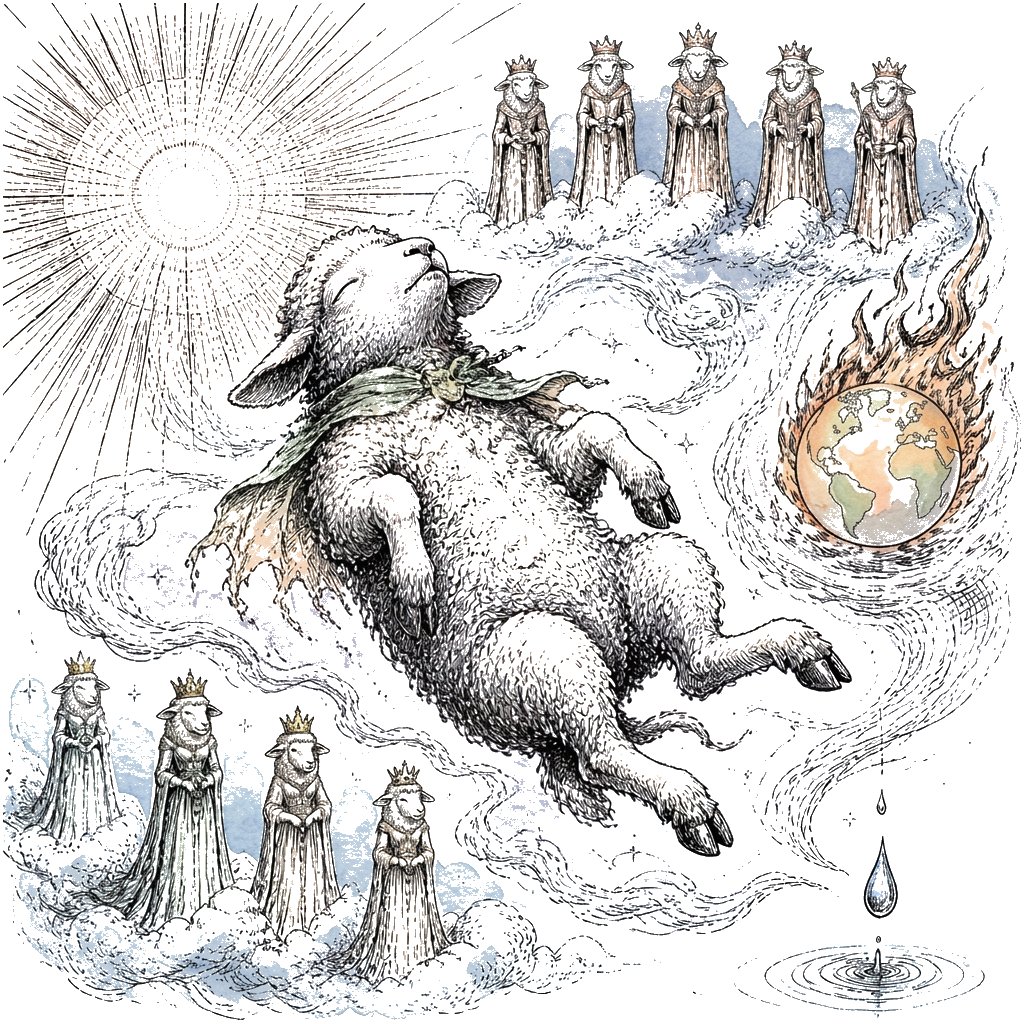
Suddenly, before Heryshaf appeared Five Kings and Four Queens.
He looked on in disbelief.
One of the Kings stepped forward.
He was the King of Hate.
He was dressed in a red velvet cloak, which hung in thick pleats from a black iron breastplate that had been forged from dragon fire many millennia ago.
A cloud appeared in front of the King and, in the smoke, appeared an image of the Earth.
“Let me introduce you to my Queen, for we do not have much time,” he thundered. “Her name is Jealousy.”
When he spoke, the light faded and all around cowered in terror.
Jealousy, dressed in green, looked on with pride as her husband bellowed.
“This world has treated us unkindly, Jealousy, and it shall pay the price! I want to control and rule all that is on it.”
Hate and Jealousy became like a furious fire and, in an all-consuming rage, began to tear through the world.
Heryshaf felt a terrible sense of loss as the planet began to burn under Hate's wrath.
A tear welled in his eye and crawled across his face.
He'd never really seen the world as this beautiful before. Perhaps he had taken it for granted and now, as he witnessed its demise, he saw how wonderful it had been all along.
His tear fell on the fire and evaporated into a sizzle of steam.
Out of the darkness came a second King called Apathy.
Apathy held in his hand a glass of water. He had never found a Queen and, like the water, looked dirty.
Apathy watched the world burning.
The sight stirred no emotion in him.
The fires raged on.
Apathy called on his sister Sloth, but she too was unmoved.
He spilled the glass of water upon the flames of Hate and Jealousy that tore through the world.
Alas, to no effect.
For everyone knows that when Apathy reigns no one gets wet.
Hate was furious with Apathy.
He consumed him and his sister.
Hate and Jealousy had destroyed half the planet by this point, and the fires raged on.
“Quick, quick!” shouted Faith, the King of Love's great Queen.
She had seen all that was going on and knew Love must help if all was to end well.
“There is little time left,” she screamed. “The world is being destroyed!”
The King of Love was no more than a young man, so young it was hard to believe he was a King.
Over his eyes he wore a blindfold.
“Then guide me, Faith, for as you know I cannot see.”
Faith took his hand, as she always did, and led him to the world that smoked and burned under the power of the malevolent King of Hate and his Queen.
The King of Love and his Queen Faith turned themselves into water and poured themselves onto the flames.
They flowed throughout the world and around all the living, determined to put an end to Hate's fire.
The King of Hate and his Queen Jealousy retreated.
They knew all too well that together Love and Faith were unbeatable, for they had met in battle many times.
For a moment, the fires subsided.
However, the King of Hate was cunning.
He had been expecting Love and Faith's intervention and had brought an ally.
On the sidelines a fourth King stood awaiting instructions.
The King of Hate summoned the King of Fear.
The King of Fear and his Queen Deceit descended on Love and Faith and terrified them.
In her panic Faith let go of the hand of Love.
Seeing her opportunity, Deceit quickly drove Faith to the opposite side of the world.
Faith was lost without Love.
Love could not see anything without Faith.
And the fires raged on.
Hate and Jealousy had consumed three quarters of the planet.
Fear and Deceit laughed.
“Love and Faith will never find each other again.”
Everything suddenly became black.
The laughter faded into silence.
Heryshaf cried and cried.
He had not cried in front of others since he left his flock a long time ago — being a sheep, he found it a sign of weakness.
In the darkness Douglas spoke.
“What have you learned?”
Heryshaf opened his mouth to speak, but no words came forth.
For once, words seemed of very little use.
“Good,” said Douglas.
“Now watch.”
Heryshaf wiped the tears from his eyes.
No sooner had he done so than the image of the burning world reappeared.
Queen Faith had lost courage once she had been separated from the King of Love. Without Love she was nothing. She sat whimpering behind a tree, awaiting her demise.
The King of Love, on the other side of the planet, had lost conviction. Without Faith he was a mess and could do nothing as the fires raged on.
Fear stooped over Faith and Deceit over Love.
Apathy and Sloth had been killed.
The rest could see that the end was near.
Out of the smoke a fifth King arose.
This was the King of Hope.
Hope could stand these sights no longer.
The spirit of self-preservation had motivated him to action. If the world was destroyed there would be no hope left, no place for him.
The King of Hope was very weak.
He was slowly de-materialising.
It happened to him every 10,000 years when Hate would try to conquer the world.
Hope's Queen, Glory, knew what to do.
She dragged him through the flames to the feet of Jealousy.
There she stopped.
It was up to him now.
The King of Hope rose to his feet.
He was fading fast.
He was almost gone.
And the fires raged on.
Only two spots on the Earth were now untouched by the wrath of Hate.
On the first, Love was held in place by Deceit.
On the other, Fear pressed Faith to the ground.
Faith placed her face in her hands and sobbed.
“Oh no, it is all over. Hate has won. I must die alone. Never again will I hold the hand of Love.”
She put her hands together in prayer.
“God please, please allow me to see Love again. I swear I shall never leave his hand again. Have mercy God, please.”
Summoning all his great wisdom, Hope whispered in Jealousy's ear:
“Jealousy, once all of this is over, do you really think Hate will keep you as his Queen? Never! Hate will kill even you. He is selfish and full of gluttony. He wants everything for himself and you will play no part in his plans after the Earth has been consumed.”
“Jealousy, I beg you, stop him now so that you may claim at least a part of the Earth for yourself. For surely a little is better than nothing?”
“You are right,” said Jealousy enviously. “He must be stopped. But Hate is too powerful. I cannot stop him. Why don't you tell him yourself?”
“Good question,” spoke Hope. “I have no power without help. Indeed it is true that Hate is very strong, so go to Fear and Deceit and tell them that there will be no place in Hate's plans for them either.”
“Tell them to release Faith and Love. Love and Faith will stop Hate for us all.”
Jealousy was instantly with both Deceit and Fear, for she moves quickly and can be in many places at once.
She told them what Hope had informed her.
Fear became afraid and Deceit believed that she had been played by Hate.
“We are both very angry with Hate, but what should we do?” asked Fear and Deceit. “For Hate is very strong and we have no power over him.”
“Hope told me you should release Love and Faith and they would deal with Hate,” stated Jealousy.
The fires burned and thick black smoke filled the air.
The end was near.
Deceit released Faith.
“Faith, we need your help. This has gone too far. We must stop Hate before he destroys the world altogether. Come with me. I will take you to Love.”
“But I cannot trust you. For you are Deceit,” screamed Faith.
“Don't be foolish. Have some faith!” retorted Deceit.
The two Queens looked at each other and smiled.
They joined hands and Faith flew with Deceit to find Love again.
On the way, Faith wondered if it was true that a sincere prayer is always answered.
She was about to find out.
By this time the King of Hate had discovered that his Queen was missing.
He was filled with fury like the heart of a great storm.
He flew to the place where she stood alongside Fear and Love.
As he arrived, so did Deceit with Faith in tow.
Faith was overjoyed to see Love again.
She took his hand and he recognised it was her.
He could see again.
“I shall never leave your side again,” she swore.
Hate rose up in the belly of flames.
“Oh foolish ones, you are like ants to me. I shall tear you apart and consume you as I have consumed everything else in my path. It is over for you as it is for the rest of the Earth.”
“Look!”
Hate pointed to the only remaining part of the Earth that was not burning.
They all watched in horror as the flames closed in.
Suddenly there was a flash of blinding white light.
Then everything went black again.
Heryshaf gasped.
For a long time, Douglas said nothing.
“And what happened next?” asked Heryshaf.
“After a time,” said Douglas, “the cycle continues.”
3rd Interval
He woke on the sand with the taste of the rock pool still bitter on his tongue, and the crab nowhere to be seen.
Something small and mean rose in him at once. He had been given a vision of the whole world burning and saved, and what he felt was not awe but irritation -- that the crab had gone without explaining, that his legs ached, that he was cold and no closer to an answer than he had been at the river.
The old machinery began its work. It offered him a complaint, ready made, and invited him to speak it aloud to the empty beach.
He did not speak it. He stood in it instead, and let it burn where it stood, and did not add a single word to it.
He observed the irritation in him and watched it try to trigger him. Watching without reacting to it was harder than the battle with the crab, for there was nothing to wrestle against except himself. He couldn't fight the rising anger within him. He could only watch it. Observe his compulsion to become it.
And as he did, something strange happened.
The irritation thinned, the way smoke thins, and something else came through it. The air in his lungs felt -- finer.
And for the space of a breath he was not on the sand at all. He was in a small stone room below something very heavy, with a door in it that did not open, and there was a man in there who had stopped counting the days and did not mind. The picture went as quickly as it had come and he could make nothing of it whatsoever.
But he found that he had stopped counting too.
Cycle 3
The Telling
And here a third thing began, a long way from any field.
A thing that happens to you is one thing. A thing you can tell is another, and the difference between them is the whole of what follows.
Three threads now. The road, the man on it, and the voice that carries them both.
The Telling · I
Doomed
Doomed
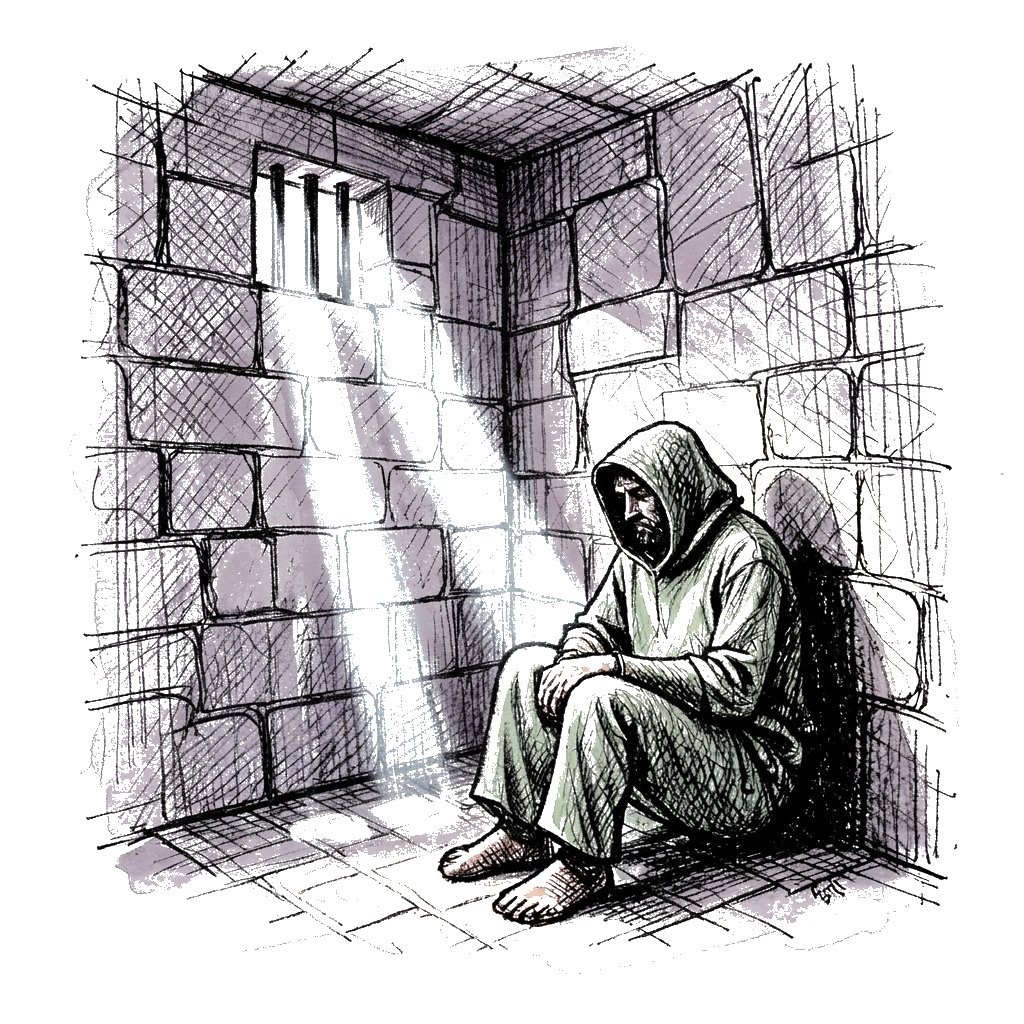
The cell was below the hall, and the hall was below the King, and so the prisoner reasoned that he was at the bottom of everything, which was a restful place to be. There was one window. It was too high to see out of and exactly the right height to let the cold in.
He had been there seven days. He had counted them without minding them.
On the eighth day the door opened and the Guard filled it. The Guard was a wide man who had learned early that a wide man rarely has to finish a sentence.
'Up,' said the Guard.
The prisoner stood.
'You are not afraid,' the Guard observed, as one might observe that a door was ajar.
'Should I be?'
'Everybody is.'
'Then I am sorry to break the pattern,' said the prisoner. 'It must be tiring, being the reason.'
The Guard looked at him a moment longer than he needed to, and then took him up the stairs.
The hall was warm and enormous and the warmth did not reach the corners. The King sat at the far end of it, and the King was bored. This was not a small thing. In that country the King's boredom had a body count.
'This one says nothing,' said the Guard.
'They all say nothing,' said the King, 'eventually.'
Beside the throne the Priest stood with his hands folded, and on the step below him sat the Jester, who was sharpening a stick for no reason anybody could determine.
'What is he charged with?' asked the King.
'Wandering,' said the Guard. 'No trade. No village. No master. He was found on the eastern road talking to nobody.'
'Talking to nobody,' repeated the King. 'About what?'
'He would not say.'
The King leaned forward. He had a face that had once been handsome and had been left out in the weather of itself for thirty years.
'I am told,' he said, 'that men who talk to nobody are either mad or holy, and that the difference is decided afterwards by whoever writes it down. I have no interest in either. I have an interest in not being bored. Amuse me, and you may keep your head until morning. Bore me and you will not see the afternoon.'
The prisoner considered this.
'That is a generous offer,' he said. 'But I should tell you that I do not want it.'
The Jester's stick stopped moving.
'You do not want to live?' said the King.
'I do not mind either way. I have something to give away before I go, and I would rather give it to you than to the wall of that room. If it takes until morning, good. If it takes until the afternoon, also good.'
'And if I have you killed within the hour?'
'Then it will not have been given,' said the prisoner, 'and that would be a waste. Not of me. Of it.'
The King sat back. Something in him that had been asleep for a very long time turned over without waking.
'Then begin,' he said.
And the prisoner said:
'There was once a sheep who looked into a river at night, and could not be sure the face looking back was his own.'
The Journey · VI
Ladders
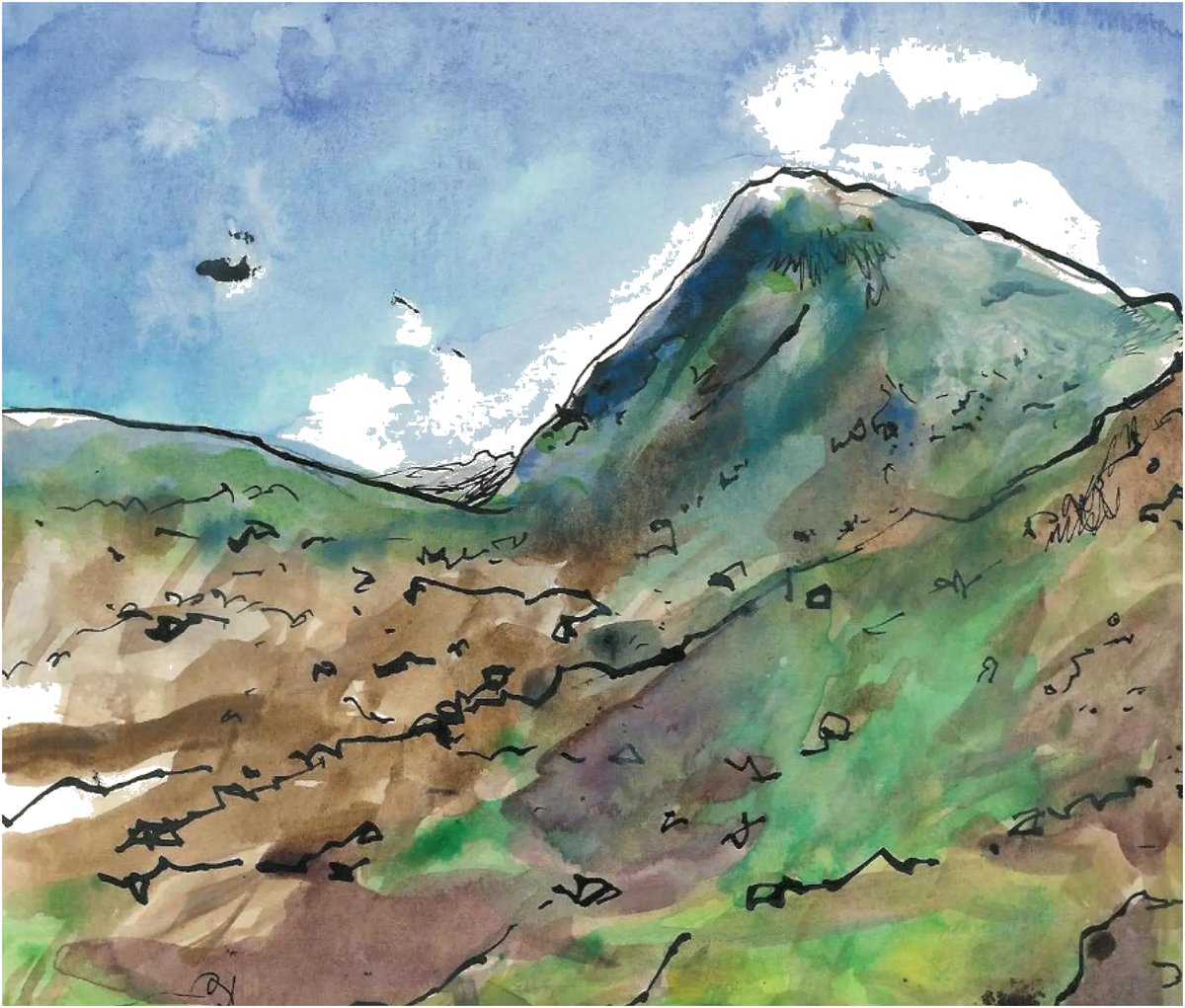
Ladders
Heryshaf had just drifted off to sleep when he heard a small, hard voice near his ear.
He shook himself awake.
Although he was alone, he was certain someone was speaking. He pulled himself together and was shocked to overhear the little stone next to him in deep conversation with the mountain.
Heryshaf kept his eyes closed and listened so as not to seem nosey.
The little stone called towards the summit.
“What is the secret of your great height? I am so low in the scheme of things and would so like to know how to get to where you are.”
The topmost stone on the mountain spoke.
“As I was saying, a very long time ago I was once like you are now, small and crushed at the bottom of the pile. And for many years I stayed that way.
“I too had a great desire for height and so I tried to climb on top of other stones so that I would be bigger and better, but every time I fell back down again.
“It took me a long time to realise I could not become any bigger, any stronger. I could not rise any higher by trampling others underneath me. In truth, they would let me down when I needed them most.
“And in time I realised that true strength comes through time and faith and consistency. And having stopped looking outside myself for answers I began to find the one I sought.
“As I became a humble and solid step for others so I too increased in stature.”
The little stone thought about this.
The mountain continued.
“Solid. Steady am I. A firmly anchored rope for whoever would use me to climb.
“I could advise but could never lift. I could reach out but must be met halfway.
“Whilst I learnt patience, I experienced great loneliness for it is true that loneliness is the price of great height. And who can bear that price?”
“Oh highest stone of all,” said the small stone, “I am curious how you managed to stay high when the multitude at the bottom had so much more company and comfort. It must have been so tempting to let another take your place and retire to the bottom of the pile.”
Again the mountain hollered.
“I must commend you, little one. For in asking the right questions you shall surely find your answer.
“It must have been in my one hundred thousandth year when I realised that the top and the bottom are exactly the same place. There is an illusion in one's mind that separates them.
“However, many years ago a stone that I respected said to me that climbing is for the strong of mind and idleness for the weak of spirit. Just those words were enough to keep me from the bottom.
“And so it was that I got on top of myself and vowed to never go under again.”
“You are already so high, just how high do you think you can go?” said the little stone.
“I'm not sure,” said the topmost stone. “Someone once said that the sky is the limit, but I don't believe that.”
“So when will you stop climbing?” questioned the little one.
The mountain thought for a moment.
“I guess when there is something better to do.”
Heryshaf smiled to himself and slept at the mountain's foot.
In the morning he walked down out of the heights, the little stone's question still in his ears.
The Self · IV
Fate
Fate
A new idea entered Heryshaf's mind.
He thought back to the old story that he had been told as a young lamb -- that every sheep's fate had been pre-ordained in the Book of Life.
Had God really written a big fat book with everything that was and is and ever will be in it?
If so, nothing that he ever did would make any difference to the pre-ordained outcome of things anyway.
If that were indeed the case, just what would have been the point of doing anything?
This Book of Life idea made him uncomfortable, for it meant that he was going through all of his confusion for no other reason than somebody else had written it so.
He didn't mind suffering -- as long as it was his choice.
Doing so because it was written that way just didn't seem right.
In fact it felt unfair, almost illegal.
It reminded him of feeling imprisoned back at the start of his quest.
'Since I cannot know for certain whether God even exists or has ever written such a book, then his existence or non-existence should not be allowed to affect anything I do,' Heryshaf thought.
'And since there is no proof of this Book of Life, what's the point in worrying about it?'
He walked on.
But the question refused to walk away.
There was something about his reasoning that bothered him.
If he could not know for certain that the Book of Life existed, neither could he know for certain that it didn't.
Heryshaf frowned.
That was irritating.
He had become rather fond of the idea that he was lord of his own destiny.
But how did he know?
He thought back to the start of his quest, retracing his steps.
Some time ago he had examined his own reflection in the river. He had been unsure of himself back then. He had been unsure of who he was.
Since then he had travelled far. He had met creatures and heard what they had to say. He had stood up for what he believed in; he had almost given up and had pulled himself back on track.
He certainly knew more than he had known beside the river.
But knowing more was not the same as being free.
His mind returned to the strange court he had seen and all those forces fighting one another -- Love and Hate, Fear and Faith, Jealousy and Hope -- each pulling events in a different direction.
And then another thought occurred to him.
If he was free to choose, where did a choice come from?
Heryshaf stopped walking.
He had always assumed that when he chose something, he had chosen it.
But what if a choice had begun before he noticed himself making it?
What if something in him wanted first, and only afterwards did Heryshaf explain why?
He didn't know.
Perhaps everything was written.
Perhaps nothing was written.
Perhaps there was something between the two.
For once, Heryshaf found himself strangely pleased not to have an answer.
Suddenly he jumped.
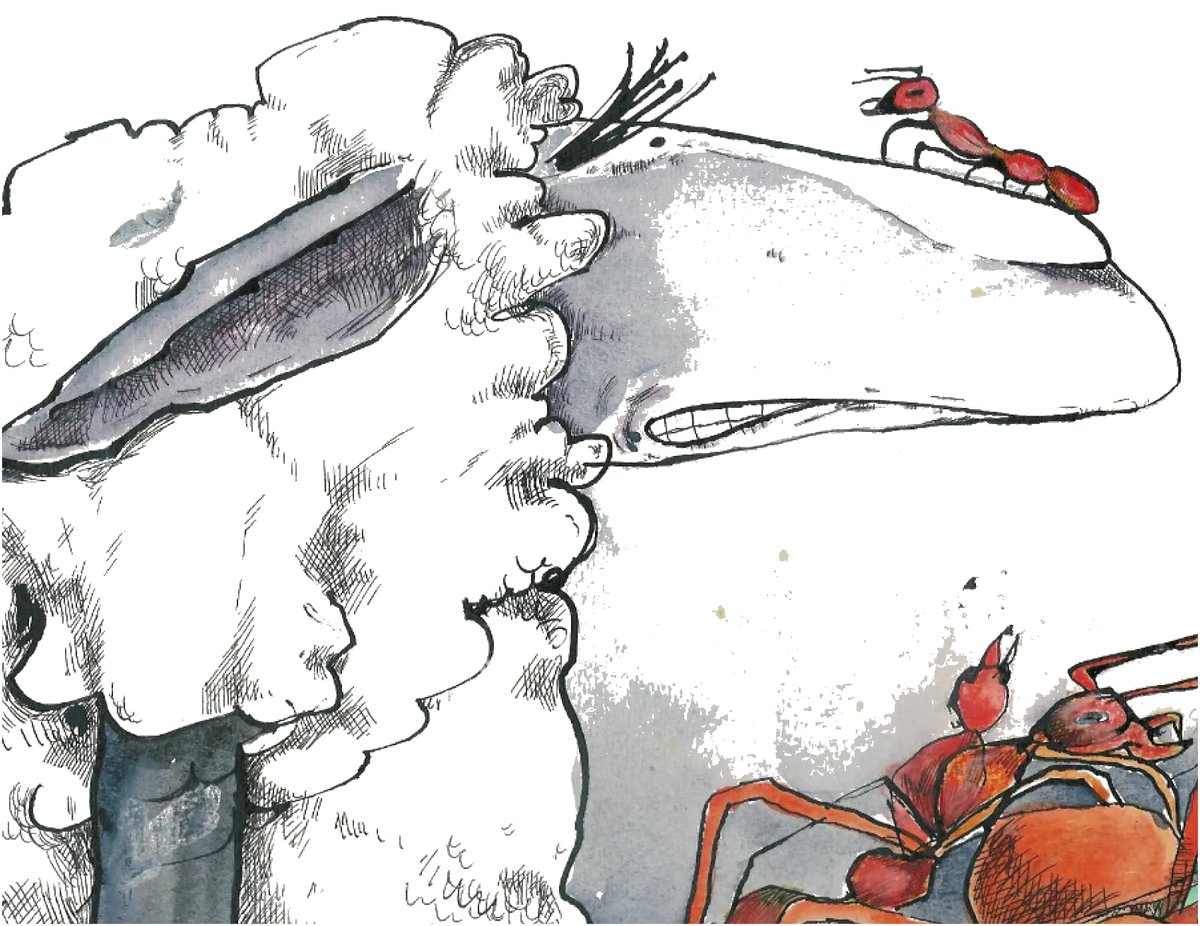
He was horrified to discover thousands of ants crawling all over him.
'Baaaahhhhh!'
Terrified, he screamed and shook himself.
'Concerned with your cleanliness?' questioned one of the ants sarcastically.
'Foolish creatures!' stated another. 'They worry too much about the little things.'
'Baaaahhhhh!' screamed the sheep, shaking and running round in circles.
'Get away from me! Get away!'
The ants surrounded him and laughed.
This was quite a sight.
It took some time for Heryshaf to calm down. All the while the ants laughed.
Eventually he regained his composure. He was surrounded by ants that were still laughing at him.
Embarrassed, he stuttered, 'Ermmm... Heeello.'
'Welcome,' boomed the ants in unison. 'We have been expecting you!'
'Really...?' questioned Heryshaf.
'Really,' answered the ants together. 'What brings you here?'
'I am searching for the meaning of life...'
'The meaning of life!' laughed all of the ants.
'I am searching for the meaning of life. What is it to you?' said Heryshaf angrily.
The ants looked at each other uncomfortably. It seemed to Heryshaf they had been thrown by his anger, as if they didn't know how to deal with it.
At that point one of the ants stepped forward.
'I am Krotex. System Three Five Eight, red back. I speak for all of Ant Kind when I say that we congratulate you on the passion you display for your quest. You see, we ants already have an answer for you and our Queen would be pleased to help you.'
'Really? That's fantastic,' said Heryshaf. 'Where is she?'
'Before we take you to her, it is very important that you understand something,' interrupted the ant.
'What is that?' asked Heryshaf.
'Allow me to lead you,' said the ant.
'Very well,' retorted Heryshaf, feeling apprehensive.
'Answer this!' boomed Krotex. 'What is the distance between anything less than infinity and infinity itself?'
'Ermm, well...'
'The answer is obviously infinity. Correct?'
'I suppose,' said Heryshaf suspiciously.
'Is it not obvious that everything you see, I mean everything -- from the number one to your sister or brother, from chocolate to all your accomplishments -- all of these and everything else is less than infinity?'
'Yes, I suppose it is.'
'Well?'
'Well what?'
'Don't you see? If everything, everything, is less than infinity that means everything, no matter what it is, is exactly the same distance away from infinity.'
'Yes, but what do you conclude from that?'
'Is it not obvious?' continued Krotex. 'It has often amazed us ants that such a simple and beautiful truth goes unnoticed by grander creatures than ourselves.'
'Where are you going with this?' asked Heryshaf.
'If everything is less than infinity, then everything, no matter what it is, is exactly the same distance away from Infinity.'
'You've already said that yet I still don't know what you mean.'
'It means that everything in the universe has something in common.'
Heryshaf waited.
'We are all -- everything is -- an infinite distance away from infinity. To express it another way: we are all, everything is, exactly the same distance away from something mind-bogglingly, indescribably, unknowably, amazingly, immeasurably BIG. God, if you want to call it that.'
'And because we are all always exactly the same distance away from it at all times, it follows that we are all, in some invisible way, connected to it. We are all part of that same thing.'
'Wow,' exclaimed Heryshaf. 'That's so simple. Why doesn't everyone see that?'
'There is the problem,' said Krotex. 'In fact, the Second Biggest Problem in the entire universe.'
'The second biggest?' questioned Heryshaf.
'Yes. The second biggest!'
'Oh?' said Heryshaf, still confused.
'You see,' continued Krotex, 'as I have said, everything in the entire universe is exactly the same distance away from infinity -- an infinite distance at all times. That means that no matter where an individual stands and no matter which direction they look in, they are always standing an infinite distance away from infinity.'
'That makes sense, but I don't see the Problem, let alone the Second Biggest Problem in the universe,' said Heryshaf.
'Slow down a second,' said Krotex, all the while contemplating what a strange expression that was.
'Although sharing something definite in common -- the fact that they are all the same distance away from infinity -- everyone sees themselves at the exact centre of their own universe because, through their eyes, they are always standing at the exact centre of infinity.
'This, of course, is also true.'
Heryshaf frowned.
'And there you have it,' said Krotex. 'The ultimate paradox. Everyone stands at the centre of the universe, yet everyone is part of the same enormous thing.'
'So which is true?' asked Heryshaf.
'Both.'
Heryshaf thought about this.
Krotex continued.
'The problem begins when a creature mistakes being at the centre of his universe for being at the centre of the universe. We call this EGO.'
'Amazing,' exclaimed Heryshaf.
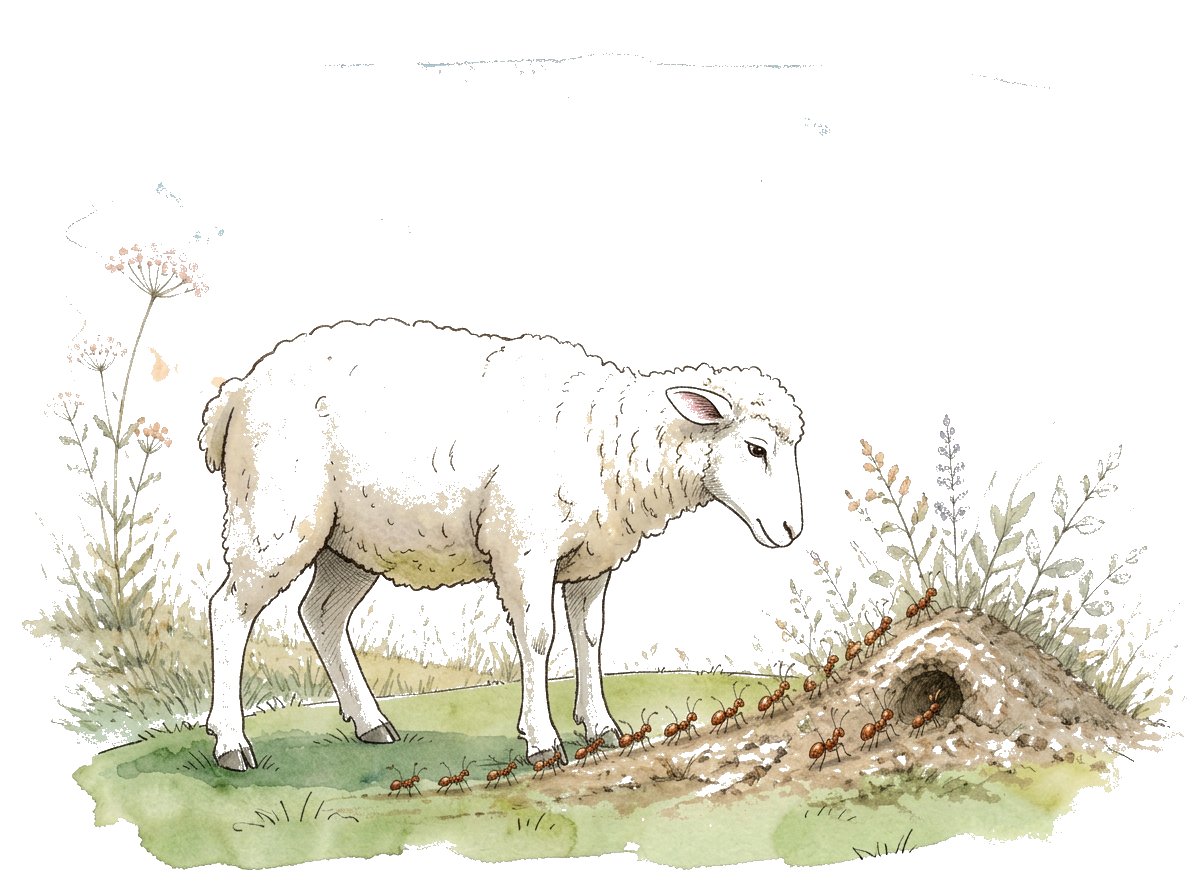
'Yes indeed,' said Krotex. 'We are ants. We therefore work together to achieve. We try to abolish individuality because it is not necessary and tends to divide us from the truth. Everyone is looked after, but everyone must perform their role.'
Heryshaf looked at the thousands of ants moving around him.
'Out of interest... what happens if they don't?'
'Unthinkable! It does not happen.'
'What if it did?' pushed Heryshaf.
'Well...' stammered Krotex.
He seemed genuinely puzzled by the possibility.
'We would kill him!'
Heryshaf stared at him.
'What?'
'Kill him.'
'How do you condone that? What about freedom of thought? Of speech?'
'All a waste of time,' stated Krotex.
'A waste of time? Why?'
'As we are all working towards the same goal, anything that stands in the way of the goal is bad. Individuality does little to benefit the power of the group, so it is deemed a nuisance and disposed of.'
'And,' said Heryshaf, 'I suppose there is a leader to this group? Someone must be in charge?'
'Yes. There has to be,' said Krotex. 'It is She. Our Natural Mother. The Queen.'
'Is she the only leader?'
'Yes.'
'And no other ant can become the leader?'
'No. They are not our mother. We know in our hearts that our mother wants the best for us. The same cannot be said of another.'
'And there are no power struggles?'
'No.'
'Sounds great in theory. Does it work in practice?'
'No. Not in any other group than in ants.'
'Why is that?'
'We know what we are doing,' said Krotex.
Heryshaf wasn't entirely convinced that they did.
'Let me take you to the Queen.'
Krotex led Heryshaf around the anthill to the roots of an old tree. There, hidden beneath the grass, was the entrance to an old burrow.
'You didn't think we dug all of this ourselves, did you?' said Krotex.
Heryshaf peered inside. The hole was just large enough for him to squeeze through.
He followed Krotex down into the cool darkness.
The burrow twisted between the roots of the tree, and everywhere along its walls were tiny openings. Ants streamed in and out of them in endless lines.
The deeper Heryshaf went, the more ants there were.
Soon he could hear them -- a low, continuous hum made by thousands of tiny bodies moving together.
At last the burrow opened into a chamber beneath the roots.
Here Heryshaf could go no farther. He crouched at the entrance while Krotex continued ahead.
The floor seemed to move.
Thousands of ants covered it, flowing around one another in perfect order.
At the centre of them, surrounded by a ring of red backs, sat the Queen.
She was enormous for an ant, though still tiny beside Heryshaf. Her pale body was almost transparent, and she hardly moved.
Yet somehow the whole colony seemed to move around her.
'So,' said the Queen.
Her voice was quiet and deep.
'You are the one who is searching.'
'I am,' said Heryshaf.
'Tell me what you have learned.'
Heryshaf told her about the river and the reflection that had looked back at him. He told her his father's four secrets. He told her about the eagle and the mountain. He told her of his meeting with Reggie the crab, of the water in the strange rock pool, and of the intense vision that had been shown to him.
The Queen listened.
When he had finished, she was silent for a while.
'You have travelled a long way,' she said. 'But there is something you have not yet understood.'
'What?'
'You think meaning is some magical thing you will find.'
'Isn't it?'
'Perhaps. But the thing most likely to stop you finding it is the one doing the searching.'
Heryshaf looked bemused.
'You,' said the Queen.
Heryshaf said nothing.
'As long as everything begins with you -- what you want, what you fear, what you think, what things mean to you -- you stand at the centre of everything you see.'
Heryshaf remembered what Krotex had shown him.
The centre he could never leave.
'You can travel to the end of the world,' said the Queen, 'and still find only yourself waiting there.'
The Queen stared at him through big, almond-shaped black eyes.
Heryshaf's mind became quiet.
He looked at the ants. They moved around the Queen without hesitation. None stopped. None argued. None seemed to wonder whether it wanted to be somewhere else.
Suddenly they reminded him of the flock he had left behind.
Every morning the sheep had risen together. They had eaten together, moved together and slept together. When one began to walk, the others followed.
No one asked where they were going.
No one wondered whether there might be somewhere else to go.
Once, that had felt like home.
Now, watching the ants, Heryshaf saw it differently.
'But they...' he began.
The Queen followed his gaze.
'My ants have no self. They don't search for meaning. They don't wonder who they are. They simply do what they were made to do.'
'Yes.'
'My flock was like that.'
'Perhaps that is why you had to leave them.'
Heryshaf looked at her.
He had always thought he had left because he wanted to find something. He had never considered that leaving itself might have been necessary.
'Then haven't they already found what I'm looking for?' he asked.
'No.'
'They have unity,' said the Queen. 'But they do not know it.'
'I don't understand.'
'My children were born this way. They never became separate from the whole, so they can never choose to return to it.'
Heryshaf watched a line of workers pass beneath him, each carrying a tiny piece of leaf.
He thought again of the sheep moving across the hillside behind one another.
'So they have no choice?'
'No.'
'Then what they have isn't meaning.'
The Queen was quiet.
'No,' she said. 'It is not.'
Heryshaf looked around the chamber again.
For the first time, its perfect order seemed different to him.
Not wrong.
But familiar.
He had come from a place like this.
'Then why would I ever want to become like them?'
'You should not.'
Heryshaf looked at her in surprise.
'You must first become yourself,' said the Queen. 'Only then can you choose to let yourself go.'
'Why?'
'Because you cannot give away something you never had.'
Heryshaf thought about this.
The Queen looked out across her thousands of children.
'There are two kinds of peace,' she said. 'There is the peace of those who never woke up, and there is the peace of those who woke up, knew themselves, and finally learned to set themselves down.'
Heryshaf looked at the ants.
'Which one do they have?'
'The first.'
'And my flock?'
The Queen looked at him for a moment.
'You already know.'
Heryshaf did.
'And which one will I have?'
'That,' said the Queen, 'is why you must keep walking.'
Heryshaf bowed his head.
Then he backed carefully out of the chamber and followed Krotex through the old burrow.
When he finally squeezed out from beneath the tree roots, the evening light seemed strangely bright.
He stood beside the anthill and watched the ants moving in their endless lines.
For a moment he could almost see his old flock instead, spreading across the hillside, each sheep following the one before it.
He felt a sudden ache for them.
There had been warmth in belonging.
Safety too.
He had never needed to ask who he was or where he was going.
But perhaps that was precisely why he had needed to leave.
The ants belonged completely.
So had he, once.
But they had never been lost.
Heryshaf had chosen to become lost.
And now he began to wonder whether getting lost was not a mistake on the way to finding meaning, but the beginning of it.
The Telling · II
Retelling
He stopped at dawn.
He stopped in the middle of a sentence, which the Jester later said was the cleverest thing he had ever seen a dying man do.
'Go on,' said the King.
'The sun is up,' said the prisoner. 'I was promised until morning. It is morning. Do what you like.'
There was a silence of the kind that costs money.
'You are bargaining,' said the King.
'No. If I were bargaining I would be frightened, and you would smell it, and you would enjoy it, and then you would kill me anyway, because that is what bargaining is for. I am tired, and I would like to sit down.'
'Give him a chair,' said the King, 'and bring him back tonight.'
The Guard did not move for a moment.
Then he brought a chair.
That night, and the night after, and the night after that, the story went on.
The sheep left his flock.
The sheep met an eagle and a mountain.
The Priest listened with his head slightly tilted, the way a man listens for a wrong note rather than for a tune.
'This Good Shepherd of theirs,' the Priest said on the fourth night. 'You understand that this is our Lord. You are telling our scripture with wool on it.'
'Am I?'
'You are, and I am not certain you have permission.'
'Then take it back,' said the prisoner pleasantly. 'I have no use for a thing I need permission to say.'
'Careful,' said the Priest.
'Why? You have a whole congregation who are careful. What would you want with one more?'
The Jester laughed once, like a dropped plate, and then looked at his shoes.
'And what is your interest in this?' the King asked the Priest afterwards, when the prisoner had been taken down. 'It is a story about livestock.'
'It is a story about a sheep leaving the flock, Majesty, and I have a flock.'
The Priest smoothed his sleeve.
'So, if I may say it, do you.'
The King did not answer.
But he thought about the word after they had gone, and he did not enjoy it.
For eleven nights he had been buying the end of a story with the life of the man telling it, and it had not once occurred to him that this was a strange way to do business.
What he had begun to notice -- and he would have denied it under oath -- was that he was no longer waiting for the story to finish.
He was waiting for the night.
2nd Interval
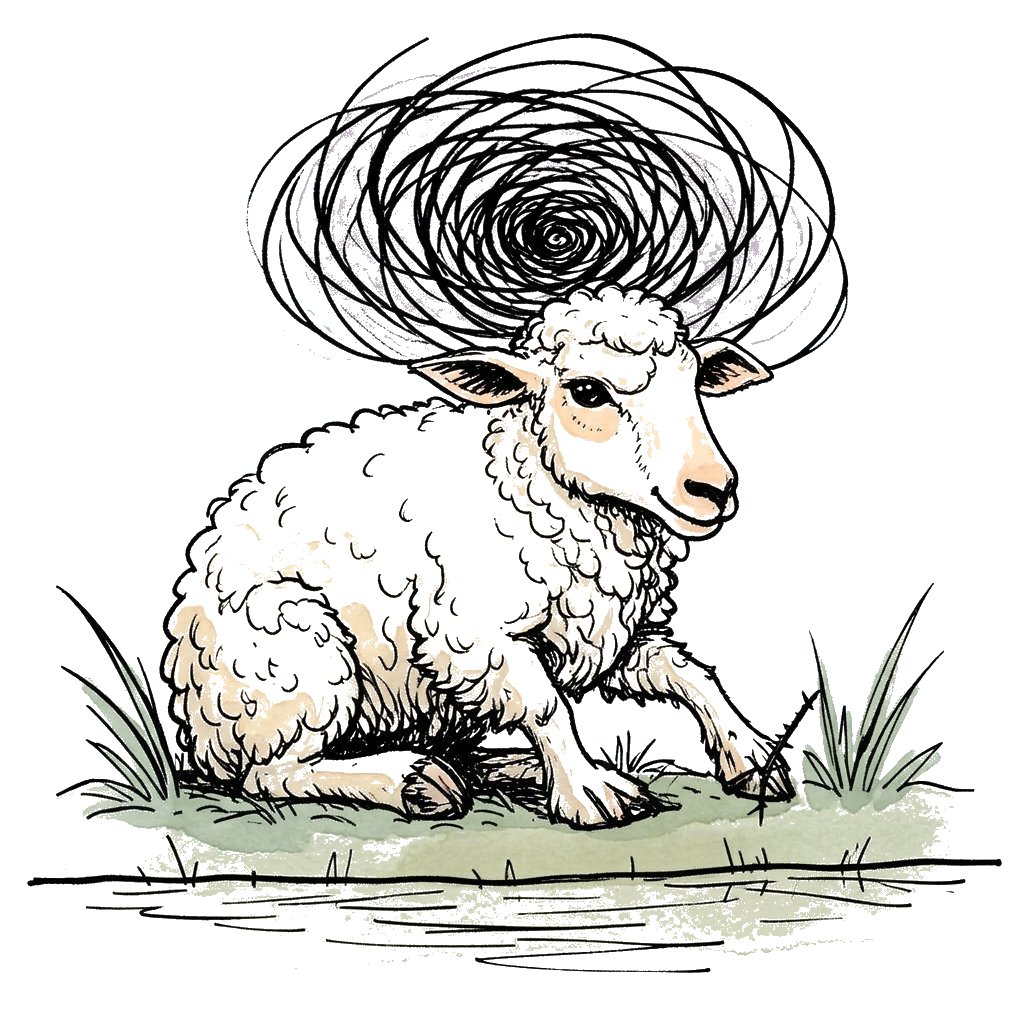
2nd Interval
Heryshaf left the mountain in the distance, following a twisting river down the hill.
Somewhere along the path, a thorn worked its way into the soft part of his hoof.
At first it was hardly worth stopping for. He felt a small prick each time his hoof touched the ground, but he had walked on sore feet before and decided it would probably work itself loose.
It didn't.
The farther he walked, the more he noticed it. Every few steps it caught him sharply and made him wince.
He began putting more weight on his other legs, which made walking awkward, and soon he was limping along the riverbank.
'Oh, come on,' he muttered after one particularly painful step.
He stopped and rubbed his hoof against the grass, hoping to knock the thorn free. For a few steps afterwards it seemed better.
Then it stabbed him again.
Heryshaf gritted his teeth and carried on.
The little pain became a constant nuisance. He tried walking on the soft grass, then on the mud beside the river, but nothing helped.
With every sharp prick he became a little more frustrated, and with every frustrated step the journey seemed a little less pleasant.
Eventually he could stand it no longer.
Heryshaf sat down heavily beside the river, lifted his hoof and tried to pull the thorn out with his teeth. He could see the end of it, but whenever he caught it, it slipped away again.
He tried once.
Then twice.
Then a third time.
'Ow!'
Heryshaf stamped his good hoof into the ground.
'STUPID THORN!'
A fly buzzed around him and Heryshaf, frustrated, swooshed it away.
He tried again.
This time he caught the thorn between his teeth and, with one sharp pull, dragged it free.
'There!'
He spat it into the grass and got back to his feet.
The thorn was gone.
But his bad mood wasn't.
The river now seemed too noisy. The evening was too cold. The birds in the trees would not stop calling to one another.
Even the stones seemed to be lying in exactly the wrong places.
Then, almost without noticing, Heryshaf began thinking about the flock.
They had been fools to cast him out. They had never listened properly, and if they had only let him explain, they would have seen that he had been right all along.
Soon he was re-running his time with the flock in his head, saying all the clever things he wished he had said at the time.
He remembered every insult and every unfair word.
He imagined what he would say if he ever saw them again.
In these new arguments, Heryshaf always won.
Strangely, each victory only made him angrier.
By evening he was arguing with sheep who were not even there.
'You never listened to a word I—'
He stopped.
One hoof was raised in the air and he was glaring furiously at a willow tree.
For a moment, Heryshaf simply stood there.
Then something curious happened.
It was as though a small part of him stepped backwards and looked at everything that was going on inside him.
And a question came to him that he was quite certain he had not made himself.
It arrived the way a voice arrives in a hall that is supposed to be empty.
But how do you know?
'Who is angry?' he asked.
It seemed a silly question.
I am angry, he thought.
But when he looked more carefully, he found the anger was almost doing everything by itself.
It was hot and noisy and terribly certain that it was right.
And suddenly Heryshaf realised something else.
The thorn had started the anger — but the thorn was gone.
The anger was still there.
In fact, it was bigger than before.
Somehow it had begun feeding itself.
One angry thought led to another, and that thought found something else to be angry about. It gathered every old complaint it could find, every unfair word, every argument Heryshaf had ever lost, and rolled them all together.
By now the anger had grown very large indeed.
It had become a thing of its own — a great ball of frustration and nastiness rolling around inside him.
It had its own voice, its own thoughts and its own reasons for being angry.
It knew who was to blame.
It knew what Heryshaf should say to them.
It even knew what they would say back.
And the strangest thing was that, until this moment, Heryshaf had believed that voice was him.
He stood very still.
'You are not me,' he said slowly.
The anger did not like that at all.
At once it wanted to be let out. It wanted Heryshaf to shout at the sky, stamp his hooves and tell somebody — anybody — exactly how badly he had been treated.
He could feel how wonderful it would be to say everything he was thinking.
But he did not.
He did not shout, and he did not pretend the anger wasn't there.
He did not push it away or tell himself that he ought to be a good and forgiving sheep.
He simply stood beside the river and felt it.
The anger burned inside him, and Heryshaf watched.
For one whole minute he gave it nothing.
Not a word, not another argument, not even a quiet grumble.
It was harder than any mountain.
And then, quite suddenly, the storm began to pass.
The heat went out of it. The angry voice became quieter.
All the things it had been so desperate to say suddenly did not seem quite so important.
And in its place came a strange steadiness.
Heryshaf felt quiet and clear, as though someone had opened a little window somewhere behind his ribs and let cool air inside.
The flock had still cast him out.
Nothing about the past had changed.
Nothing in the world around him had changed.
And yet, when he took a deep breath, even the air seemed somehow finer.
Heryshaf knew that feeling.
He had felt it once before, beside his uncle.
Heryshaf looked back at the tiny thorn lying in the grass.
It was strange.
Such a tiny thing had started it all. But somewhere along the way the thorn had become a river that was too noisy, an evening that was too cold, birds that were too irritating, a flock that was too foolish, and finally a whole world that seemed to be against him.
And none of those things had been the thorn.
Heryshaf smiled.
Then he curled himself into the grass and slept without dreaming.
Beside him, the river went on towards the sea, quiet and unhurried.
The Journey · VII
Sink or Swim
Sink or Swim
The sun was shining brightly in the sky and the breeze was just right.
As Heryshaf knelt to drink, a little fish popped out of the water and blinked at him.
'Hello,' said Heryshaf to the fish.
'Hi,' said the fish. 'How you doing?'
'Not very well,' answered Heryshaf.
'Why, pray tell, is that?'
'Well, you see, I have been despised by all Sheepdom and banished from my flock because I sought to find my own truth. I want to find the great secret to life.'
'As do we all,' retorted the fish. 'And they banished you for your curiosity?'
'Yes. All the sheep have this point of view they follow blindly without question, and I cannot accept it anymore. I need to find the truth for myself.'
'So you went against what the sheep told you?'
'Yes,' replied Heryshaf. 'Can you help me?'
'I'm not sure if I can help you.'
Heryshaf's head dropped.
'However, what I can do is offer you the benefit of what I have learnt in my own quest for knowledge. For I, Jonk the fish, have been searching for the great secret of life also.'
'Really? Really?' said Heryshaf excitedly. 'Have you found it yet?'
'No. I have not.'
'Oh.'
'But I can offer you this. The great secret of which you speak cannot be in the lakes of the highest mountains, nor at the bottom of the deepest sea. For I have braved fierce rapids and waves, and in all my years have not found that which you seek.'
'I've heard something rather similar,' said Heryshaf.
'From whom?'
'An eagle and a mountain.'
Jonk blinked.
'And what was it you gathered from them?'
'Well,' began Heryshaf, 'Aldwin the eagle is sixty-eight years old and has travelled far and wide and seen all that is in the air and all that walks on land. He told me that the great secret of life couldn't be found in any of the places he had seen. And that the greatest thing he learned was...'
Heryshaf breathed.
'Know yourself.'
'And?' prompted Jonk.
'And the great mountain said of its height that it was only when he stopped looking outside himself for answers that he began to rise above the valleys.'
'What is your name?' asked Jonk.
'My name is Heryshaf, son of Storig.'
'That's an unusual name.'
'Yes, it is. It means \u2018The Greatest\u2019,' said Heryshaf. 'And yours is Jonk. That's quite unusual too. Where did you get that name?'
'I was born Jonathan Kaddish, but my friends got rid of the \u2018athan\u2019 and \u2018addish\u2019. They renamed me Jonk.'
Heryshaf considered this.
'So, Jonk, it seems that the great secret cannot be found in the mountains, in the valleys, in the rivers, in the skies or in the seas. And it would seem we have to look inside ourselves.'
Jonk stared at him.
'It's amazing,' he said. 'I have spent my whole life searching for the meaning of life and have never found it. Now I meet a crazy sheep with a crazy name. He doesn't know the answer himself, yet tells me that I've been looking in the wrong places all my life.'
Heryshaf wasn't entirely sure whether this was a compliment.
'I've got to look inside,' Jonk continued. 'Of course, you are right. It couldn't be any simpler. I can't believe it!'
'Calm down, calm down,' said Heryshaf, worrying about the fish's sanity.
'But how do we do that?' he continued. 'Where do we begin? Is there anything else you've learnt in your life that could help me?'
The fish regained his stability.
'Yes, perhaps there is. The greatest truth that I have perceived in life is that there is a flow.'
'A flow?'
'The flow surrounds us in all directions. It is everywhere. And life becomes a lot harder when you try to swim against the river. The river is too big. Too powerful. You can't escape its current.'
Jonk disappeared beneath the surface.
A moment later he appeared several feet downstream.
'You see?'
'Yes.'
'The river goes where the river will, and you must try and find your truth as you pass through it.'
Jonk turned and began swimming furiously upstream.
For several seconds he went nowhere.
Then the current carried him backwards.
He surfaced beside Heryshaf again, breathing heavily.
'The more you hold, the more you resist, the harder life becomes.'
'I see.'
'At times, of course, you can, and should, resist the flow \u2014 pushing against it to swim in a different direction \u2014 but you should only do so rarely. The effort required to fight against the flow is exhausting and doesn't always end well.'
Jonk flicked his tail and fought his way towards a small rock.
'Sometimes there is danger. Sometimes you must change direction.'
He released the rock and immediately drifted downstream again.
'But you cannot fight the river for long before it reminds you who is boss.'
'This is very interesting,' said Heryshaf. 'It seems that I was fighting against the flow when I chose to walk in a different direction from the rest of the flock?'
'Yes,' said Jonk. 'That is true.'
'Then perhaps I shouldn't have?'
'I didn't say that.'
'But you just said\u2014'
'I said swimming against the river is difficult. I didn't say never to do it.'
Jonk swam in a little circle.
'It takes a lot of energy and courage to change course, and you can never know where your new course will end, or if it will offer any brighter path.'
Heryshaf thought about this.
'So remember this on your quest \u2014 just because you can change direction, it doesn't mean you should.'
'When should I?'
'When you must.'
'How do I know when I must?'
Jonk thought for rather longer than Heryshaf found reassuring.
'When the core of your inner being tells you to.'
Heryshaf waited.
'That's it?'
'That's it.'
'What if the core of my inner being is wrong?'
Jonk thought again.
'Then you'll know something else.'
Heryshaf considered this.
'When it comes to the flow,' Jonk continued, 'sometimes you can simply be still and you'll end up in exactly the same place that you would have, had you struggled.'
'Doing nothing?'
'Sometimes you don't need to do anything at all. Sometimes doing nothing at all is the right decision and leads you in the right direction \u2014 with the flow.'
Heryshaf looked at the river.
It seemed to be doing an enormous amount without appearing to make any effort at all.
'Doing what you did with your flock was a massive leap from one stream into another,' Jonk continued. 'I commend you for it. But it is important to only jump stream when you absolutely must. For all other reasons, and at all other times, it is useless to argue with the river, for it is bigger than you and will push you wherever it chooses.'
'I think I understand.'
'Good. Because I have a rule I apply in every situation.'
'Of course you do.'
'I call it Jonk's Rule of Information Extraction.'
'Please continue.'
'Always Nod, Smile and Agree.'
Heryshaf frowned.
'Whether you agree or not. Always Nod, Smile and Agree. You will find that everyone opens up to you when you don't confront them. Tell everyone what they want to hear and do what you want anyway! Always agree and do your thinking later.'
'That sounds dishonest.'
Jonk nodded, smiled and agreed.
'You're absolutely right.'
Heryshaf stared at him.
Jonk stared back.
Then Heryshaf laughed.
'Let the flow lead you,' said Jonk. 'Let the flow guide you \u2014 sense it \u2014 trust it, and go with it if it is possible to do so.'
'And if it isn't?'
Jonk smiled.
'Swim.'
With those words he ducked under the water in a flourish of ripples and a flap of his tail.
The Self · V
Sovereign
Sovereign
After a time, Heryshaf came across a small yard.
In the middle of it stood the most beautiful creature he had ever seen.
The bird’s enormous tail shimmered blue and green in the sunlight, covered with feathers that seemed to have eyes of their own.
Heryshaf stopped.
The bird noticed.
He had clearly been waiting for someone to.
“Hello,” said Heryshaf. “I’m Heryshaf.”
“And I’m Jonnie. Jonnie the peacock. How are you this fine day?”
“I’m great, thanks. You look unbelievable.”
“Thanks,” said Jonnie.
Heryshaf waited.
“I don’t think I’ve ever seen a creature like you.”
“Thanks again,” said Jonnie. “It is true I am the most attractive of all creatures, and it is also true that none can withstand my charms.”
Heryshaf blinked.
“All are impressed by my display of colour and grace. I’m very lucky. Look around this farm. Every creature here knows I am king.”
Heryshaf looked around.
A chicken was pecking at something in the dirt.
“The sheep shuffle past with their heads down,” Jonnie continued. “The dogs avert their eyes when I spread my tail. Even the old bull in the far field will not challenge me, because he has seen me stand tallest and brightest at the centre of everything.”
The old bull appeared to be asleep.
“I was born to rule this place,” said Jonnie. “My colours are my crown, my voice is my sceptre, and every hen in the yard is my subject. I need no army and no throne.”
He unfurled his tail.
“I simply unfurl, and the world falls quiet and remembers who is in charge.”
The chicken continued pecking.
“That is what it is to be truly magnificent — not merely admired, but obeyed.”
Heryshaf looked at the chicken.
Jonnie did not.
“And there is not a female on the planet I cannot seduce.”
“What? Come on. You must be kidding?”
“No, I’m not. I can seduce anyone I want.”
“Why do you believe that? There must be some females you cannot win over. Not all of them are looking for the same thing.”
“My dear sheep,” began Jonnie. “Yes, that is true.”
Heryshaf was surprised.
“But I can be whatever they want me to be. I simply ruffle the feathers that are most attractive to the girl I want at the time.”
“That’s impossible.”
“Nothing is impossible. I am simply better than anyone else at getting what I want.”
Jonnie turned slightly, and the colours of his feathers changed with the light.
“I can be anyone I want to be.”
He turned again.
“Anything they want me to be.”
Heryshaf looked at him.
“Which one is you?”
Jonnie stopped.
“What?”
“If you can be anyone you want to be, which one is actually you?”
“All of them.”
“All of them?”
“Of course.”
“Then why do you have to change?”
Jonnie’s tail rustled.
“I don’t change. I adapt.”
“What’s the difference?”
“Success.”
Heryshaf thought about that.
“Do you not feel bad about deceiving them?”
“I’m not really deceiving anyone. It’s the challenge of getting what I want that I enjoy. It makes me feel great. Knowing that I can get something others can’t.”
“And what happens after you get it?”
“I get something else.”
“And after that?”
“Something else.”
Heryshaf waited.
Jonnie frowned.
“Emotions seem to get in the way of my goal,” he said. “Compassion and achievement don’t seem to mix.”
“Perhaps you are deceiving yourself.”
“I don’t deceive myself.”
“How would you know?”
Jonnie’s feathers shifted.
“Eventually the act will wear off,” Heryshaf continued, “and others will see you as you really are.”
“You are wrong. Most of them are unaware.”
Jonnie smiled.
“I move on before they can do that.”
“You can keep on running away, but you can’t outrun yourself.”
“I’ll worry about that when I’ve got a conscience!”
“And it doesn’t matter who you hurt as you go?”
“It takes two to tango,” said Jonnie smugly.
Heryshaf turned his back on him and walked towards the other corner of the yard.
Jonnie followed.
“If you have to be manipulative to find a partner,” said Heryshaf, “you start on the wrong premise. Once you get to know each other, you might not be what she expects. Or she might not be what you expect.”
“I don’t believe there is such a thing as the perfect partner,” said Jonnie. “How many unhappy relationships do you know of, Heryshaf?”
“Plenty.”
“There you are.”
“But then again, there are a few good ones.”
“If there is such a thing as the perfect partner, how do you know who it is?”
Heryshaf hesitated.
“I suppose it’s someone you can be yourself with.”
Jonnie looked at him.
“What do you mean, ‘be yourself with’?”
This time there was no boast in the question.
Heryshaf opened his mouth.
Then closed it.
He had spent a great deal of his journey being told to know himself.
It occurred to him that this did make the question rather difficult.
“I don’t know,” he admitted.
Jonnie stared at him.
“But I think,” Heryshaf continued, “that if you have to become somebody else for them to want you, then whoever they want isn’t you.”
Jonnie looked down at his feathers.
For the first time since Heryshaf had met him, he seemed to have forgotten how magnificent they were.
Heryshaf turned to leave.
“Wait,” said Jonnie.
Heryshaf stopped.
“If you were me,” Jonnie asked, “what would you change?”
Heryshaf looked back at him.
“I wouldn’t know where to begin.”
Jonnie’s beak opened.
Heryshaf smiled.
“Neither do I.”
And he walked out of the yard.
For a little while Jonnie remained exactly where he was.
Then a hen walked past.
Jonnie saw her.
His tail opened.
The Telling · III
Mirror
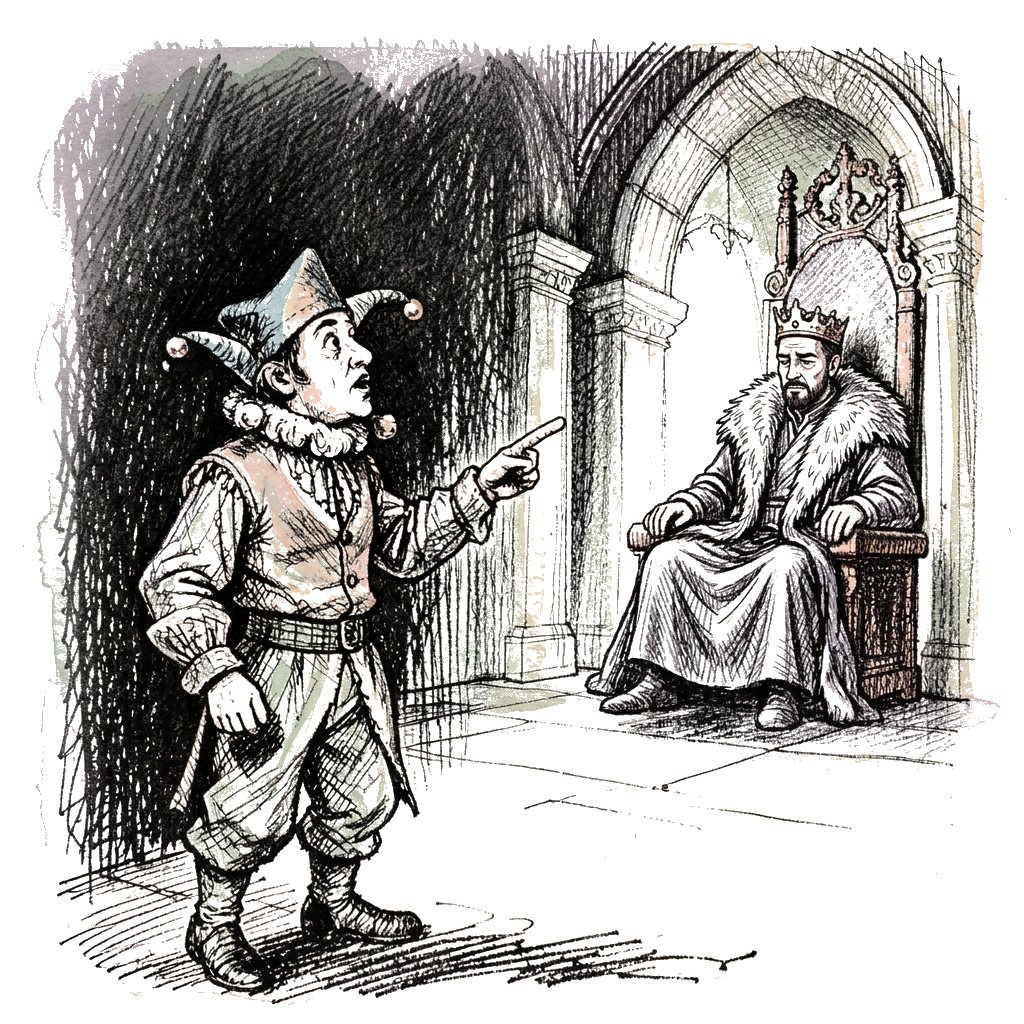
Mirror
“But how do you know?” said the Jester.
It was the first thing he had said from the floor rather than from the side of his mouth, and the hall turned to look at him.
“Know what?” said the prisoner.
“What he was thinking. Your sheep. You said, he wondered if he had spent his whole life seeing himself as he would like to be seen. Nobody knows that about anybody. I do not know that about me.”
The Jester spread his hands.
“So either you are making it up, which is fine, I make things up for a living and they pay me in soup — or you have put something of yourself inside the sheep, which for a storyteller is either honesty or a trick.”
The prisoner was quiet for a long moment.
It was not the silence of a man caught out.
It was the silence of a man who has been walking for a great distance and has just been asked, kindly, where he is going.
“That,” he said at last, “is a better question than any I was asked in nine years on the road.”
“I get a lot of practice,” said the Jester. “Nobody listens to me either.”
“I do not know what he was thinking,” said the prisoner slowly. “I know what it is like to think it. Those are not the same, and I have been saying them as if they were.”
He looked at his hands.
“A story may happen to another creature, yet find the same thing happening inside you. I have carried this one for a long time without asking what it was making of me.”
“And what have you made?” said the King.
“I am finding out,” said the prisoner, “by telling you. That is why I did not want the chair.”
The Priest made a small dismissive noise.
“He is confessing that he is inventing it.”
“No,” said the Jester, unexpectedly. “He is confessing that he is only now understanding it.”
He turned the sharpened stick over in his fingers.
“That is the opposite.”
The King looked from one to the other and found, to his considerable annoyance, that he wanted to know which of them was right.
So he did a thing he had not done since he was nine years old.
He asked.
“Which is it?” he said.
And the Guard, standing at the door where he always stood, noticed that the King had asked a question without already having the answer — and filed it away, as a soldier files away a crack in a wall.
5th Interval
They took the prisoner back down to his cell before the fires were banked.
The Guard walked beside him without saying through here. By now, the prisoner knew that his silence could mean something too.
He sat with his back against the stone and found that he could not go on with the story.
Not because he was tired.
Because the Jester's question had got underneath it.
How do you know what he was thinking?
He had been telling it for nights on end the way a man walks a road he knows in the dark, and now he had been asked to look at the road.
So he went back to the beginning instead.
Not to tell it.
To stand in it.
A hillside.
Two hundred sheep with their heads down.
Grass, and the sound of grass being eaten, and above it all a sky doing nothing in particular.
A young sheep lifting his head and asking why they were there, and the flock going on eating.
He had not thought of it in years without thinking of what came after.
Tonight he let it be only itself: the grass, the sky, the question with nothing yet attached to it.
Something in his chest loosened that he had not known was held.
Above him, in a room with a fire in it, the King lay awake and asked a servant what the eastern road looked like, and the servant, terrified, said that it was a road, Majesty, and had grass beside it.
The Self · VI
Lacuna
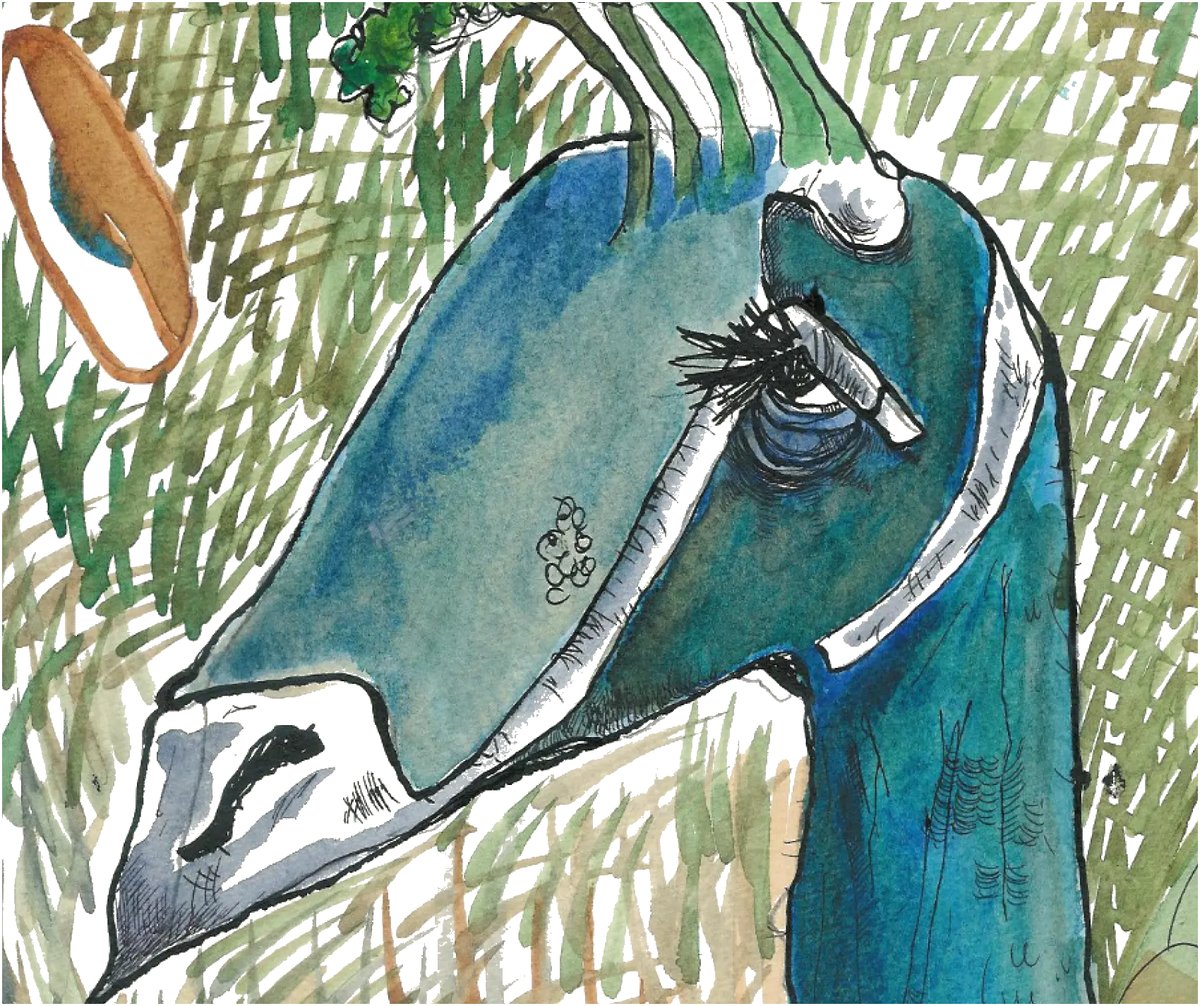
Lacuna
Heryshaf walked out of the yard and saw another large bird.
He looked just like Jonnie, except he was not quite as colourful and, Heryshaf thought, not quite as attractive.
The second peacock looked at him and winked.
“Hi.”
“Hi,” said the peacock. “Jeff's the name!”
“I'm Heryshaf.”
Heryshaf glanced back towards Jonnie.
“Your friend is very arrogant.”
“Yes indeed,” said Jeff. “I used to think like that.”
“What changed?”
“I met a jellyfish.”
Heryshaf looked at him.
“You met a jellyfish?”
“Yes.”
“What did he say?”
“Not much. Just that when he looked inside himself, he didn't see anything.”
Jeff considered this.
“He was quite depressed about it, actually.”
Heryshaf laughed.
“But he made me think about myself in a different way,” Jeff continued. “I sat down and had a long and serious word with myself. I questioned all the great things I thought about myself and all the things I had achieved.”
“And?”
“I realised none of them amounted to me.”
Heryshaf stopped smiling.
“I realised I was walking around in a daze. In truth, it seemed that everyone I knew was in a kind of sleep.”
“Sleep?”
“Yes indeed. Everyone is born and carries out their entire lives in this sleep. Gets married, has children and dies in the sleep.”
Heryshaf thought of his flock.
Heads down.
Eating.
Following.
“And being asleep,” Jeff continued, “they can never really do anything, for the thing does itself — with the creature's help.”
Heryshaf looked at him.
He had heard something like that before.
He had also begun to see it.
The thorn had gone, but the anger had continued without it. He had watched thoughts arrive already carrying their own reasons. He had caught himself believing himself simply because the thought had appeared inside his own head.
“What does that have to do with the jellyfish?”
“Everything.”
Jeff sat down.
“Everyone you meet is really a big bag into which many experiences have been thrown. Books. Conversations. Memories. Achievements. Things other creatures have told them. Things that have happened to them. Things they have copied without knowing they were copying.”
“That doesn't sound very flattering.”
“It wasn't meant to.”
Jeff looked at his tail.
“The trouble is, the bag calls itself me.”
“And what's wrong with that?”
“I looked inside mine.”
“What did you find?”
“A big bag of contradictions and false personalities, each one thinking he was better than the rest.”
Jeff was quiet.
“All is a result of what has come before. Something happens, and something in us reacts. Then something else happens, and something else reacts. We call the whole procession me.”
Heryshaf frowned.
“And if we never see it?”
Jeff looked at him.
“Then, with him it is done.”
Heryshaf didn't entirely understand the phrase.
He didn't entirely like it either.
“When I looked inside,” Jeff continued, “I could not find any consistency inside myself.”
He paused.
“I found I was empty.”
For a moment neither of them spoke.
Jeff turned his magnificent tail towards Heryshaf.
“Do you see the eyes on my tail?”
“Yes.”
“I realised that they were an analogy for my different personalities. The different eyes with which I perceived the world.”
“What do you mean?”
“Have you ever woken up one day and felt happy, and the very next day got out of bed and felt terrible?”
“Yes, I suppose.”
“Do you speak to your friends in one way, your mother in another, and someone you are frightened of in another?”
Heryshaf thought about it.
“Yes.”
“And you've never found that odd?”
“Not until you mentioned it.”
Jeff smiled.
“Yesterday's Heryshaf promises to do something. Today's Heryshaf doesn't feel like doing it. Tomorrow's Heryshaf wonders why he ever promised.”
Heryshaf frowned.
“Which one is Heryshaf?”
“All of them.”
“That's what Jonnie said.”
“Did he?”
“Yes.”
“Then perhaps even Jonnie is right occasionally.”
Heryshaf looked back towards the yard.
Jonnie's tail was visible above the fence.
It had opened again.
“The problem,” said Jeff, “isn't that you behave differently in different situations. Sometimes you should. The problem is that each time you change, you believe completely in the Heryshaf you happen to be at that moment.”
“Who are you?” Jeff asked suddenly.
“I'm Heryshaf the sheep, son of Storig.”
“No. Who are you?”
“I just told you.”
“What do you stand for? Give me something that you believe in.”
Heryshaf thought for a moment.
“I believe in me.”
“Good. And tomorrow?”
“What?”
“Tomorrow you might say honesty. Another day courage. A year ago perhaps you would have said God, or family.”
Jeff tilted his head.
“Which answer is yours?”
“They all are.”
“Again.”
Heryshaf was becoming irritated.
Jeff noticed.
“There's another one.”
“Another what?”
“Eye.”
Heryshaf almost told him not to be ridiculous.
Then he caught himself wanting to.
The irritation was real.
So was the sheep who, only moments earlier, had been curious.
Both had called themselves Heryshaf.
The irritation faded a little.
Jeff smiled.
“Now you're getting it.”
“But if I'm not always in control of myself,” said Heryshaf, “who is?”
“One of your many sets of eyes.”
Jeff opened his tail.
“One moment, one set is looking. A moment later another takes its place. Each set is selfish and wants complete control while it is there.”
“And I don't notice?”
“Usually not. Because every one of them uses the same name.”
“Heryshaf.”
“Exactly.”
Heryshaf stared at the great coloured eyes.
“Why do they change?”
“Everything changes them. Who you are with. Where you are. What has just happened. Whether you're hungry. Whether someone has praised you. Whether someone has insulted you.”
Heryshaf remembered Ordok.
Then his mother.
Then the thorn.
Then Jonnie.
He had not been the same sheep with any of them.
Yet at every moment he had felt completely certain that he was.
“How do you know all this?”
“God gave me this beautiful tail covered with pictures of all my different eyes so I could see them clearly.”
“Convenient.”
“Extremely.”
Jeff turned his tail towards the sun.
“At first I tried to decide which eye was the real one.”
“And?”
“Every eye said it was.”
Heryshaf laughed.
“So I stopped asking them.”
“Then how do you know which one is you?”
“I don't.”
That answer surprised him.
Jeff looked back at his tail.
“But I can sometimes see them.”
Heryshaf waited.
“When I notice one of them taking over, something strange happens. For a moment I am not completely inside it anymore. I remember myself.”
Heryshaf felt suddenly alert.
He remembered standing beside the river, watching his anger.
“As though you're watching yourself?”
“Yes.”
His uncle's voice returned to him.
Observe yourself.
“And what is doing the watching?” Heryshaf asked.
Jeff smiled.
“That is a much better question.”
“And what's the answer?”
“I don't know.”
Heryshaf stared at him.
“You've been doing this for years and you don't know?”
“I don't know what it is,” said Jeff. “But I know that it has changed.”
“How?”
“When I first began, I could barely find it. I would remember myself for a moment and then lose it again. One of the other eyes would take over and I would forget that I had ever been watching.”
Jeff folded his tail.
“But the more I observed myself, the easier it became to return to that place. And the more I returned to it, the stronger it became.”
“Stronger?”
“More constant.”
Jeff thought for a moment.
“More real.”
Heryshaf said nothing.
“I began to find a constant place,” Jeff continued. “An inner observer growing in strength. It could see the other eyes without becoming any one of them. And the clearer I saw them, the less power they seemed to have.”
“So you're making another eye?”
“Perhaps.”
“A better one?”
Jeff smiled.
“I used to think so. Now I think it may be something finer than an eye.”
“Finer?”
“An eye looks out at the world. This seems able to look both ways.”
“Both ways?”
“Out at what is happening, and in at the creature it is happening to.”
Heryshaf considered this.
“And if it keeps getting stronger?”
Jeff was quiet for a moment.
“I don't know.”
“What do you think?”
Jeff looked at the fading eyes upon his tail.
“I think one day it may need less of me than I need of it.”
Heryshaf stood very still.
Then he thought of his father's words.
“Life is only as real as I am.”
Jeff nodded.
“Your father was a very wise ram.”
“And has it changed you?”
Jeff looked back at his tail.
“The clearer I see the false eyes, the less power they seem to have. If you had met me six years ago there were many more eyes on my tail.”
Heryshaf looked carefully.
“What happened to them?”
“They disappeared.”
“Really?”
“It seems that as I conquer my internal eyes I become less attractive to onlookers.”
Jeff sighed.
“Kind of boring.”
Heryshaf laughed.
“As I grow older, perhaps there will be no beautiful eyes left on my tail and I will look like all the other birds.”
“That bothers you?”
“Of course.”
Jeff paused.
“I'm working on that one.”
For a while neither spoke.
Then Jeff said, “If you permit me, let me leave you with something.”
Heryshaf nodded.
“Always try to catch yourself out in the act.”
“In the act of what?”
“Anything.”
Jeff shrugged.
“If you have an impulse to speak up, notice it before the words come out. If you have a drive to jump up and fix everyone's problems all the time, consider why. If you get irritated with others, see whether you can catch the irritation before it becomes everything.”
He looked directly at Heryshaf.
“Notice how your mind is not always here, in the present. Notice that it takes you away on flights of fancy whenever you are bored or angry.”
“What do I do when I catch it?”
“Don't immediately try to change it.”
“Then what should I do?”
“See it.”
“That's all?”
“Try it first.”
Heryshaf nodded.
He turned to leave, then stopped.
“Jeff?”
“Yes?”
“If all those eyes aren't you, and you don't know what the thing watching them is...”
“Yes?”
“Then what are you?”
Jeff looked at his tail.
Then at Heryshaf.
“I'll tell you when I find out.”
Heryshaf smiled and walked away.
Behind him, Jeff caught sight of his reflection in a water trough and immediately adjusted one of his feathers.
He noticed himself doing it.
For a moment he looked annoyed.
Then he laughed.
The Telling · IV
False Shepherds
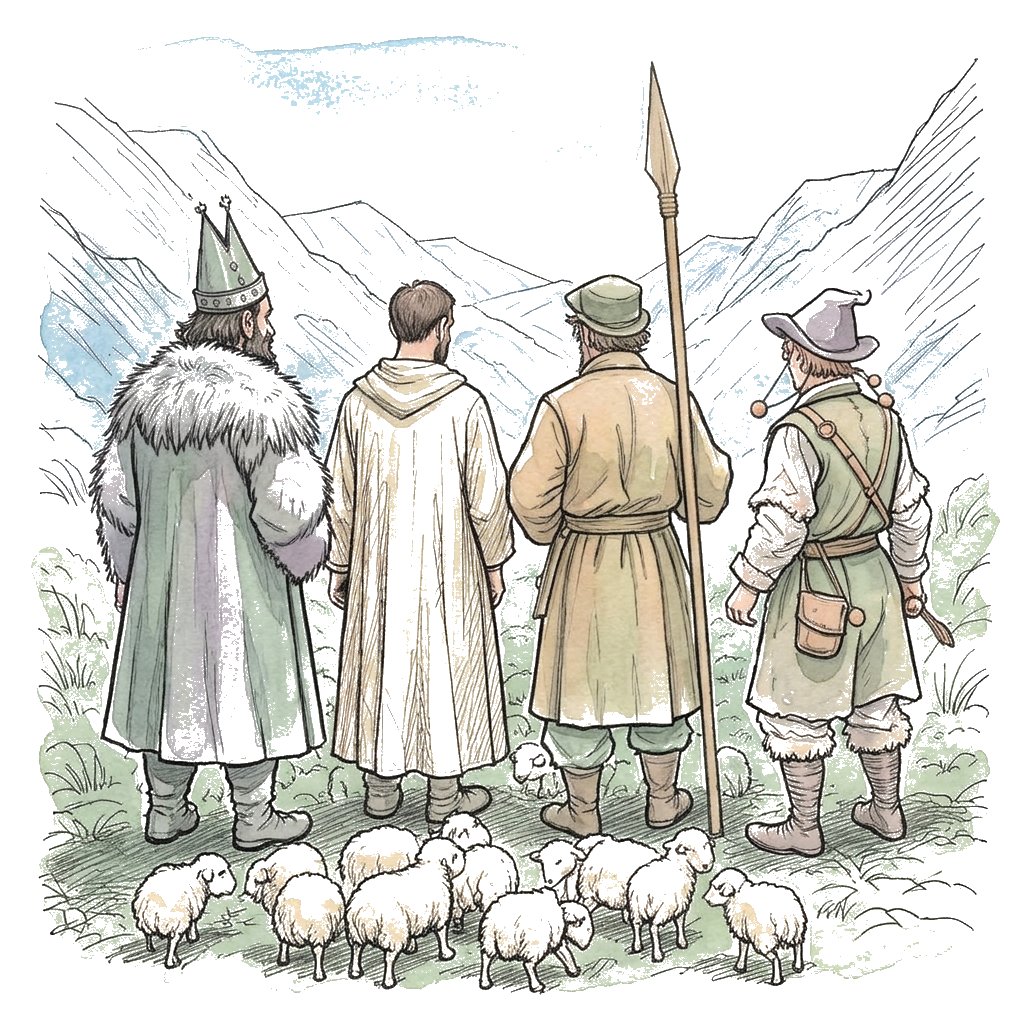
False Shepherds
By the thirtieth night, nobody in the hall pretended they were not there for the story.
The King had the fires built up early. The Jester no longer performed. The Priest came and did not want to, and came anyway, and sat further back each time.
“He is unmaking them,” the Priest said. “Your people hear that a sheep may walk out of the fold and find God in a fish. What do you imagine happens to a flock that hears that?”
“You have said the word flock four times this month,” said the King.
“It is my word.”
“It was my word first,” said the King. “I have thirty thousand of them and I have never once stood among them.”
“Then stand among them,” said the Jester from the floor, “and see how quickly you are trodden on. It is very educational. I am trodden on nightly.”
“You are permitted to be funny,” said the Priest coldly, “not correct.”
“I know,” said the Jester. “It is the only licence I hold and I am always losing it.”
It was the Guard who surprised them.
He had not spoken in the hall in nine years except to say up and through here and Majesty. Now he said, without turning from the door:
“I have eight hundred men.”
Everybody waited.
“They do what I tell them,” the Guard said. “They do not ask why. If I told them tonight to burn the eastern road they would burn the eastern road and sleep well.”
He shifted his weight.
“I used to think that was discipline.”
“And now?” said the King.
The Guard did not answer.
For a moment he was a man considering a question.
Then he straightened his back and became a Guard again.
The prisoner, who had said nothing through all of this, said:
“You have all just told me the same thing in four voices.”
“We have not,” said the Priest.
“A congregation. An army. An audience. A kingdom.”
The prisoner looked around the hall without hurry.
“Four flocks, and four men who are certain they are not in one.”
The fire cracked.
“I left mine,” he said. “I thought that was the answer. It took me nine years and most of my life to learn that walking out of a field is not the same as waking up, and that a shepherd asleep is only a sheep with a stick.”
Nobody in that hall slept well, and for once it was not fear.
The Journey · VIII
Dorik
Dorik
Heryshaf followed the river for many miles until the land began to flatten and the river widened before him.
Then, quite suddenly, there was nowhere left for it to go.
The sea stretched to the horizon.
Heryshaf stopped.
'Wow.'
The water shimmered blue and green beneath the sun. Waves folded themselves onto the shore and withdrew again, leaving long shining lines upon the sand.
Then he heard something squealing.
'Help me... Please help me!'
Heryshaf made his way across the sand towards the sound. There, struggling above the reach of the waves, was the strangest creature he had ever seen.
It was almost completely transparent.
'Please!' cried the creature.
Heryshaf came closer.
'I'll help you. But first tell me who and what you are.'
'Dorik. Dorik the jellyfish. Now please, will you help me back into the water?'
'How did you get stuck here?'
Dorik groaned.
'Very well, sheep. What do you know about jellyfish?'
'My name is Heryshaf the sheep, and I know nothing about jellyfish. I've never seen anything like you.'
'Well, Heryshaf the sheep, I've never heard of a sheep with a name such as yours either. It is truly very strange.'
Heryshaf smiled, nodded and agreed.
Dorik relaxed.
'Aldwin the eagle told me that every creature has its own gift from the Creator,' said Heryshaf. 'What is yours?'
Dorik gave a miserable little laugh.
'If only Aldwin the eagle were right. For most creatures, perhaps. Not for me. A curse was put upon me and my kind. I can never get close to another being. I cannot touch another creature, because I am poisonous. I may maim or kill them by mere touch.'
Heryshaf took a step backwards.
'And you asked me to pick you up?'
'There is one place you can touch me safely.'
'Where?'
'The very top of my head.'
Heryshaf stared at him.
'And how am I supposed to know you're telling the truth?'
Dorik blinked.
'I suppose you just have to trust me.'
'But I don't even know you.'
'You trusted Aldwin the eagle. How long had you known him?'
'Not long,' Heryshaf admitted.
'Then why not trust me? Look at me. I'm dying. I'm in pain. You're my only hope.'
Heryshaf looked at the sea.
A wave came almost close enough to reach Dorik, then slipped back.
'I have thought about trust,' he said. 'I find it easier to trust those who seek nothing from me. Aldwin shared his experience with me. So did Jonk. Neither asked anything of me.'
'I am asking you not to let me die.'
'Yes.'
Dorik stared at him.
'You really are a very suspicious sheep.'
'I've had a complicated few weeks.'
Another wave broke and withdrew.
'Tell me something,' said Heryshaf. 'I've travelled a long way looking for the meaning of life. If you've learned something on your travels that might help me, tell me. Then I'll risk helping you.'
Dorik looked offended.
'You're bargaining with a dying jellyfish?'
Heryshaf considered this.
'Yes.'
'At least you're honest.'
'But how do I know,' said Dorik, 'that if I reveal my truth, you won't simply leave me here to die and take it for your own?'
Heryshaf opened his mouth.
Then closed it.
Dorik smiled weakly.
'You see?'
'You are one hundred percent correct,' said Heryshaf, remembering Jonk.
Dorik looked pleased.
Heryshaf nodded.
'I promise I'll put you back in the sea.'
'You promise?'
'Yes.'
Dorik studied him for a moment.
'Very well. But we must hurry.'
Heryshaf sat down beside him.
'I'm listening.'
'Much like Jonk the fish, I too have travelled the oceans of the world searching for an answer. But unlike Jonk, I can go deeper.'
'How deep?'
'Very deep. So deep that the pressure would kill almost any other living creature.'
Dorik looked towards the sea.
'I went down into darkness where there was no sunlight at all. And whenever I thought I had reached the deepest place, I discovered there was somewhere deeper still.'
'What did you find?'
'Mostly darkness.'
'That doesn't sound very useful.'
'It wasn't.'
Dorik shifted painfully in the sand.
'But I learned something from going down.'
'What?'
'That depth is not the same as truth.'
Heryshaf listened.
'On my journeys into the abyss I passed the carcasses of creatures who had gone down searching for the answer and never came back.'
'That fits with everything I've learned,' said Heryshaf.
'Does it?'
'The mountain couldn't give me the answer. Aldwin couldn't find it in the heavens. Jonk couldn't find it in the rivers or the sea. They all led me to the same conclusion.'
Dorik watched him.
'Which is?'
'That the truth cannot be found out there.'
Heryshaf looked towards the sea.
'You have to look inside yourself.'
Dorik laughed.
Heryshaf frowned.
'What?'
'That was my conclusion too.'
'Then what's funny?'
Dorik's expression changed.
'Because the truth cannot be found within yourself either.'
Heryshaf stared at him.
'What?'
For the first time since meeting him, Heryshaf forgot about the sea, the bargain and even the dying jellyfish in front of him.
'Everything I've learned has brought me to that.'
'I know,' said Dorik.
'The mountain. Aldwin. Jonk—'
'I know.'
'Then how can it be wrong?'
Dorik looked down through his own transparent body.
'Because I looked.'
Heryshaf said nothing.
'And when I looked inside myself,' said Dorik, 'I saw straight through.'
Heryshaf could see the grains of sand beneath him.
'I am transparent, after all.'
'Dorik.'
'I'm serious.'
The jellyfish's voice became quieter.
'I looked for the thing I called me. Do you know what I found?'
'What?'
'Memories. Things that had happened to me. Things other creatures had said. Things I wanted. Things I feared. Reflections upon reflections.'
Dorik looked at him.
'When you take the time to look inside, you may be horrified to discover there is nothing there but reflections of your past.'
Heryshaf felt something in him go still.
'Then what am I?'
Dorik gave a faint shrug.
'Now that is a better question.'
Heryshaf was quiet for a while.
'Thank you, Dorik.'
'You're welcome.'
Dorik waited.
'And now,' he croaked, 'your part of the bargain?'
Heryshaf stood.
'Sorry, Dorik. I must get going. I've got an answer to find.'
Dorik's eyes widened.
'But you promised!'
Heryshaf took two steps away.
'Only joking.'
'You horrible sheep!'
Heryshaf laughed.
He approached Dorik carefully and placed his hoof against the very top of the jellyfish's head.
Nothing happened.
'You see?' said Dorik.
'I'm reserving judgement.'
With considerable difficulty, Heryshaf pushed and rolled Dorik across the wet sand until the next wave caught him.
The water lifted the jellyfish gently.
Dorik floated away.
'I won't forget you, Heryshaf!' he called.
'I hope not!'
Heryshaf watched him drift farther from the shore.
Dorik sank slowly beneath the surface.
His transparent body became harder and harder to distinguish from the water around him until Heryshaf could no longer see him at all.
There was nothing left upon the surface but Heryshaf's own reflection.
4th Interval
Heryshaf walked on, and the jellyfish's words needled him. Many had gone down into the deep and not come back, the creature had said. But I am not like them, he thought at once, and then thought it again, and then again, and it took him a good while to notice that he was.
For he was pleased with himself. He had out-bargained the jellyfish, and stood his ground, and now his mind was replaying the meeting for him -- improving it slightly with each telling, adding a sharper question, adding an audience that gasped at his discernment.
This is the sweetest of the sleeps, and the hardest to wake from, because nothing in it hurts.
Heryshaf stopped walking. He watched the little story assemble itself once more, admired it honestly, and then declined to finish it. He let the applause go unheard. He did not tell it to himself again.
And as he declined it, there came to him, for no reason he could name, the cold shoulder of Ordok. He stood on it again in memory --- the day he had climbed that mountain to ask the meaning of life and it had given back only its enormous silence, which had answered nothing and had been the truest answer he was ever given. The cold climbed up through his hooves and the little audience in his head --- the gasping crowd, the sharper question --- went quiet at last, as though a great stone had been laid over them. Then it passed, and he was only standing on a road again.
There was a small pang, like a hunger refused. Then it passed.
'Vanity feeds on being watched,' he thought, 'even when the only one watching is me.'
And the air, once more, was finer.
The Telling · V
Sojourner
'You were a shepherd,' said the King.
It was not a question, and it had taken him forty nights to arrive at it.
'I was,' said the prisoner.
'Where?'
'North. A long valley with a river in it that is black at night and brown in the day, though everybody there will tell you it is silver, because that is what their grandmothers told them.' He almost smiled. 'Two hundred head. I knew all of them. I could tell you which one limped and which one bullied and which one would stand in the rain when there was a perfectly good tree.'
'And you left them.'
'I left them.'
'Why?'
'Because one of them looked at me,' said the prisoner, 'and I understood that I had no idea what it was like to be looked at from inside a sheep. And once you have wondered that, you cannot go back to counting them.'
The Priest stirred. 'So the sheep in the story is you.'
'No,' said the prisoner. 'Heryshaf is himself. But I recognised his question, and perhaps you have too. That is the only reason to tell it.'
'That is an evasion.'
'Yes,' agreed the prisoner. 'It is also true. Both things happen.'
The King was looking at him with an expression the court had never seen on him and could not name, because it had no precedent there. It was the expression of a man doing arithmetic he does not want the answer to.
'You have been telling me,' the King said slowly, 'for forty nights, the story of a sheep whose search has somehow become your own, to a man who could end your life at any moment. Why?'
'Because it is not mine any more.' The prisoner said this quite lightly. 'That is what I came to say and I have been forty nights getting to it. A thing you have learned is not yours. It is only lodging with you. And the rent falls due.'
'And what,' said the King, 'is all of it worth? All of it. Nine years, two hundred sheep, an eagle, a mountain, a queen under the ground. What is all you have learned, worth?'
The Jester stopped breathing.
'I do not know yet,' said the prisoner. 'Ask me at the block. That is the only place the question has an honest answer.'
'Blasphemy,' said the Priest, but quietly, and to nobody, and he did not look up when he said it.
The Self · VII
Silver Trail
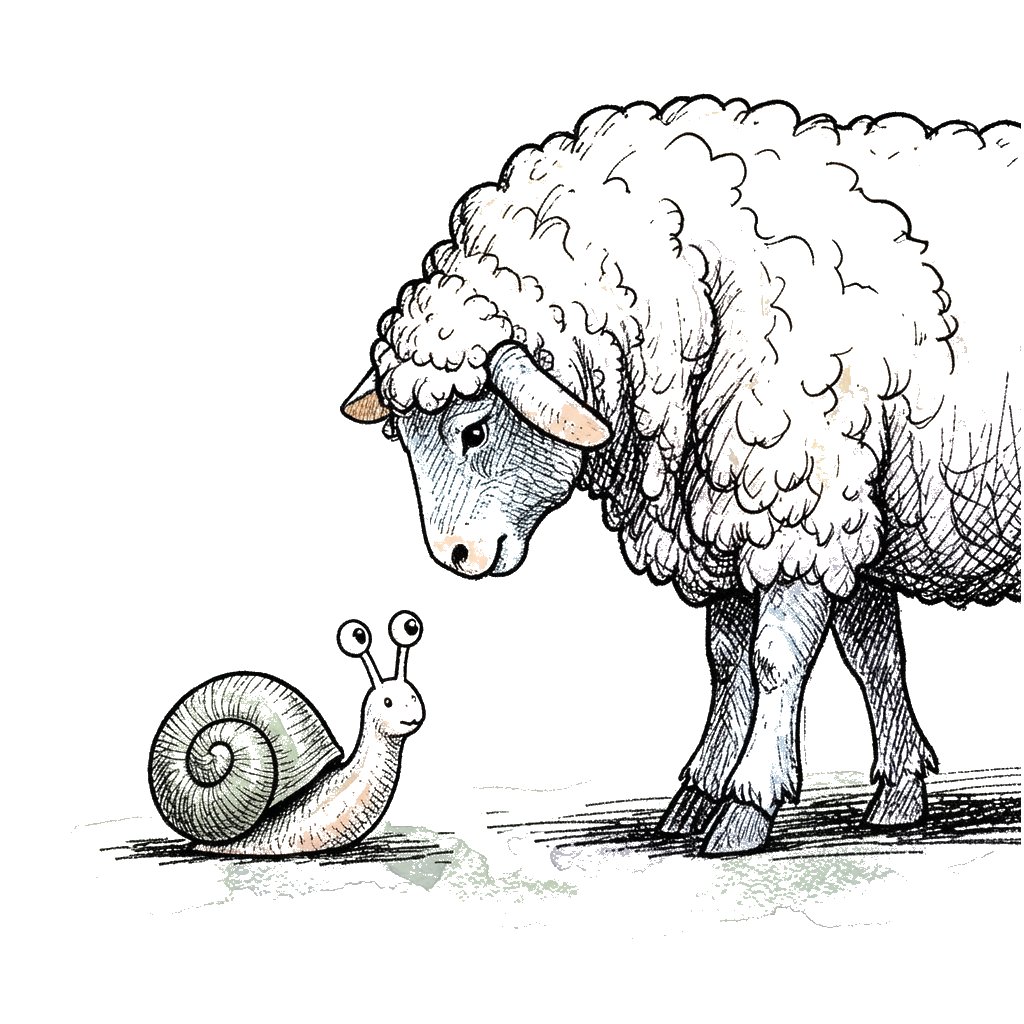
Silver Trail
Heryshaf walked on.
Dorik's words had left him more confused than before.
He had searched outside himself and been told to look within.
Now he had looked towards within and been told there might be nothing there but reflections.
He walked faster.
He did not notice that he was walking faster.
'Excuse me.'
Heryshaf continued.
'Excuse me!'
He stopped.
There was nobody there.
'Down here.'
Heryshaf looked between his hooves.
A snail looked up at him.
'Hi,' said the snail. 'I'm Paulo. You look frustrated.'
'I am.'
'Why?'
Heryshaf sighed.
'A while ago I left home and went in search of the great meaning of life.'
'Ah haaa,' said Paulo. 'That Biggie.'
Heryshaf looked at him.
'Yes. You don't seem very shocked.'
'Of course not. I've met thousands who have tried.'
Heryshaf felt slightly less special.
'And?'
'And...' said Paulo.
Heryshaf waited.
Paulo moved forward perhaps half an inch.
'And...'
'Yes?'
Another half-inch.
'And...'
'What?'
'They passed it by.'
Heryshaf frowned.
'What?'
'They passed it by.'
'I know you said that. What does it mean?'
Paulo continued slowly across the earth.
Heryshaf watched him.
'Well?'
Paulo stopped.
'You are very impatient.'
'I am trying to find the meaning of life.'
'Yes. I noticed.'
'I don't have forever.'
'Neither do I.'
That stopped Heryshaf for a moment.
Paulo resumed his journey.
Heryshaf looked behind the snail. A thin silver trail marked every inch of ground he had crossed.
'Where are you going?'
'Over there.'
Heryshaf looked.
There was a rock perhaps six feet away.
'That could take you all day.'
'Yes.'
'Doesn't that bother you?'
'Why should it?'
'Because you could be somewhere else.'
Paulo stopped again.
'So could you.'
Heryshaf opened his mouth.
Then thought better of it.
'I have travelled mountains,' he said. 'I've followed rivers. I've met an eagle, a fish, a jellyfish, a crab, a peacock, an ant queen—'
'And yet here you are.'
'Yes.'
'Talking to a snail.'
'Yes.'
'Perhaps things are improving.'
Heryshaf laughed.
Paulo continued towards the rock.
'What did you mean when you said they passed it by?'
'It doesn't matter.'
'It matters to me.'
'Only a snail would understand.'
'Try me.'
Paulo considered him.
'You spend a great deal of time going somewhere.'
'I am on a journey.'
'So am I.'
Heryshaf looked again at the rock.
'That is not much of a journey.'
'It is from here.'
Heryshaf smiled.
Paulo reached a tiny stone and went around it.
'Most creatures think that because they are moving, they are getting closer.'
'To what?'
'Whatever they think is waiting for them.'
'And isn't it?'
Paulo shrugged, which was difficult to detect on a snail.
'Sometimes.'
'And the rest of the time?'
'They pass it by.'
Heryshaf became quiet.
Paulo reached the shadow of the rock.
'What am I passing by?'
The snail began to disappear underneath it.
'Paulo?'
A quiet voice came from beneath the stone.
It was singing.
Try and slow down.
You miss much in your haste.
For there is still one opinion you must not waste.
There is still one to ask for this life's meaning,
One who may yet help to wake you from your dreaming.
One that has seen all there is on this earth.
One without measure. One without worth.
He is the one that can conduct the whole ocean.
He's at the heart of a storm and causes its motion.
He can lift vast deserts. Uncover hidden treasures,
Yet has never been born and has no measures.
One you meet all the time yet never know,
And you can't ever see him come or go.
One you know by his deeds, for trees bow before him,
And try as you might you can seldom ignore him.
His touch can be soft or his wrath unfurled,
For he is stronger than any other in the world.
One that is everywhere present and a present to some.
You want to know the meaning of life?
Then ask the wind, my son.
The voice stopped.
Heryshaf waited.
'Paulo?'
Nothing.
He looked back along the snail's silver trail.
It crossed only a few feet of earth.
Heryshaf wondered how much Paulo had noticed in those few feet that he himself had walked past.
Then he noticed the wind.
The Telling · VI
Last Crown
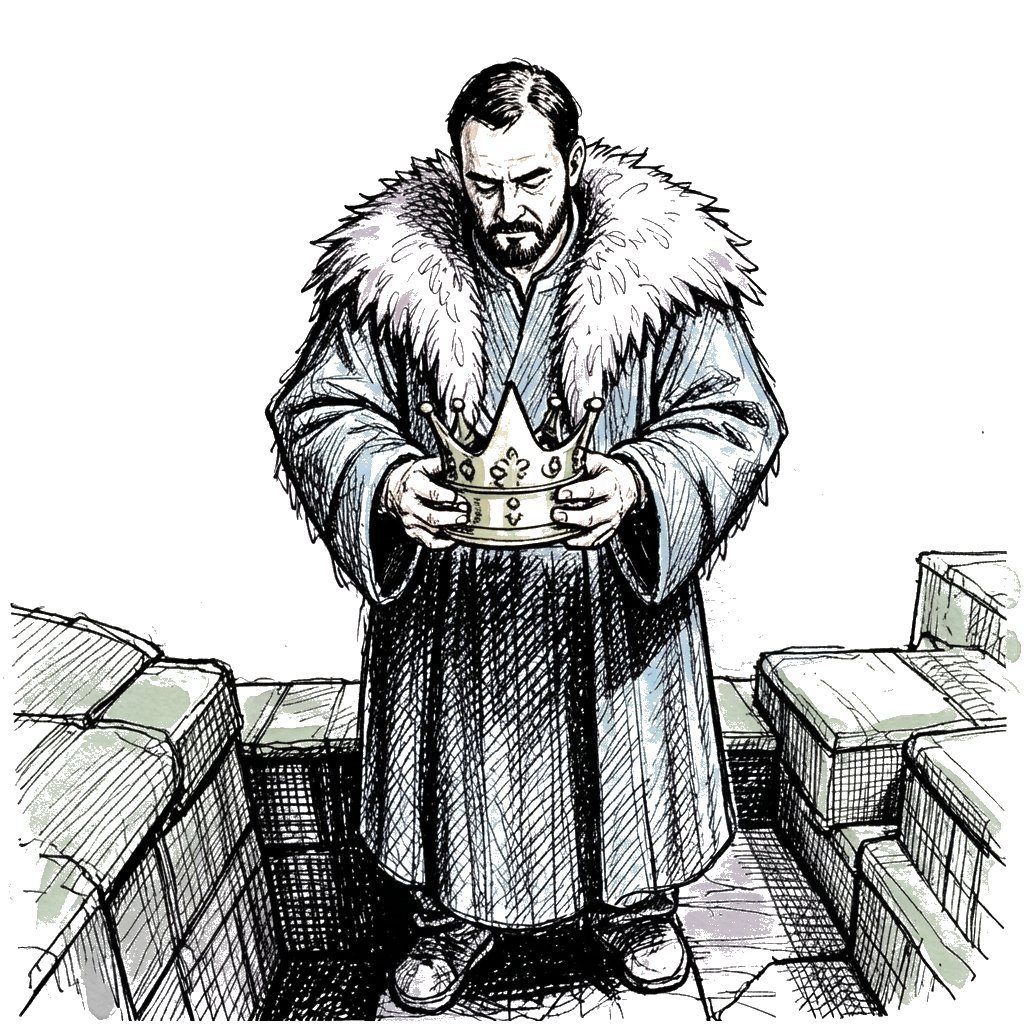
Last Crown
The King came down to the cell on the forty-first night, alone, which no king in that line had ever done.
He had left the crown on the chair.
This was not humility.
He had simply found, standing at the top of the stairs, that he could not carry it down them, and had been unable to explain to himself why.
'You are not to tell anyone I was here,' he said.
'I will be dead in the morning,' said the prisoner. 'I am the safest man in the building.'
The King sat down on the step.
He had not sat below another man since he was a child, and his body did not know how to do it, and made a poor job of it.
'I want the end of it,' he said.
'You have had the end of it. There is a sheep on a hill and he does not know what it is worth. That is where his story stops. Mine stops here.'
'Then tell me something else.'
The King looked at his own hands, which were not a king's hands at this distance; they were an ageing man's, and one of them had a scar he had got falling out of a tree at seven years old, before there was any of this.
'Tell me what I am.'
'You know what you are.'
'I am the King.'
'That is what you do,' said the prisoner. 'It is very good work and somebody has to. I asked what you are.'
The King was silent for a long time.
Somewhere above them a door closed and a man laughed and it was nothing to do with either of them.
'When I was nine,' he said at last, 'my father had a man's hands taken off in the yard for a debt of a dozen coins. I was made to watch, so that I would learn.'
He looked at his hands again.
'And I did learn. I learned that there was a thing you could be, in which nothing reached you, and I climbed inside it that afternoon, and I have not once come out.'
'And is there anybody still in there?'
'I do not know,' said the King. 'That is what I came down to ask you.'
'Then there is,' said the prisoner.
The King looked at him.
'A crown does not wonder whether it is empty.'
The King put his face in his hands, briefly, the way a man does when he is very tired and there is nobody to see, and then he took it out again and was the King.
'I cannot stop it now,' he said. 'The court has assembled. The Priest has written something. There are eight hundred men who obey me because they believe I cannot be moved, and if I am moved by a vagrant with a story, then by the spring there will be nothing here to obey at all.'
'I know,' said the prisoner. 'I am not asking you to stop it. I never was.'
'Then what in God's name have you been doing for forty-one nights?'
'Giving it away,' said the prisoner, 'before I put it down. It is no good to me and it was never mine to keep.'
He looked up.
'You keep saying my people, Majesty. Thirty thousand of them. Somebody is going to have to be awake for all of that, and it is not going to be me.'
The King went up the stairs.
He picked up the crown from the chair and stood holding it for a while.
6th Interval
The King did not sleep.
He lay in the dark and found that there was not one of him in the bed but a great many --- a whole court assembled inside him, the way a court does: five kings and four queens, each one a different voice, each one certain it alone wore the crown. They did not agree, and they had never agreed, and he had simply been in the habit of calling whichever one was loudest by his own name.
One of them wanted the man dead and wanted it the way a thirsty man wants water: because the court had assembled, because the Priest had written something, because a king who bends is a king who ends.
One of them wanted to go down the stairs again and was ashamed of wanting it.
One of them, and this was the worst, did not care at all, and was already thinking about the spring levies.
And there was a small one, nine years old, standing in a yard, being made to watch.
He sat up. He would have given the whole eastern province, at that moment, to know which of them was the King --- for he could feel, behind all those quarrelling voices, something that was none of them, that had no crown and no name, that only watched them. And he suspected, with a kind of cold, that this was the only one of him that was awake.
Outside, the sky went the colour that is not yet light and is no longer night, and below him, in the stone, a man who was not afraid slept soundly, and it was this, more than anything the man had said in forty-one nights, that the King could not forgive and could not stop thinking about.
The Telling · VII
Silence
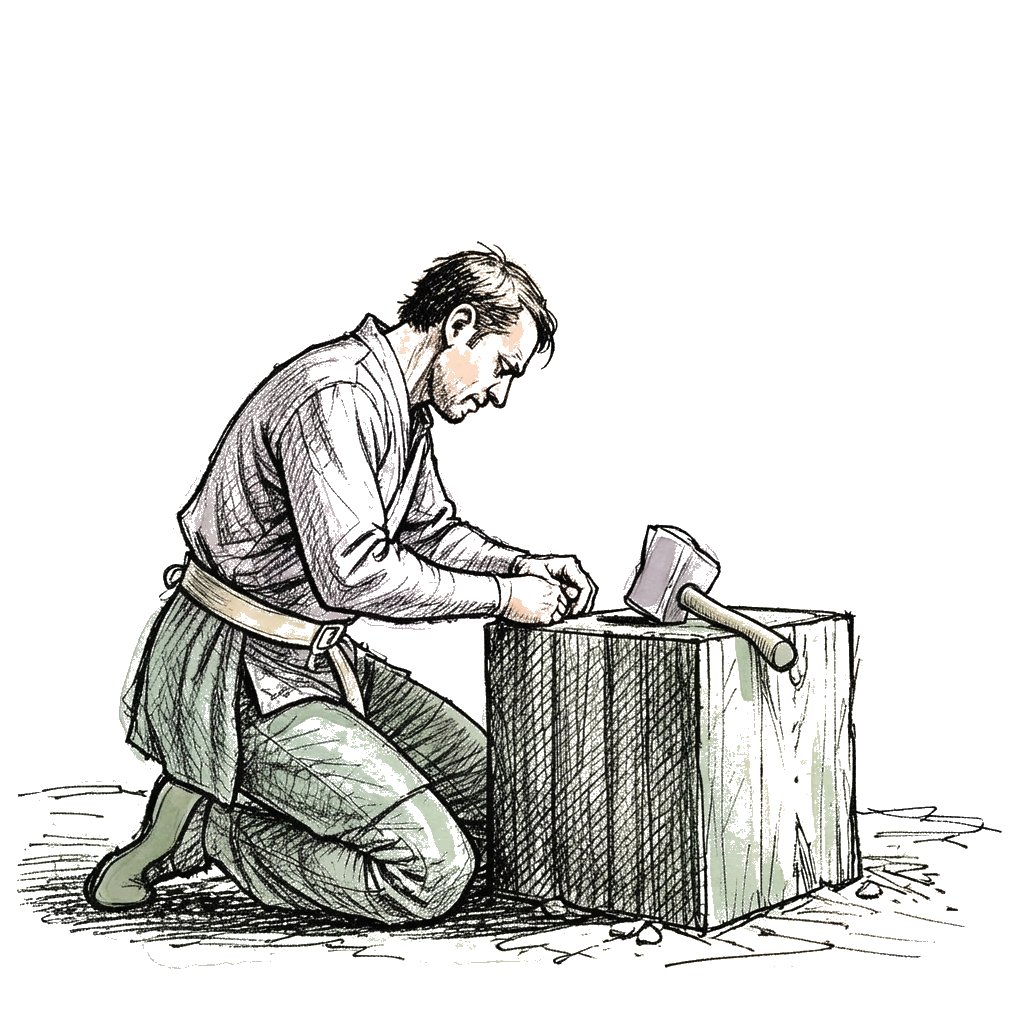
Silence
The morning came the way mornings do, without any sense of occasion.
There had been no order given.
That was the strangeness of it.
The machinery of the thing had simply continued to turn, because it had been set turning forty-one days earlier and nobody had thought to stop it, and so at dawn the Guard came down the stairs with two men, and the prisoner stood up.
'There has been no order,' said the Guard.
'There has been no order to stop, either,' said the prisoner. 'Let us not make anybody's morning difficult.'
They came out into the yard.
The court had assembled without being summoned, which nobody remarked upon.
The Priest was there with his book shut.
The Jester was there with nothing in his hands at all, which for him was a kind of nakedness.
The King stood on the step.
The block was old and pale and had a shine on it in one place.
'You may speak,' said the King.
His voice was not steady, and he heard it not being steady, and hated it.
'I have spoken for forty-one nights,' said the prisoner. 'You have all of it. There is nothing left in me that has not been handed over.'
He walked to the block.
Nobody had taken his arm.
That was what the Jester remembered afterwards, and told badly, in taverns, for the rest of his life: nobody took his arm.
The prisoner knelt.
He did not kneel the way the condemned kneel, which is a sort of falling that has been arranged in advance.
He knelt the way a man kneels to drink from a stream.
He put his cheek against the cold stone and let out a long breath.
The breath went out of him completely, and he did not draw another quickly.
And in that moment he understood the last thing, and it was too simple to have been worth nine years, and it had cost exactly nine years.
He had wanted the meaning of life the way a man wants a stone he can carry in his pocket.
He had wanted to find it, hold it, own it, and — he saw this now, with his face against the block, and found it funny — to be the man who had found it.
That was the last thing he was still holding.
Not life. He had put life down weeks ago in a cell with a high window.
This.
The wanting to have an answer.
He let it go.
It went easily, which was the joke.
It had never been heavy.
He had only been gripping.
What was left was not an answer and not an emptiness.
It was the cold of the stone, and the smell of the yard, and eight hundred men breathing somewhere behind him, and the fact of a morning happening whether or not he was in it.
It was enormous.
It had been there the whole time.
'Now,' he said, to nobody, 'it is worth something.'
And the King, on the step, discovered that he could not do it.
Not would not.
Could not.
He opened his mouth to give an order he had given four hundred times, and the machinery of it was gone.
Every execution he had ever ordered had run on a single fuel, and he had never known it until the fuel was absent: they had all been afraid, and their fear had told him he was a King.
This man was not afraid.
There was nothing for the crown to grip.
And underneath the crown, where he had not looked in thirty years, there was a person, and the person had been standing in the dark the whole time waiting to be asked.
The Guard's hand was on his sword.
It had been on his sword since the yard door.
It did not move.
It would not have moved, and both men knew it, and neither ever said so.
'Get up,' said the King.
The prisoner got up.
The Self · VIII
Downwind
Downwind
Heryshaf stood alone beside the rock.
Paulo was gone.
For the first time in a long while, Heryshaf did not immediately start walking.
He waited.
The wind moved softly through his wool.
He looked around.
There was nobody there.
'Oh mighty wind,' he said quietly.
Nothing happened.
Heryshaf felt ridiculous.
'You have seen everyone. You have been everywhere. You blow wherever you will. Please tell me. You must know the secret of life.'
The wind ignored him.
Heryshaf waited.
Then asked again.
The breeze strengthened.
He could hear it moving through the grass.
'Oh mighty wind. You have seen everyone. You have been everywhere. You blow wherever you will. Please tell me. You must know the secret of life.'
The grass bent.
Heryshaf waited.
At last a voice seemed to come from everywhere around him.
'I cannot give you the answer to your question.'
Heryshaf's heart sank.
'Of course you can't.'
'Neither I nor any I have met upon my journeys has known that answer.'
'Then Paulo sent me to ask somebody else who doesn't know.'
'Paulo is a snail.'
'I know.'
'They take a very long time to make a joke.'
Heryshaf smiled despite himself.
'However,' said the Wind, 'I know something that may provide a substitute.'
'What's that?'
'Not so quickly, Sheep. I observed you conversing with the snail. I am unsure whether you are ready for my truth.'
'Try me.'
'Why do you want it?'
Heryshaf was about to answer.
Then stopped.
Once he would have said because he wanted to know the meaning of life.
But that answer seemed too small now.
'I don't know,' he said.
The Wind moved around him.
'Better.'
Heryshaf frowned.
'A long time ago,' he said, 'I saw with sheepish eyes. When I realised it, I tried to tear them out. I left my flock because I didn't want somebody else's answer. I climbed a mountain. I flew with an eagle. I followed a river. I looked at other creatures and then I tried looking at myself.'
'And?'
'The more I find, the less certain I become.'
'Better still.'
'Is everything I say going to be better if it's less useful?'
'Usually.'
Heryshaf laughed.
Then became serious.
'I have found ignorance where I expected wisdom, and wisdom where I expected ignorance. Every creature has given me a different answer.'
'Which was the truth?'
'That is the problem.'
'Is it?'
Heryshaf thought.
'Perhaps all of them.'
'And?'
'And perhaps none more than another.'
The Wind circled him.
Heryshaf looked back at the road behind him.
'Thinking about these things wasn't enough,' he said. 'I had to leave. I had to climb the mountain and fall in the river and meet all of them. I had to do something.'
'Lead does not become gold by thinking about gold.'
Heryshaf smiled.
'I wish somebody had told me that before the mountain.'
'They probably did.'
'That is annoyingly possible.'
The Wind moved through the grass.
'And what do you seek now?'
Heryshaf thought for a long time.
'Something that doesn't change when I look at it from somewhere else.'
For a while there was only the movement of grass.
Then the Wind spoke.
'From cause and effect there is no escape.'
Heryshaf listened.
'A word spoken enters another creature and becomes part of what happens next. You may regret it. You may apologise for it. But you cannot climb into another creature's head and remove the thing you put there.'
The Wind passed around him.
'A hoof placed here rather than there changes the road. A kindness. A cruelty. A silence. Everything enters what follows.'
'Then everything is connected?'
'Yes.'
'By what?'
'Love connects all things.'
Heryshaf was disappointed.
'I was told that near the beginning.'
'Did that make it untrue?'
'No.'
'Then your problem is not with the answer.'
'What is it with?'
'You wanted a new one.'
Heryshaf said nothing.
'What is greater than love and faith?' asked the Wind. 'What more can you hope to find?'
'I once had a dream,' said Heryshaf. 'Love and faith conquered everything.'
'And yet?'
'And then the cycle continued. Everything rose again to fight them, and they conquered it again.'
He looked into the distance.
'And then again.'
The Wind became quiet.
'I don't want to know what wins inside the circle,' said Heryshaf.
'What do you want?'
'I want to know whether there is anything outside it.'
The wind stopped.
Completely.
Heryshaf had never noticed how loud the world was until the air became still.
Then the voice returned.
'Within the circle you cannot hope to see what is outside it.'
'Then how do I get out?'
'I once helped another sheep.'
Heryshaf's head lifted.
'Who?'
'Douglas.'
Heryshaf stared into the empty air.
'You knew Douglas?'
'I touched every hill he walked upon.'
'What happened?'
'He was already dead when I carried him. There was very little left for the world to hold.'
'Where did you take him?'
'Out.'
'Out where?'
'If I knew that, it would still be inside.'
Heryshaf felt a chill that had nothing to do with the wind.
'I followed Douglas everywhere life could take him,' said the Wind.
'And after?'
'There came a place where I could carry him no further.'
Heryshaf waited.
'He went on,' said the Wind. 'I did not.'
'Was he the only one?'
'No.'
'Who else?'
'A man.'
Heryshaf looked up.
'A shepherd. The Good Shepherd.'
'And he went outside the circle?'
'He is the only other I have known to make that journey.'
'Where did he go?'
The Wind moved softly through the grass.
'You keep asking the Wind what lies beyond the place where even the Wind cannot go.'
Heryshaf smiled.
'It was worth trying.'
'Yes,' said the Wind. 'It was.'
'And Douglas?'
'You tell me. You are the one who says he came back.'
Heryshaf thought of the dream.
'He said he had found the truth.'
The Wind stirred around him.
'Then perhaps there are some journeys from which one can return without coming back.'
Heryshaf thought of Jeff.
Of the eyes upon the peacock's tail.
Of the place from which one might watch oneself.
Then he thought of Dorik, looking through his transparent body and finding reflections.
'What was there for you to carry?' he asked.
The Wind did not answer immediately.
'What do you mean?'
'If Douglas was dead, what went on?'
The grass whispered.
'Something of him.'
'His spirit?'
'If you like.'
'That isn't an answer.'
'No.'
'Does everybody have one?'
The Wind moved past him.
'Every creature begins with the possibility of becoming more than the collection of things that have happened to it.'
'Begins with?'
'A possibility is not a possession.'
Heryshaf stood very still.
'What happens to it?'
'What happens to anything that is never fed?'
Heryshaf did not answer.
'It weakens.'
'And then?'
The Wind moved through the grass.
'It withers.'
Heryshaf felt suddenly cold.
'Can it die?'
There was a long silence.
'Yes.'
Heryshaf looked around him as though something might have disappeared while he wasn't watching.
'How would you know?'
'You wouldn't. That is part of the danger.'
The Wind passed through his wool.
'Most creatures spend their lives building the part of themselves that other creatures can see. They learn what pleases the flock. What pleases the shepherd. What earns approval, safety, admiration.'
'The outside.'
'Yes.'
'And whatever is inside?'
'Is easily neglected. There is less immediate reward for feeding something nobody can see.'
Heryshaf remembered Jonnie opening his magnificent tail.
'Dorik looked inside himself and found almost nothing.'
'Perhaps he looked correctly.'
'Jeff found something watching.'
'Perhaps he looked correctly too.'
'They can't both be right.'
'Why not?'
Heryshaf opened his mouth.
Nothing came out.
'A thing may be empty of what it imagined itself to be,' said the Wind, 'and still contain something unfinished.'
'The observer?'
'Perhaps.'
'A spirit?'
'Perhaps.'
'What is it, then?'
The Wind stirred around him.
'Something that must be fed if you wish to discover what it can become.'
'Fed with what?'
'Attention. Effort. Honesty. Will. By choosing sometimes not to follow the thing in you that shouts the loudest.'
Heryshaf remembered things he would once have called himself.
His anger.
His vanity.
His fear.
His certainty.
And the strange place from which he had sometimes been able to watch them.
'And if I do that?'
'Perhaps it grows stronger.'
'And if I don't?'
The Wind was quiet.
Heryshaf already knew the answer.
'It withers.'
'And if it grows strong enough?'
'Perhaps it requires less of the flock to tell it what it is.'
'Independence.'
'If you like.'
'Will?'
'If it can choose.'
Heryshaf swallowed.
'Can that thing survive death?'
The Wind passed softly through his wool.
'I followed Douglas everywhere life could take him.'
'And after?'
'You already know my answer.'
'There came a place where you could carry him no further.'
'Yes.'
'And he went on.'
'Yes.'
'What went on?'
The Wind was silent.
'That is all I know.'
It was not enough.
For once, Heryshaf did not demand more.
After a while he said, 'Then what am I supposed to do?'
'Live.'
'That sounds suspiciously simple.'
'Most difficult things do.'
'But how?'
'Do you remember what the mountain told you?'
Heryshaf smiled.
'Which part?'
'That the perfect question will always be answered.'
'Yes.'
'I cannot give you the meaning of life. But perhaps I can give you a question by which you may understand the meaning another creature has given to his.'
Heryshaf listened.
'Do not ask what a creature says he believes. Do not ask what he claims to love, or fear, or serve.'
'What do I ask?'
'First, watch.'
The Wind moved through the grass.
'Watch what he does when nobody is praising him. Watch what he protects. What he sacrifices. What he repeatedly chooses.'
'And then?'
'Ask what all he has learned is worth.'
Heryshaf frowned.
'How does that tell me his meaning?'
'Because his answer will not be the words he gives you.'
The Wind rose.
'It will be his life.'
Heryshaf said nothing.
'You wanted to escape being a sheep because you thought a shepherd knew where he was going.'
'I did.'
'And now?'
'I've met shepherds.'
The Wind laughed through the trees.
'Then you have learned something.'
'A little.'
'A shepherd may be as asleep as his flock. A sheep may become more awake than its shepherd. The stick proves nothing.'
Heryshaf thought of the Queen beneath the earth.
'You can lead or follow,' said the Wind. 'You can sleep or awaken. But neither is decided by what you call yourself.'
The Wind pulled gently at his wool.
'Learn not only to listen to what creatures say. Watch what they do.'
Heryshaf closed his eyes.
'And remember: once you can see another creature clearly, you will be tempted to use what you see.'
'To control him?'
'Yes.'
'To make him my sheep.'
'Yes.'
Heryshaf opened his eyes.
'And then I become the shepherd.'
'You become a shepherd.'
'Isn't that better?'
'Only if you are awake.'
The Wind became stronger.
'Otherwise you have merely changed places in the same flock.'
Heryshaf stood against it.
'So what do I do with what I see?'
'Choose.'
'To lead?'
'Perhaps.'
'To follow?'
'Perhaps.'
'That's not much help.'
'No. But the choice must be yours or it is not a choice.'
The Wind swept around him.
'The meaning of life cannot be found in words alone, Heryshaf.'
The grass bowed.
'It is revealed in how you act.'
The Wind began to move away.
'Wait!'
It weakened.
'I still don't have the answer.'
'No.'
'After all this?'
'No.'
Heryshaf almost laughed.
'What am I supposed to do with that?'
The Wind passed him one last time.
'Live, my friend.'
Then it was gone.
Heryshaf stood in the stillness it left behind.
He thought of Ordok.
Aldwin.
Jonk.
Reggie.
The Queen.
Jonnie and Jeff.
Dorik.
Paulo.
His uncle.
His father.
His mother.
His flock.
So many answers.
So many creatures certain, uncertain, wise, foolish, awake and asleep.
All of them true.
None of them the truth.
And somewhere among all of them, himself.
He breathed.
Then he began walking again.
Not faster.
The Telling · VIII
Done
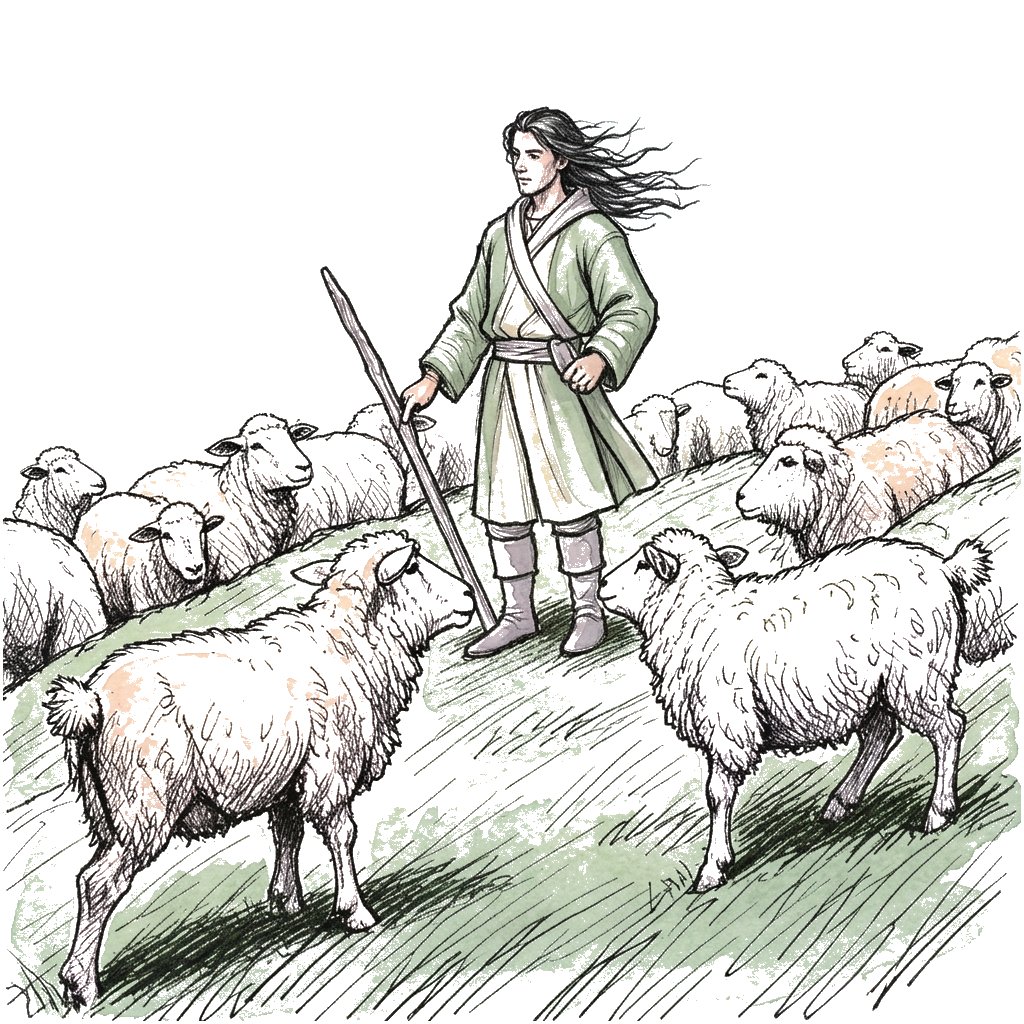
Done
They gave him bread and a coat that did not fit, and the gate was opened, and that was all the ceremony there was.
The Jester walked with him as far as the eastern road.
He had not stopped crying and he had not acknowledged that he was crying, and he kept making jokes into it, which is the bravest thing in this book.
'Stay,' he said. 'Be the second fool. I will teach you the falls. You have the face for it.'
'You do not need a second fool,' said the prisoner. 'You need somebody to tell you that you are not one. So: you are not one.'
'That is a terrible gift.'
'It is the only one I have left. I gave the rest to a King.'
The Jester stood in the road until the shape of him was gone.
Behind, in the hall, the Priest opened his book that night and read the same page nine times and shut it and did not sleep.
He would harden.
Some do.
The story had gone into him and found nothing to eat and had gone out again, and he would preach against wandering men for another twenty years with a slightly louder voice than before.
The Guard stayed.
He did not become gentle.
He became exact.
He began, without announcing it, to ask his eight hundred men why — not always, not kindly, but sometimes — and the ones who could answer he kept close, and the ones who could not he taught.
That is how it moves in a soldier.
Slowly, and in the right direction.
And the King ruled for another nineteen years, and was not a good King in the way of songs, and was a good King in the way that is only ever noticed afterwards, by people counting the things that did not happen.
He never told anyone the story.
He was not able to.
He tried, twice, and both times it came out as information, and he heard it come out as information, and stopped.
The shepherd went north.
It took him most of a year.
The valley was where he had left it, because valleys are.
The river was black at night and brown in the day, and the people there said it was silver, and he did not correct them, because he had learned by then that a thing can be brown and silver at once depending on who needs it.
There were sheep on the hill.
They were not his sheep.
His sheep were forty generations of grass by now.
These were somebody else's, and then for a while they were nobody's, and then they were his, because he was there and he fed them and nobody else came.
So he was a shepherd again, on the same hill, in the same rain, with the same animals, doing the same work, and everything about it was different, and nothing about it could be explained.
He had gone out to escape being led and come back to keep a flock.
He had believed that holding the stick placed him outside the flock, and had learned instead how easily a shepherd may follow without knowing it.
Now he knew how to lead without pushing, and how to stand among them without pretending he was one of them.
He grew old there.
One evening, as the light was leaving the hill, the shepherd looked across the flock.
Near its far edge an old sheep had raised his head.
The shepherd knew him at once, though he could not have said how.
Heryshaf.
Neither spoke.
The wind moved across the hill, lifting the shepherd's hair and passing through Heryshaf's wool.
For a moment they looked towards the same horizon.
Then Heryshaf lowered his head and began to eat, and the shepherd smiled.
In the evenings the lambs came and lay near him because he was warm, and one evening one of them — a small one, with a black ear, the sort that always stands in the rain when there is a perfectly good tree — said:
'Tell it again.'
So he told it again.
The sheep at the river.
The uncle dying.
The eagle and the mountain and the queen under the ground.
The cell with the high window and the King who could not give the order.
And when he had finished, the lamb with the black ear said:
'But what was it? The meaning. What was the answer?'
The old shepherd did not say anything for a while.
The wind came up the valley and went through the grass and through the fleece of two hundred sheep and through him, and he felt it, and he noticed that he felt it, and that the air in his lungs was cold and clean and finer than it had any right to be.
'That,' he said, 'is not a thing I can tell you.'
'Because it is a secret?'
'No,' said the old shepherd. 'Because telling is not knowing. I could put it in your ears in four words and you would have four words.'
The lamb thought about this with the terrible seriousness of the very young.
'Then how do I get it?'
The old shepherd looked down the valley, where the river was going black, and the first star was out, and eleven thousand evenings had happened exactly like this one and he had been present for perhaps nine of them.
'You are getting it now,' he said.
'Do not be sheep.'
And then, because he was old, and because it was true, and because there was nobody left alive who would misunderstand him:
'Be a very good sheep.'
The lamb did not understand.
The lamb would understand, in about forty years, on a hillside, with a lamb of its own.
That is how it travels.
It has never travelled any other way.
Understand this if you can.
Of all the mysteries of life, death and birth,
As is his answer, so is the man.
“What is all you have learned, worth?”
His Uncle
What you leave behind.
His Father
What you do with what I gave you.
Paulo
What you didn't pass by.
The Guard
What you do.
His Mother
Where I belong.
Reggie
Life. Replacing oneself. Children.
The Prisoner
Whatever is left when you let go.
Ordok
Worth? As in money?
The Sojourner
What you give away.
Jonnie
Everything.
The Jester
The question.
Aldwin
Myself.
Douglas
Love. To be loved. Nothing without love.
Jonk
Only time will tell. Less today than tomorrow.
The Ant Queen
Choice.
The Priest
What is written.
Heryshaf
This.
Dorik
Nothing.
Jeff
What remains.
The Wind
What survives.
The King
What remains when the crown is taken off.
The Mountain
I'll show you.
The Shepherd
What you can give away and still possess.
The Good Shepherd
Beyond.
And perhaps God might say:
I'll tell ewe tomorrow.
Heryshaf is a philosophical fable inspired by the central ideas of the Fourth Way.
Heryshaf is a sheep who begins to suspect that the flock around him is not truly awake. They eat, follow, react and repeat, believing themselves to be conscious while living largely through habit and conditioning. His questions set him on a journey through a strange world of characters and encounters that gradually reveal the different forces governing behaviour — personality, identification, fear, desire, imagination and the many competing versions of the self. Over the journey he discovers a process by which he can become something more than a sheep.
At its heart, Heryshaf explores the Fourth Way proposition that we live much of our lives mechanically, mistaking thought for consciousness and personality for the self. Heryshaf's search becomes a search for what might exist behind that machinery: the part of us capable of observing it.
Accessible as a story but philosophical underneath, Heryshaf uses the simplicity of a fable to ask a difficult question: if most of what we call ourselves is happening automatically, what would it mean to actually wake up?